Washington, DC — When Colombians head to the polls on May 31 to choose a successor to President Gustavo Petro — the South American country‘s first-ever leftist leader — issues such as the economy, security, and social reforms will be central to the electoral process.
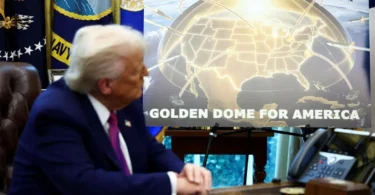
However, one topic that could also play some role is Bogota‘s ties with Washington and the incoming leader‘s relationship with US President Donald Trump, who has had largely strained relations with President Petro, particularly regarding US military operations in the Caribbean Sea and Israel‘s aggression in the Middle East.
“President Trump does not function as a central campaign issue in the same way that security, the economy, or climate do, but he operates as a background structuring force in the election,” Jenaro Abraham, a political scientist and professor of Latin American politics at Gonzaga University, tells TRT World.
“It is possible that he could become more visible, particularly if he signals support for specific candidates, as he has in countries like Brazil, Argentina, and Honduras,” adds Abraham.
Colombia, which has historically been governed by right-wing administrations, is a key ally of the US and, along with Panama, hosts the largest number of US bases in Latin America.
However, ties between Bogota and Washington have been rocky in recent years, especially after President Petro won the election in 2022.
In September 2025, at the UN General Assembly in New York, Petro called for a global force to liberate Palestine from Israeli occupation. Tensions mounted further after he opposed the US military posturing regarding Venezuela.
That, in turn, prompted the US Treasury to sanction Petro and his “support network,” while President Trump and his Secretary of State Marco Rubio labelled him a “lunatic,” mirroring their aggressive stance against Venezuela’s abducted leader Nicolas Maduro.
A surprisingly cordial White House meeting between Trump and Petro in February 2026 cooled things down somewhat, but the friction remains a campaign issue.
Related
A model of governance
In recent years, there has been a wave of right-wing victories in many countries across Latin America, most notably Argentina, Chile, Ecuador, and Bolivia. The US influence, however, comes in the form of ideological framing rather than being a direct issue in the election, Abraham explains.
“His (Trump’s) influence is most evident in the ideological framing of right-wing candidates, especially in their emphasis on militarisation, law-and-order policies, and closer alignment with US security priorities,” says Abraham. “In that sense, Trumpism appears less as a direct electoral issue and more as a model of governance that informs certain sectors of the political field.”
Abraham stresses that candidates associated with the Centro Democratico or other right-wing movements are generally more aligned with President Trump’s geopolitical positioning and strategies, particularly in areas such as migration control, regional security, and relations with Venezuela.
“At the same time, US influence extends beyond any single administration. Trade, migration, and security cooperation continue to shape Colombia’s economic and political environment regardless of who is in power in Washington,” he says.
“So while voters are not explicitly voting ‘on Trump,’ the broader architecture of US influence remains embedded in the issues that do matter. His role is therefore indirect but still consequential, particularly in shaping the ideological and strategic orientation of candidates on the right and the broader geopolitical context in which the election unfolds.”
Colombia is one of a small bloc in Latin America and the Caribbean that opposes US regional dominance, which includes Brazil, Mexico, Cuba, and Nicaragua.
While President Trump has not publicly supported any candidate in the election, Washington maintains a neutral stance regarding the country’s polls. However, experts argue that voters are likely to choose the candidate who can maintain strong ties with the US.
Elizabeth Dickinson, interim deputy director for Latin America at the International Crisis Group, tells TRT World that the US is by far Colombia’s biggest trading partner and political ally.
“The relationship with the United States is an issue that matters to voters because the United States is far and away Colombia’s most important commercial partner, political ally, and also a key partner in international cooperation, particularly in the defence sector,” Dickinson says.
“I think that certainly one thing on at least a certain sector of voters’ minds would be which candidate can maintain that relationship in the best condition.”
Dickinson highlights that the business sector in Colombia is more concerned about the issue of ties with the US than regular voters.