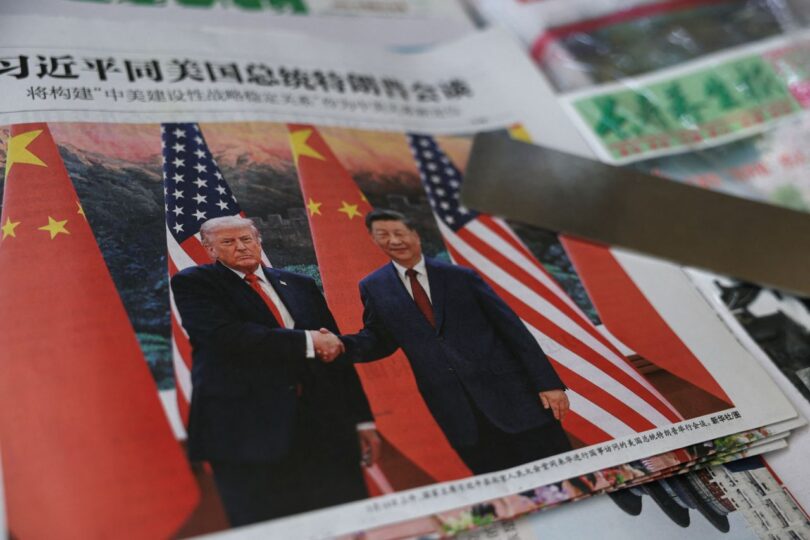
Washington, DC — US President Donald Trump is flying back from Beijing after a two-day summit with Chinese President Xi Jinping.
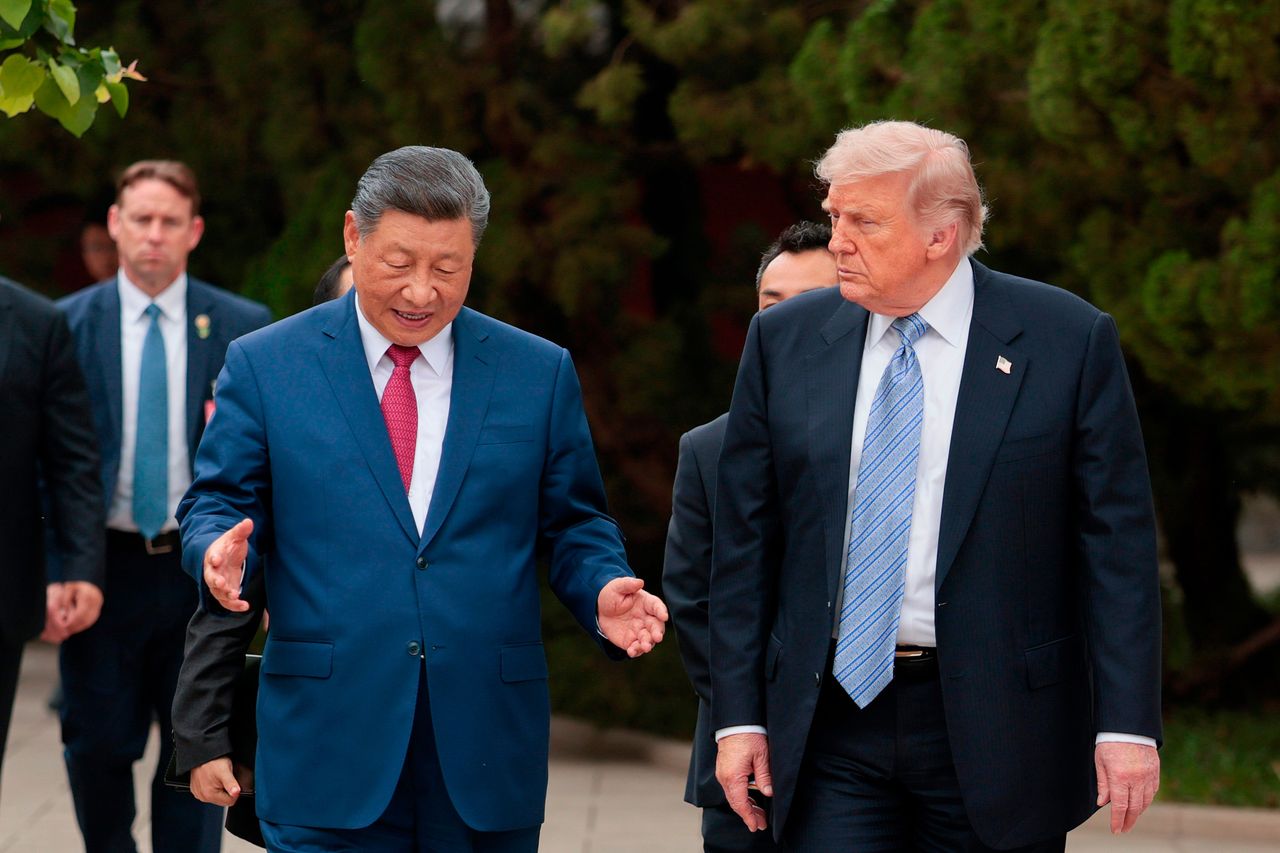
During the visit, President Trump was honoured with a temple tour and tea as the two leaders discussed a range of issues facing the world’s two major superpowers and economies — from bilateral trade to US-Israeli war on Iran and the Taiwan question.
We review the key outcomes from the Trump-Xi talks.
Diplomacy and trade
President Xi and President Trump agreed to define bilateral ties as a “constructive China-US relationship of strategic stability”.
Beijing described this as the guiding framework for the next three years and beyond, emphasising “positive stability with cooperation as the mainstay,” manageable competition, and enduring peace.
Xi called the summit a “milestone.” Trump described the talks as “fantastic,” “incredible,” and a “great couple of days,” inviting Xi to the White House in September.
Trump called Xi a “great leader” and noted that he typically receives some criticism when he refers to the Chinese leader in those terms. “But I say it anyway because it’s true,” he added.
During their meeting, Xi referring to the “Thucydides Trap,” a political theory that war becomes more likely when a rising new power competes with an established great power.
But Xi said the US and China could “transcend” this danger.
Trump, who was carrying some of the biggest names in American business, said that China committed to large-scale purchases of US goods, including billions of dollars in agricultural products, soybeans to benefit US farmers and energy.
Trump also said China agreed to buy 200 Boeing planes and signalled interest in as many as 750. Boeing and Beijing have not commented yet.
“The delegations of the two countries reached overall positive results, including continuing to implement all consensus reached in previous consultations (and) agreeing to establish a trade council and an investment council,” Chinese Foreign Minister Wang Yi said.
The two countries also agreed to “address each other’s concerns regarding market access for agricultural products and promote expanding two-way trade within a framework of reciprocal tariff reductions”, Wang added.
Related
Taiwan
On Thursday, Xi begun the summit with a warning that missteps on the sensitive issue of Taiwan could push US and China into “conflict”.
Framing it as “the most important issue in US-China relations”, the Chinese leader warned the stakes could not be higher, stressing: “Handle it well, the relationship holds; handle it badly, the two countries risk collision or conflict.”
And a day later, Trump expressed opposition to Taiwan’s formal independence and questioned US defence commitments to the island, addressing one of the priority issues for President Xi.
“I’m not looking to have somebody go independent. And, you know, we’re supposed to travel 9,500 miles to fight a war. I’m not looking for that,” he told Fox News host Brett Baier.
“I want them to cool down. I want China to cool down,” Trump said. “We’re not looking to have wars, and if you kept it the way it is, I think China’s going to be OK with that.”
“We sensed during the meeting that the US side understands China’s position and attaches importance to China’s concerns, and, like the international community, does not support or accept Taiwan moving toward independence,” Wang told Chinese state media on Friday, following the summit.
“The Taiwan question is the most important issue in China-US relations; it affects the situation as a whole,” Wang stressed. “We hope the US side will abide by the one-China principle and the three China-US joint communiques and fulfill its due international obligations.”
Related