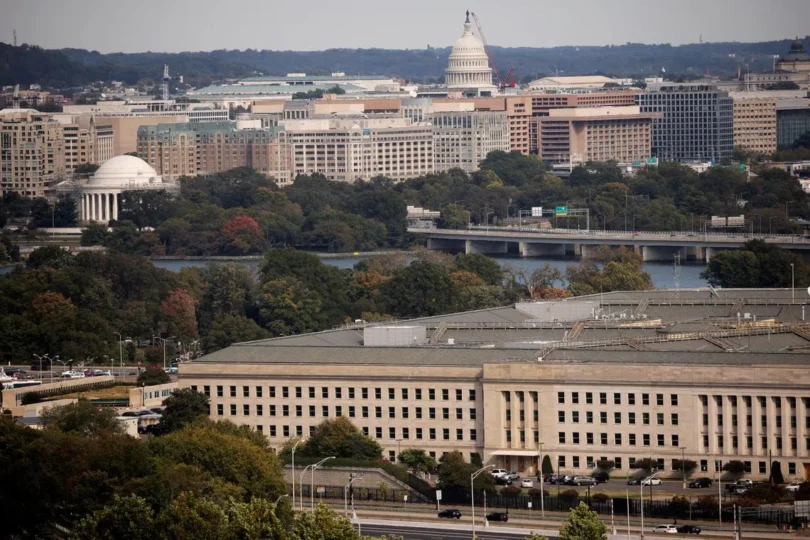
WASHINGTON – The Pentagon on April 21 unveiled more details of President Donald Trump’s US$1.5 trillion (S$1.9 trillion) defence budget request for fiscal year 2027, by far the largest year-over-year increase in defence spending in the post-World War II era.
In a new wrinkle, the Pentagon has created a category it is calling “presidential priorities”, covering Golden Dome missile defence, drone dominance, artificial intelligence and data infrastructure, and the defence industrial base, Pentagon officials told reporters.
In 2025, Mr Trump asked Congress for a national defence budget of US$892.6 billion then added US$150 billion through a supplemental budget request, sending the total price tag over US$1 trillion for the first time in history.
On shipbuilding, the budget includes over US$65 billion to procure 18 warships and 16 support ships made by General Dynamics and Huntington Ingalls Industries as part of what the Pentagon is calling the “Golden Fleet” initiative, the largest shipbuilding request since 1962, the officials said.
The budget ramps up Lockheed Martin F-35 procurement to 85 aircraft per year and includes US$102 billion for aircraft procurement and research and development, a 26 per cent increase over the prior year, the officials said. Development of next-generation systems like the Boeing Co F-47 fighter jet is also a priority, while US$6.1 billion is requested for Northrop Grumman’s B-21 bomber.
On drones, senior officials described the request as the largest investment in drone warfare and counter-drone technology in US history. The budget requests US$53.6 billion for autonomous drone platforms and warzone logistics, along with US$21 billion for munitions, counter-drone technologies and advanced systems.
The Defense Autonomous Warfare Group, which previously received roughly US$225 million, would see its funding balloon to approximately US$54 billion. Senior officials said the vast bulk of that money is aimed at applying technology that exists today, not long-range basic research, and confirmed the group has effectively absorbed the Pentagon’s earlier Replicator drone initiative.
The budget proposes multi-year procurement contracts for more munitions programs, arguing longer contracts give both large defence firms and their small and medium-sized suppliers the stability needed to expand production.
The request includes a pay raise weighted toward junior enlisted troops, getting a seven per cent increase, six per cent for their superiors and five per cent for the top ranks. The budget also proposes expanding the force by 44,000 additional service members in fiscal 2027, following the addition of more than 20,000 in fiscal 2026.
Notably, the budget does not include funding for the conflict with Iran. A senior Pentagon official said the timing of the appropriations process means a supplemental budget request will likely be needed to address near-term operational costs and replenishment needs arising from the conflict.
The Pentagon’s US$1.5 trillion total is split between a US$1.15 trillion funding request, and a US$350 billion supplemental budget request – requiring the passage of a reconciliation Bill akin to a format used in 2025. REUTERS