
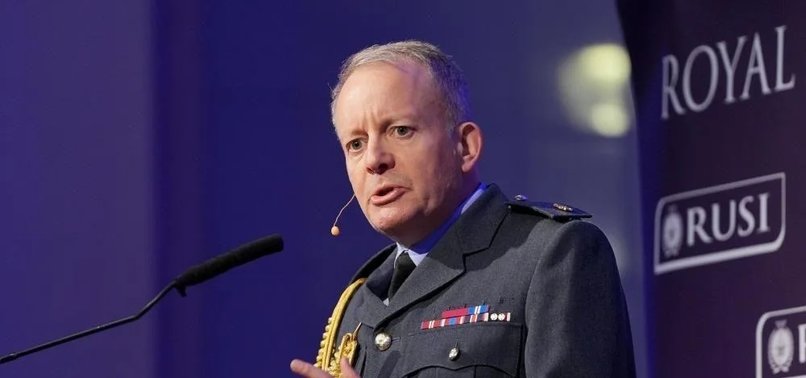
The UK is facing its most dangerous security environment since the Cold War, the country’s top military officer warned on Friday, citing increased Russian military activity and growing threats in cyberspace and other domains.
Chief of the Defence Staff Sir Richard Knighton said the risks facing Britain are greater than at any point in his career.
“This is the most dangerous period that I have known,” Knighton told BBC Radio 4’s Today programme.
“The risks and threats to this country are greater than I have known since the Cold War,” he said.
Knighton said the number of incursions by Russian strategic aircraft near UK airspace during the first five months of 2026 had already matched the total recorded throughout 2025.
“So Russia is definitely raising the stakes and risks crossing a line,” he said.
The military chief warned that Moscow’s activities extend beyond conventional military operations and include cyberattacks, sabotage, and assassination attempts.
“Russia is probing both our traditional military defenses and also through other means,” he said.
His comments came ahead of the publication of the government’s Defence Investment Plan, expected in the coming weeks, which will outline funding for military equipment and infrastructure over the next decade.
Knighton said Britain must adapt to a changing security landscape and prepare for prolonged conflicts, such as the war in Ukraine, rather than shorter military engagements.
He also highlighted the growing role of emerging technologies on the battlefield.
“Drones and autonomous systems are going to become increasingly important in the future of warfare,” he said.
Calling last year’s Strategic Defence Review a “call to arms,” Knighton backed efforts to increase military spending, saying Britain must invest more rapidly in its defense capabilities.
“Exactly as the prime minister says, we need to spend more on defense and do it faster,” he said.
Knighton also urged the public to recognize the changing threat environment.
“It is important that society and all of us recognize and understand that, and that may mean that we need to make different choices and different priorities,” he said.