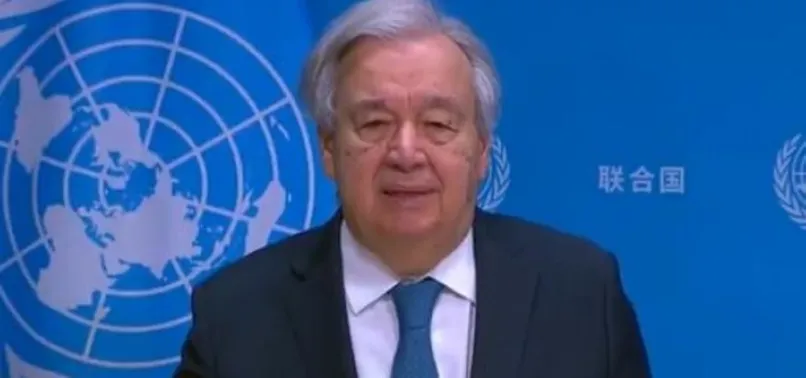
UN Secretary-General Antonio Guterres on Friday called for inclusive global governance of artificial intelligence (AI), saying the technology should be shaped by all countries rather than a small number of governments or companies.
Speaking at the opening ceremony of the World Artificial Intelligence Conference in Shanghai, Guterres described AI as “humanity’s greatest opportunity in the 21st century,” while cautioning that it could also become “one of its greatest risks.”
“Technology that will shape the future of humanity must be shaped by all of humanity,” he said, stressing that AI “cannot be governed by a handful of countries or companies” and that “every nation needs a seat at the table.”
Guterres said the UN has expanded its work on AI governance following the adoption of the Global Digital Compact and the establishment of the UN General Assembly-backed Independent International Scientific Panel on AI.
He added that the next phase should focus on turning commitments into practical support so that all countries can benefit from AI’s development.
Highlighting AI’s potential to advance healthcare, education, food systems and employment, Guterres warned that many developing countries remain at risk of being left behind.
“One-third of humanity is still offline,” he said, adding that computing power, technical expertise and investment remain concentrated in a limited number of countries and companies.
Without addressing these disparities, AI could lead to “greater inequalities, greater divides in income, in opportunity, in security.”
Guterres said he will soon present recommendations for a Global Fund for AI and called on governments to support it alongside the UN-backed Global Network for Exchange and Cooperation on AI Capacity Building.
He outlined three priorities for global AI governance: expanding AI capacity in developing countries, establishing international safety standards, and improving environmental sustainability.
“No AI system should be put in a child’s hands before it has been proven safe,” he said.