
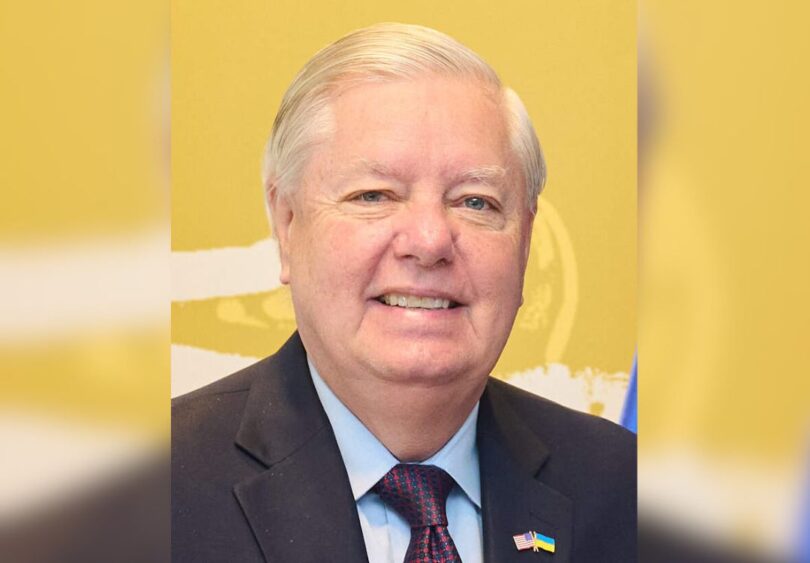
Mr Graham, 71, a veteran senator, is notorious for often urging the US to go to war, especially wars that favour Israel.
A Republican US senator, Lindsey Graham, is dead.
His death was announced early on Sunday in a post by his office on his official X account.
“On the evening of Saturday, July 11, U.S. Senator Lindsey Graham passed away from a brief and sudden illness…” the office stated.
Mr Graham, 71, a veteran senator, is notorious for often urging the US to go to war, especially wars that favour Israel. He had repeatedly stated in the past that part of his job as an American senator was to protect Israel’s interests.
During a visit to Tel Aviv in March, Mr Graham openly pledged to be with Israel until “our dying day.”
“When it comes to Israel, we have common enemies and common values,” he said.
Mr Graham has pushed for military action against Iran for years. He is also one of the senators who staunchly supported the recent US/Israel war on war, which has destabilised the Middle East and caused the death of over 7,300 people, including over 100 schoolgirls.
In March, the Wall Street Journal reported that Mr Graham travelled to Israel several times in the weeks before the war to coach Prime Minister Benjamin Netanyahu on how to convince President Donald Trump to go to war with Iran.
The senator also compared the Iranian government to Nazi Germany and insisted it would be a “mistake” for MrTrump not to initiate full-blown regime change in the country,
“They’re no more normal than Hitler was,” the senator said.
Without any evidence, Mr Graham claimed Iran would have had “11 nuclear bombs” within a year and that it would use them. He also repeatedly echoed Mr Trump’s claim that Iran was about to attack before the US attack in February.
Mr Graham has been known for a hawkish foreign policy long before the war in Iran. The senator has supported or defended several hostile US actions against other nations.
The Republican senator from South Carolina was among the prominent US politicians who backed the 2003 invasion of Iraq; a move that led to the removal of President Saddam Hussein, the death of millions of people and destabilised the oil-producing nation.
Mr Graham, who became a senator in 2002 after serving in the House, argued that Saddam Hussein’s government posed a danger to the US and that military action was necessary.
The Iraq War is considered one of the most controversial US foreign policy decisions of the 21st century. The US invasion was justified largely by claims that Iraq possessed weapons of mass destruction, but no such stockpiles were found after the overthrow of Saddam Hussein.
The removal of Saddam Hussein created a power vacuum that escalated sectarian tensions and resulted in a civil war. Millions of civilians died as a result. Yet, Mr Graham insisted on continued US military operations in Iraq, and opposed calls for a quick withdrawal because leaving too soon could undermine American security objectives.
In 2006, Mr Graham, in a statement, said, “To start withdrawing troops would be equivalent to surrendering in the central battle front in the War on Terror. A misguided proposal such as this should hit a wall in the Senate. This is not the time to withdraw from the fight.”
“It’s time to recommit ourselves to the moderate forces in Iraq and redouble our efforts to defeat the foreign fighters and insurgents,” he went on. “The terrorists know what is on the line in Iraq. They view Iraq as the central battlefront. We must meet the challenge head-on and defeat them.”
Mr Graham also supported US military intervention in Afghanistan, which occurred after the 11 September, 2001, attack.
For a decade, he consistently backed maintaining a US military presence in the country, arguing that a premature withdrawal could allow terrorist groups to regroup. The deceased US senator criticised the decision of the Biden administration to withdraw troops from the country in 2021.
Likewise, in Libya, he backed US military involvement in the NATO intervention against the Gaddafi government, and for Syria, advocated expanded military engagement.
During his 2016 presidential campaign, he proposed sending additional US troops to Iraq and Syria.
The US senator also backed the blockade imposed on Cuba, which is further weakening the already fragile country.
He framed Mr Trump’s actions against the country as the precursor to the country’s inevitable liberation from the communist government.
Earlier this year, the South Carolina senator praised US President Donald Trump for “finishing the job” of former President Ronald Reagan, citing the now-removed Venezuelan leader, Nicolas Maduro, as evidence of Mr Trump’s successful foreign policy.
In a post on X, on Sunday, Mr Trump described the deceased as “one of the greatest people and Senators I have ever known.”
“He was always working and was a true American Patriot. Lindsey will be greatly missed.”