New posts
15:33
US Central Command Denies Naval Clash With Iran
An Iranian claim that its forces fired on two US destroyers has been denied by US Central Command (CENTCOM).
Iranian forces did NOTattack or fire at US Navy warships. Doing so would be a gross violation of the ceasefire, CENTCOM said in a statement on social media.
The claim made by Iranian armed forces was carried by Iranian state media. It said warning shots had been fired at ships identified as DDG-103 (USS Truxtun) and DDG-8 (USS Lynde McCormick).
The reports said Iran used Qader missiles and attack drones in the alleged incident.
US forces continue to operate freely in regional waters while fully enforcing the ongoing blockade against Iran, the CENTCOM statement said.
Share
Copy link
Facebook
X (Twitter)
LinkedIn
Email
Share
12:24
Any Iran Deal Must Be Measured By Actions, Not Promises, Says Former Ambassador Lisa Gable
Secretary of State Marco Rubio and US President Donald Trump attend a cabinet meeting at the White House on May 27.
WASHINGTON — As US President Donald Trump signals an agreement with Iran could be within reach, major questions remain over Tehran’s nuclear ambitions, regional security, and the durability of any future deal.
Amid continuing tensions across the Middle East — from southern Lebanon to the Strait of Hormuz — RFE/RL spoke with Lisa Gable, a former US ambassador who served during the George W. Bush administration and is now the chairwoman of World In 2050, about the prospects for diplomacy, the challenges of verification, and the broader geopolitical stakes.
Gable says one of the most important factors is “the unity of allied nations involved.”
“The commercial aspects of this are affected by the Strait of Hormuz, but any disruption there affects many countries. It’s not only affecting the United States; it’s also affecting China and Russia,” she says. “That works to our benefit, but at the same time, that level of basic commercial activity — particularly the movement of ships — is going to be the primary concern for everyone.”
To read the full interview, clickhere.
Share
Copy link
Facebook
X (Twitter)
LinkedIn
Email
Share
11:59
WFP Warns Middle East Conflict Pushing Millions Into Hunger
Millions of people are being pushed closer to the brink of hunger amid the Iran war and the broader Middle East conflict, the United Nations’ World Food Program (the WFP) said on June 5.
Rising fuel and transport costs have caused food prices to skyrocket, while shortfalls in funding have forced aid agencies to cut back on vital assistance, the WFP said.
The US-Israeli war with Iran, which began with joint air strikes on Iran on February 28, triggered a regional conflict that has disrupted key shipping routes such as the Strait of Hormuz, which has sharply constrained global energy flows and supply chains.
The WFP forecast in March that as many as 45 million people could become acutely food insecure if oil prices remained around $100 per barrel through June — a situation that is now unfolding as benchmark crude prices have remained above that level.
SEE ALSO:
Iranians Have ‘Become Poor’ As War Shatters Already Reeling Economy
Households in Afghanistan, Somalia and Sri Lanka are among the most seriously affected and face mounting pressure due to higher fuel costs, food price spikes, income losses, and disrupted trade.
In Somalia, 6.5 million people — roughly a third of the population — are expected to face severe hunger in 2026, while Afghanistan could see 17.4 million people affected, the WFP said.
The situation is projected to worsen, with an additional 2.5 million Somalis and 2.3 million Afghans at risk of falling into food insecurity if disruptions persist. Both countries are reliant on imported energy and food.
The Middle East crisis comes amid a deep funding shortfall for aid agencies. The WFP said it expected to serve 1.5 million fewer people globally in 2026, and an extra 9 million fewer if the situation persists for six months.
With reporting by ReutersShare
Copy link
Facebook
X (Twitter)
LinkedIn
Email
Share
10:56
From Iran To Ukraine: How Asymmetric Warfare Is Challenging Conventional Military Power
A Sting interceptor drone by the Ukrainian company Wild Hornets is displayed at an undisclosed location in Ukraine in March.
When it launched a full-scale invasion of Ukraine in 2022, Russia expected the fall of Kyiv within days.
In waging a bombing campaign of Iran in late February, the United States and Israel anticipated the rapid collapse of the Islamic republic.
But in both cases, overwhelming military power failed to defeat the smaller and weaker side in the conflict. Instead, Ukraine and Iran reshaped the battlefield with cheap, domestically produced drones.
The conflicts in Ukraine and the Middle East have given rise to asymmetric drone warfare, experts say. Compensating for shortages of missiles and the lack of a modern air force, militarily weaker actors are increasingly using drones to even the playing field.
“Drone warfare is new in the sense that it doesn’t truly replace conventional military means but rather modifies their uses,” said Clement Molin, an analyst at the France-based think tank Atum Mundi.
“If drones are used so extensively by Ukraine and Russia, it is primarily due to a lack of air superiority capabilities or missiles. We see this in the Middle East, where states have been able to achieve almost total air superiority over Iran,” he added.
To read the full report, clickhere.
Share
Copy link
Facebook
X (Twitter)
LinkedIn
Email
Share
10:42
Any Deal With US Must Release 50 Percent Of Frozen Assets, Says Iranian Official
Deputy Foreign Minister Kazem Gharibabadi says Iran “insists” that half of Tehran’s frozen funds be released upon signing any potential deal with the United States to end the war.
Speaking with the state-affiliated Mehr News Agency on June 4, Gharibabadi added that the remaining frozen funds should be made available to Iran “after a reasonable period of time, which in our opinion will not be more than one or two months.”
Kazem Gharibabadi
Gharibabadi has stated that Iran’s three conditions for signing an agreement are the end of the war on all fronts, including the Lebanese front; the lifting of the US naval blockade; and the release of frozen Iranian funds.
US President Donald Trump has said no money would be given to Iran in exchange for a deal.
During the negotiations, the United States has repeatedly imposed new sanctions on Iran and has explicitly spoken of “Operation Economic Fury” to paralyze the Iranian economy.
However, Gharibabadi emphasized that from Iran’s perspective, lifting sanctions and nuclear-related issues are in the second phase of negotiations.
This is despite Trump saying on his social media account, Truth Social, that almost all of the text of the agreement with Iran is about Tehran’s nuclear activities. He has repeatedly written that Washington must obtain Iran’s stockpile of enriched uranium.
Iran has called US demands regarding Iran’s nuclear activities “excessive.”
Share
Copy link
Facebook
X (Twitter)
LinkedIn
Email
Share
04:53
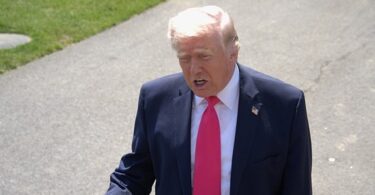
Trump Says US Will Win Iran War ‘Militarily Or On Paper’
US President Donald Trump said the United States will win the conflict with Iran either “militarily or on paper,” referring to the fitful negotiations with Tehran, and he suggested he could meet with Iran’s reclusive supreme leader “if it was to make a deal.”
“We’re going to win one way or the other,” Trump told reporters at the White House on June 4.
“It’s going to be militarily or on paper.”
Trump also said he had no desire to meet with Iranian Supreme Leader Mojtaba Khamenei, who has not been seen since the outbreak of violence on February 28 and was reportedly seriously injured in US-Israeli air strikes.
US President Trump delivers remarks in the Oval Office at the White House on June 4.
However, Trump added if the two sides reached a deal, it was possible the two leaders would meet and added: “If it happened…I’d be respectful.”
“I don’t want to meet, but if I did meet, I’d be honored to meet him,” Trump said.
“But if we make a deal, it’s possible that I would meet him. I’d be OK with that.”
Trump was speaking at the White House on June 4 to reporters on a wide variety of subjects, including the Ukraine war, Cuba, and global trade issues.
Read morehere.
Share
Copy link
Facebook
X (Twitter)
LinkedIn
Email
Share
21:14
4.6.2026
Rubio Condemns Iranian Attack On Kuwait
US Secretary of State Marco Rubio has condemned Iran’s “outrageous and unacceptable” attacks on Kuwait’s international airport that killed one person and injured 63.
According to astatementfrom the US State Department, during a meeting with Kuwaiti Foreign Minister Jarrah Jaber Al-Ahmad Al-Sabah in Washington, Rubio condemned “Irans outrageous and unacceptable attacks targeting Kuwait International Airport and other parts of the country.”
According to the statement, Rubio also expressed condolences “for those killed and injured in that attack.”
Kuwaiti officials said Iran launched 30 ballistic missiles and drones in the strike. One Indian citizen was killed.
The attacks, which the authorities in Kuwait described as “brutal,” forced the closure of Kuwait International Airport and also damaged “vital installations,” including diplomatic missions.
Iran has denied responsibility for the attack, saying a US Patriot missile was responsible.
CENTCOM, the US Central Command, has denied the claim.
Share
Copy link
Facebook
X (Twitter)
LinkedIn
Email
Share
19:29
4.6.2026
IAEA Urges Tehran To Engage On Iran’s Nuclear Material
The International Atomic Energy Agency (IAEA) called on Tehran to engage “constructively” with the agency regarding the country’s nuclear material, according to a confidential report cited by Reuters and AFP on June 4.
“While the agency acknowledged that the military attacks on Iran’s nuclear facilities and sites have created an unprecedented situation, it is critical for the agency to conduct verification activities in Iran without delay,” the IAEA said.
The nuclear watchdog has not had access to some of Iran’s key nuclear facilities since the start of the 12-day war involving Israel, the United States, and Iran a year ago, which included attacks on Iran’s nuclear sites.
The report comes as a fragile cease-fire between the United States and Iran hangs in the balance amid stalled negotiations that are about to enter their third month without yielding any concrete results.
While details of the current negotiations remain uncertain, the matter of Iran’s nuclear ambitions and the fate of the country’s enriched uranium remains in the spotlight.
US President Donald Trump, who has said there has been positive momentum in talks in recent days, said Tehran had made a major concession by stating that it would not seek to obtain a nuclear weapon.
On the state of the negotiations, Iranian Foreign Minister Abbas Araqchi has warned against “speculation,” saying Tehran could not assess the negotiating process until there was a clear outcome.
Share
Copy link
Facebook
X (Twitter)
LinkedIn
Email
Share
10:17
4.6.2026
Kuwait Releases Images Of Attack On Airport
Kuwait’s Civil Aviation Authority released images of a drone attack on the country’s international airport that took place on June 3.
CCTV footage from the airport’s interior and exterior shows a kamikaze drone crashing into the roof of a terminal, causing a large explosion.
Kuwait says one person was killed and more than 60 were injured in the attack. The deceased was an Indian national, and India’s Foreign Ministry said several other Indian citizens were also injured in the attack.
Interior Minister Sheikh Fahd Yousef Saud Al-Sabah called the attack “a heinous Iranian aggression” during a visit to the Terminal 1 building of Kuwait International Airport.
Tehran says the attacks on Kuwait and Bahrain were in response to the US military’s attack on an oil tanker en route to Iranian ports, as well as an attack on an Islamic Revolutionary Guards Corps communications tower on Qeshm Island.