New posts
10:57
US, Iran Indirect Talks Under Way In Doha
Indirect technical talks between Washington and Tehran are under way in Doha, with Qatar and Pakistan serving as mediators, a source with direct knowledge of the discussions told Reuters on July 1.
US envoy Steve Witkoff and Trump’s son-in-law Jared Kushner are not attending the talks themselves, the source said. The pair met with Qatar’s prime minister and Qatari Foreign Minister Sheikh Mohammed bin Abdulrahman Al-Thani on June 30 to lay the groundwork for the technical talks.
“The meeting discussed developments in the ongoing talks between the United States and the Islamic Republic of Iran within the framework of the memorandum of understanding (MoU) between the two parties,” Qatar’s Foreign Ministry said in apost on X.
The trio also addressed the latest regional developments, particularly cease-fire in Lebanon.
Earlier, Iran said it would meet with Qatari mediators on July 1, adding that Iranian officials were set to travel to Doha.
Meanwhile, Qatar’s Foreign Ministry said that no high-level meetings between US and Iranian officials are scheduled in Doha in the coming days.
“To the best of my knowledge, there are no direct meetings scheduled between the two parties in the coming days,” Qatari Foreign Ministry spokesman Majed Al Ansari told reporters on June 30.
With reporting by Reuters and AFP
SEE ALSO:
Qatar Says No High-Level US-Iran Talks Scheduled In Doha Despite Trump Claim
Share
Copy link
Facebook
X (Twitter)
LinkedIn
Email
Share
10:14
Iran Exported 50 Million Barrels Of Oil In Past Two Weeks, Says Monitor
Vessels in the Strait of Hormuz near the beach of Bandar Abbas, Iran, on June 30
Tanker Trackers, a company that tracks and monitors oil tankers, has released new information indicating that Iran has exported 50 million barrels of crude oil in the past two weeks since the United States lifted its naval blockade of Iranian ports.
Based on this figure, Iran exported 1.66 million barrels per day of oil in June, the company said.Tanker Trackerssays exports from most other countries in the region are still nowhere near pre-war levels.
Mohammad Baqer Qalibaf, speaker of Iran’s parliament and head of the country’s negotiating team, also said in a TV interview on June 30 that “since the end of the US naval blockade, we have exported more than 40 million barrels of oil.”
In this interview, Qalibaf also called the US naval blockade of Iranian ports, which began after the cease-fire in April, “the most severe type of war,” which, he said, had besieged “the people and the people’s bread.”
In this regard, US Treasury Secretary Scott Bessent said on June 29 that despite the lifting of sanctions on Iranian oil by the United States, no country except China has purchased Iranian oil at a discount, and other countries have not yet started purchasing Iranian oil due to concerns about the return of US sanctions.
Share
Copy link
Facebook
X (Twitter)
LinkedIn
Email
Share
10:03
Vance Says US Prepared To Use Force Against Iran If Diplomacy Fails
US Vice President JD Vance has again signaled that the White House is prepared to use force against Iran if diplomacy fails, raising the stakes around a 60-day memorandum of understanding (MOU) that has halted open hostilities but left the core disputes unresolved.
In an interview on The Michael Knowles Show released on June 30, Vance cast the US approach toward Iran as a stark choice: a longer-term agreement anchored in permanent, verifiable nuclear inspections, or renewed military action to preserve what Washington sees as gains already secured. He said President Donald Trump wants diplomacy to continue but only if Tehran accepts enforceable limits on its nuclear program.
Vance described Iran’s public messaging as contradictory, pointing to what he said was a gap between Tehran’s public denial of peace talks and its acknowledgment of ongoing technical discussions.
“They’ll say, ‘No, no, there aren’t peace talks ongoing, but there are technical talks between the United States and Iran about the peace deal,'” Vance said. “It’s a Persian negotiating tactic and a Persian rhetorical device that I don’t understand.”
Responding to critics who have urged a harder military line, Vance defended Trump’s approach as one of calibrated coercion rather than open-ended escalation. “The president is saying, ‘I’m willing to drop bombs,’ and he’s clearly shown that he’s willing to drop bombs, but only if it serves an objective,” he said.
To read the full report, clickhere.
Share
Copy link
Facebook
X (Twitter)
LinkedIn
Email
Share
09:58
US Keeps Military Option Alive As Iran Talks Near A Critical Test
In Washington, analysts warn the current arrangement amounts less to a peace agreement than a temporary pause in fighting. That tension between diplomacy and deterrence was at the center of a discussion at the Council on Foreign Relations (CFR) on June 30.
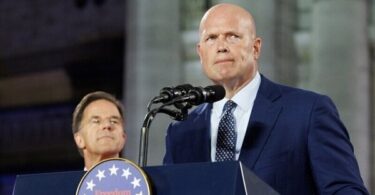
Speaking at the CFR panel, retired General Joseph L. Votel — former Commander of US Central Command (20162019) — said US forces remain capable of sustaining deterrence through the current 60-day negotiation period. This comes even as Washington reassesses the vulnerabilities exposed by the recent conflict.
Votel noted that Washington retains significant operational flexibility because of its naval presence, particularly through two carrier strike groups operating in regional waters.
“Right now we are sustainable from a military standpoint,” Votel said, while cautioning that maintaining such a posture becomes harder “after several months.”
For Elisa Catalano Ewers, senior fellow for Middle East Studies at the CFR, the larger challenge is fundamentally political.
She noted that while the Gulf states bore the brunt of Iran’s attacks during six to seven weeks of hot conflict, the subsequent pause in fighting has done little to resolve the “core issues” driving regional instability, specifically Iran’s ballistic missile capabilities, drone networks, and proxy forces, which were left out of the current memorandum of understanding.
To read the full report, clickhere.
Share
Copy link
Facebook
X (Twitter)
LinkedIn
Email
Share
08:21
Vance: US Needs To See Iran Is ‘Serious’ About Talks
US Vice President JD Vance
US Vice President JD Vance said Washington would judge Tehran by its actions rather than its rhetoric, saying the purpose of the negotiations was to determine whether Iran was willing to make meaningful concessions.
“Part of what we’re trying to do in this negotiation is to see how serious they actually are,” Vance told Fox News. “And to be serious, they’ve got to not just say the right things. They’ve got to make real concessions.”
“We care a lot less about what the Iranians say. We care a lot more about what they do,” he said. “The thing I’ve learned from the president of the United States is whether friend or foe, you shouldn’t trust anybody, you should trust people’s actions,”
“If they act in the right way, if they behave in the right way, they get a lot of benefits.”
Vance said the administration was seeing both positive and negative signals from Iran and would continue following President Donald Trump’s direction in the negotiations.
He added that even if diplomacy failed, Washington believed it had already achieved its principal objective.
“If… the Iranians don’t behave, if they don’t make the concessions in the negotiations that we need to see, their nuclear program is still destroyed, their conventional military is still destroyed, and the United States is still in a much stronger position relative to the Iranians,” he said.
“We have all the cards in the negotiation. We obviously want it to be successful, but even if it’s not successful, we’ve accomplished the core mission, which is to ensure that the Iranians never have a nuclear weapon.”
Share
Copy link
Facebook
X (Twitter)
LinkedIn
Email
Share
00:09
We are now closing the live blog for the day. We’ll be back at 7:30 a.m. Central European time to cover the latest events across the Middle East.
Share
Copy link
Facebook
X (Twitter)
LinkedIn
Email
Share
23:16
30.6.2026
Qatar Vows To Keep Dialogue Alive, As Iran Refuses To Meet US Envoys
Qatar’s Foreign Ministry spokesman, Majed Al Ansari speaks during a weekly press briefing at the Ministry of Foreign Affairs in Doha.
Visiting US envoys Jared Kushner and Steve Witkoff have held talks with Qatari Prime Minister and Foreign Minister Sheikh Mohammed bin Abdulrahman Al-Thani on June 30 to discuss pressing regional crises, primarily technical-level negotiations with Iran.
During a weekly briefing, Qatari Foreign Ministry spokesperson Majed bin Mohammed Al Ansariclarifiedthat while the American delegation met with Qatari mediators, no direct, high-level US-Iran meetings are currently underway. Instead, technical delegations from both sides continue, alternating between Doha and other locations to preserve a communication mechanism established since earlier talks in Switzerland.
Al Ansari noted that despite recent escalations, Qatar is working to contain the situation around recent military incidents in Hormuz. Technical talks are actively addressing the waterway traffic as well as Iran’s nuclear program, he said. Furthermore, the first phase of regional understandings is focusing heavily on mine clearance and maritime safety in the strait, coordinated closely with Oman.
The ministry also confirmed that frozen Iranian funds linked to a 2023 agreement remain untouched in Qatari accounts, with any future release strictly dependent on bilateral progress and the ongoing mediation track.
Share
Copy link
Facebook
X (Twitter)
LinkedIn
Email
Share
22:08
30.6.2026
Iran ‘Not Negotiating’ With US, Says Chief Negotiator
Iran is currently not negotiating with the United States at all, said Mohammad Baqer Qalibaf, the parliament speaker and chief negotiator.
In an interview with state TV on June 30, Qalibaf said Tehran will not enter further negotiations until Washington implements all the clauses in a memorandum of understanding (MoU) the sides signed on June 17 aimed at ending the war, which is nearing its fifth month.
Iranian officials have in recent days called for the release of billions in frozen Iranian assets held abroad as well the end of Israels attacks on Lebanon — key elements of the interim deal.
Tehran has said an Iranian technical team will visit Qatar but will not meet a US delegation that arrived in the Gulf country on June 30.
Qalibaf said that Iran was prioritizing diplomacy with the United States but remained ready for war.
We are pursuing dialogue, but if the dialogue is not implemented, we are also prepared for war and will respond accordingly, he said.
Share
Copy link
Facebook
X (Twitter)
LinkedIn
Email
Share
20:31
30.6.2026
Iran Spying On Opposition Activists, Says German Intelligence
Iran is among three countries spying on opposition activists living in Germany and seeking to penetrate state institutions, the European countrys domestic intelligence agency (BfV) said in its annual report published on June 30.
The BfV’s report named Iran, Pakistan, and Morocco as countries that have employed human sources in Germany to secure information.
These countries are also seeking to influence German politics, media, and administrative bodies using “clandestine methods,” the report said.
For those in power in Iran, these groups are seen as a threat to the continuation of their rule, which is why they violently suppress domestic protest and persecute these groups and individuals abroad, the report added.
Following Israels 12-day war against Iran in June 2025, Iranian intelligence services have spied on Jewish organizations and their supporters in Germany and Europe, the report said.
Share
Copy link
Facebook
X (Twitter)
LinkedIn
Email
Share
19:33
30.6.2026
Traffic In Strait Of Hormuz Picks Up
Maritime traffic in the Strait of Hormuz, a key artery for global oil and gas supplies, picked up on June 29 after a lull over the weekend, which saw an attack on a Qatari tanker that prompted a US military response.
According to data from the maritime tracking firm Kpler, 40 vessels entered and exited the strait on June 29, including at least nine supertankers.
Kpler said 29 commodity vessels crossed the waterway on June 27 and 15 transited on June 28.
That marked a significant drop from last week, when Iran and the United States signed a memorandum of understanding that reopened the critical waterway for international shipping.
On June 24, there were 70 crossings, the highest number since the United States and Israel launched a war against Iran on February 28.
In response to the war, Tehran effectively closed the Strait of Hormuz, a move that sent international oil and gas prices soaring and upended the global economy.
Share
Copy link
Facebook
X (Twitter)
LinkedIn
Email
Share
Load more