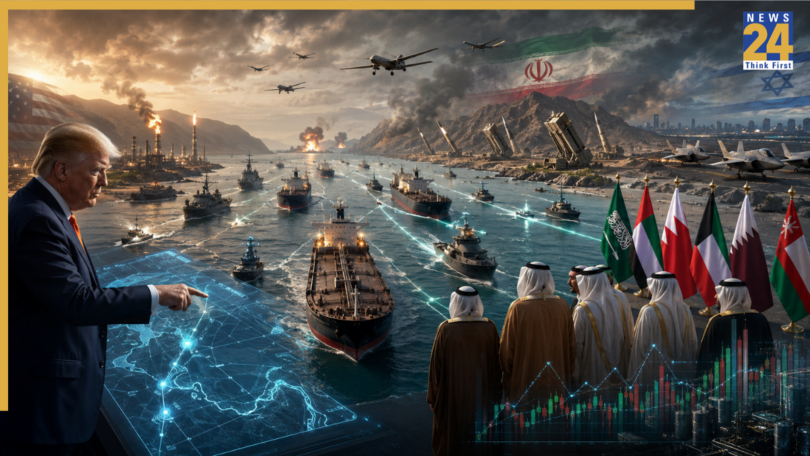
The ongoing conflict between the United States and Iran has entered a new phase, but one major regional player has so far stayed away from direct involvement Israel. While tensions continue to rise across the Middle East, Israeli leaders have indicated that they currently have no plans to join the US military campaign. Military analysts believe the conflict is increasingly centred on control of the Strait of Hormuz, one of the world’s most important oil shipping routes.
Why is Israel staying away from the latest conflict?
Israeli Finance Minister Bezalel Smotrich has said that Israel has no intention of joining the current US military campaign against Iran. According to him, the existing confrontation between Washington and Tehran, along with continued economic pressure on Iran, is already serving Israel’s strategic interests.

At the same time, Israeli media reports have claimed that the Trump administration informed Israel about the possibility of a major escalation with Iran. Reports suggest Israel has strengthened its defensive preparedness against possible Iranian retaliation but may avoid launching fresh attacks unless directly targeted.
Experts say Strait of Hormuz is at the centre of the conflict
Former Indian Navy officer and military analyst Captain Shyam Kumar believes the Strait of Hormuz has become the key objective in the current conflict. According to his assessment, the United States has been preparing for such a confrontation for several years and its broader strategic focus is securing maritime routes in the Gulf region.

Captain Kumar argued that planning for the current military campaign began well before President Donald Trump returned to office. He also pointed to the appointment of Admiral Brad Cooper as head of US Central Command (CENTCOM), describing it as part of a larger effort to strengthen American naval operations in the Middle East.
These views represent the analyst’s interpretation and have not been independently verified.
Role of Admiral Brad Cooper and regional alliances
Admiral Brad Cooper previously commanded US naval forces in Bahrain, where he oversaw maritime security operations and efforts to curb arms smuggling in the Gulf.
According to Captain Kumar, the United States has also expanded military cooperation with several Arab countries through joint naval exercises and regional security partnerships. He believes these alliances have strengthened the US position in protecting commercial shipping routes and maintaining security around the Strait of Hormuz.
The United States has not publicly stated that taking control of the Strait of Hormuz is its official military objective.
Can the US defeat Iran?
Military experts caution that Iran still possesses significant military capabilities despite sustained pressure. Analysts quoted by international media say Iran continues to maintain a large missile and drone arsenal capable of targeting military assets across the region.
Some experts believe Iran has improved the accuracy of its missile and drone systems and remains capable of sustaining prolonged military operations. They argue that any large-scale ground operation inside Iran could become lengthy and highly challenging.
As fighting continues, uncertainty remains over how long the conflict will last and whether it could expand further. While strategic analysts continue to debate the ultimate objectives of both sides, the Strait of Hormuz remains one of the most closely watched locations in the ongoing US-Iran confrontation.
First published on: Jul 23, 2026 08:19 PM IST
Get Breaking News First and Latest Updates from India and around the world on News24. Follow News24 on Facebook, Twitter.
End of Article
Related Story