
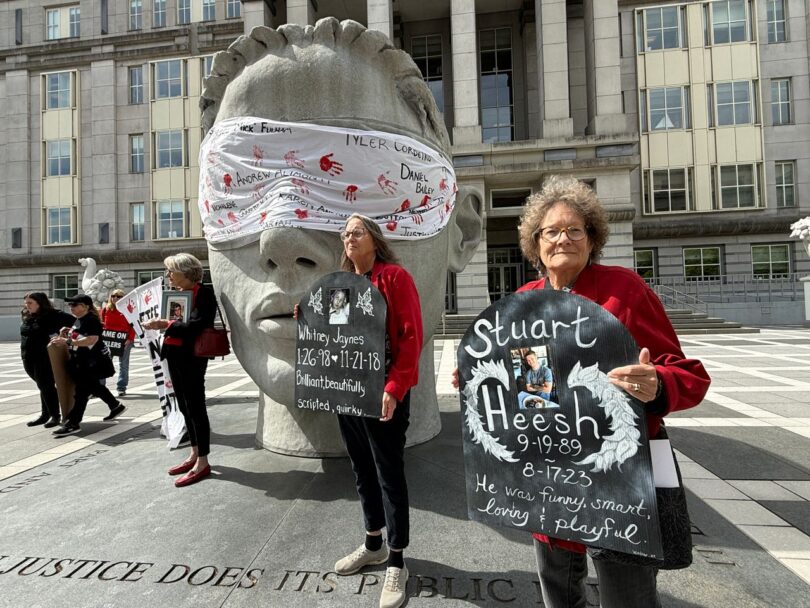
Dozens of victims of the US opioid crisis have expressed their grief and anger as they testified against Purdue Pharma, the maker of the pain pill OxyContin, which was ordered to pay billions by a judge ahead of its dissolution.
Between 1999 and 2023, around 806,000 people died from opioid overdoses in the United States, according to government data.
Purdue and other opioid makers and distributors are accused of aggressively marketing prescription painkillers like OxyContin starting in the 1990s while hiding how addictive the drugs are.
Among the victims of the opioid epidemic was the mother of a teenage boy.
“Because my mom died, I had depression and thoughts of killing myself,” the son told the court in an emotional testimony via video call on Tuesday, sitting next to his father.
“I hope you feel guilty,” he told the Sackler family, which owned Purdue for decades.
The family and company are due to pay more than $8 billion in fines, forfeitures and penalties.
The hearing to conclude a Department of Justice probe was originally scheduled to take place remotely, but US Judge Madeline Cox Arleo moved it to an in-person hearing after seeing protesters outside her courthouse in Newark, New Jersey.
“That’s the least I could do,” the judge told a victim who thanked her.
On Tuesday, some 40 victims and their families attended the hearing, with more joining online. Their testimonies, which Arleo described as “heartbreaking”, ran for more than six hours.
Related
‘Hole in our family’
Alexis Pleus’s son was prescribed OxyContin after suffering a high school football injury.
He died in 2014 from a heroin overdose, leaving a “gaping hole in our family for eternity”, said Pleus.
Those who survived addiction spoke of their “guilt” of being alive, while families of those who died blamed themselves for not having done enough.
Many painted a picture of “destroyed” lives: divorces, losing custody of their children, prison, psychiatric hospitals, and astronomical medical bills in the hope of regaining “a normal, meaningful life”.
The wives of two men who died recalled losing their homes. One of them said she suffered from post-traumatic stress disorder.