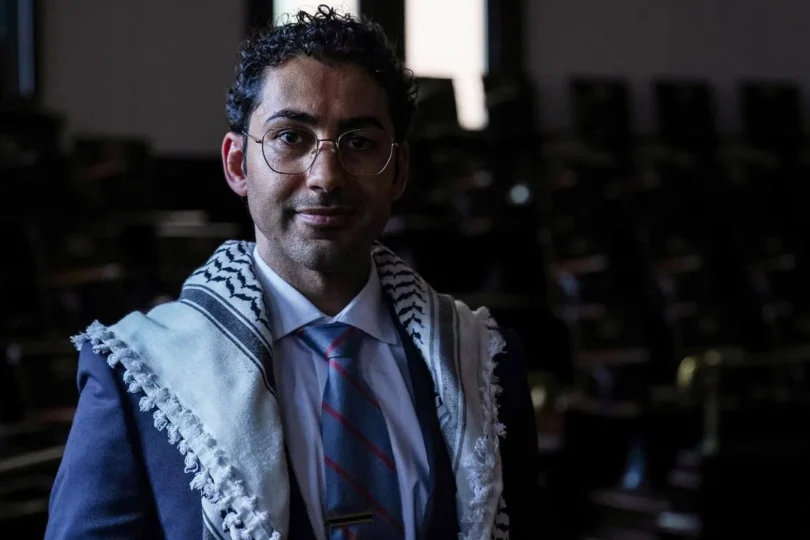
WASHINGTON – The US Board of Immigration Appeals has reinstated deportation proceedings against pro-Palestinian student Mohsen Mahdawi, according to a court filing from his lawyers.
A US immigration judge in February had rejected efforts by US President Donald Trump’s administration to deport the Columbia University student, who was arrested in 2025 following his participation in pro-Palestinian protests.
Ms Nina Froes, the Chelmsford, Massachusetts-based immigration judge who blocked the Trump administration’s efforts to deport Mr Mahdawi, was fired in April.
The Board of Immigration Appeals, part of the Department of Justice’s Executive Office for Immigration Review, overturned Ms Froes’ decision.
Mr Trump alleges activists like Mr Mahdawi are antisemitic, support extremism and threaten US foreign policy.
Activists, including some Jewish groups, say the government conflates criticism of Israel’s assault on Gaza and its occupation of Palestinian territories with antisemitism, and advocacy for Palestinian rights with support for extremism.
“The government continues to weaponise the immigration system to silence dissent,” Mr Mahdawi said in a statement shared by his legal team on April 6.
Mr Mahdawi, born and raised in a refugee camp in the Israeli-occupied West Bank, was arrested in April 2025 upon arriving for an interview for his US citizenship petition.
He was released after two weeks in detention following a judge’s order and was never charged with a crime.
The American Civil Liberties Union, which represented Mr Mahdawi, says the government cannot deport him for the moment as his arrest was still being challenged in federal court.
Mr Trump has cracked down on pro-Palestinian movements by attempting to deport foreign protesters, threatening to freeze funds for universities where protests were held and scrutinising immigrants’ online speech.
The crackdown has led to free speech, due process and academic freedom concerns from rights experts.
US colleges have seen campus movements against Israel’s war in Gaza since late 2023. Demonstrations peaked in 2024.
While the intensity of the movements has declined since then, there have been occasional flashes.
Over the weekend, University of Michigan professor Derek Peterson praised pro-Palestinian protesters in a spring commencement programme, prompting the university to issue an apology.
On May 6, Rutgers University said it withdrew an invitation to pro-Palestinian business leader Rami Elghandour, a critic of Israel, for a graduation speech next week. REUTERS