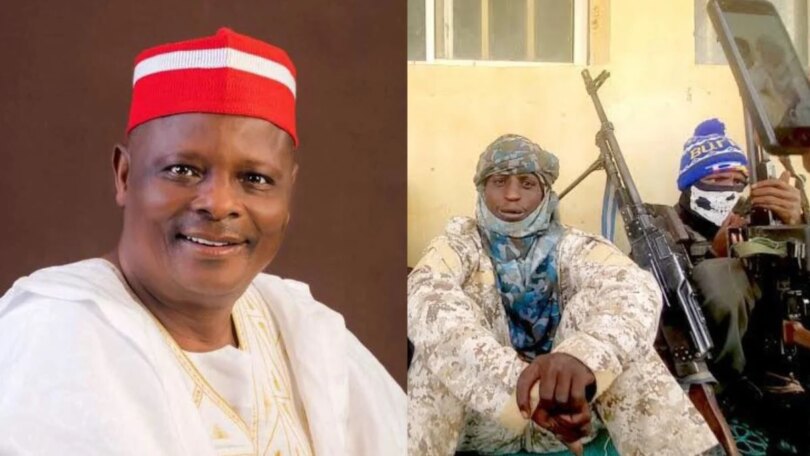
Rabiu Kwankwaso, running mate to the Nigeria Democratic Congress (NDC) presidential candidate, Peter Obi, has disclosed that an Obi-led administration would be willing to engage terrorists in dialogue as part of strategy to tackle insecurity across the country.
Kwankwaso made the disclosure during an interview on Channels Television on Monday, where he spoke on the security challenges facing Nigeria and the measures his party intends to adopt if elected in the 2027 presidential election.
According to him, insecurity has continued to thrive in many parts of the country because local communities often possess vital information about criminal activities but are reluctant to share such intelligence with security agencies.
He argued that residents in affected communities usually know those behind attacks, their locations and their activities, but years of distrust have weakened cooperation between the public and security institutions.
“You see, all these things that are happening today, if you go to localities, those places that these insecurities are happening, I can tell you people know almost everything,” he said.
Kwankwaso maintained that many citizens no longer have confidence in the system due to previous experiences where information supplied to security agencies allegedly failed to produce results or exposed informants to danger.
“They know their locations, they know the names of all those involved, and so on and so forth.
“But what is happening now is many of the communities are even afraid to go forward and tell the security agencies or agents of what is actually happening.
“Because many of them have done that in the past, and of course, they did not enjoy it.”
The former Kano State governor said restoring trust between communities and security agencies would form a major part of the administration’s security agenda.
He explained that encouraging citizens to freely share intelligence would help authorities respond more effectively to threats and criminal activities across the country.
Kwankwaso also stated that dialogue would be considered as one of the tools available to government in addressing insecurity.
According to him, engaging individuals involved in criminal activities could help discourage violence and create opportunities for lasting peace in troubled areas.
“So we will give people confidence. We will work on the people, even the terrorists, and of course, the criminals themselves, to see what can be done really to discourage their action,” he said.
Pressed on whether such an approach would amount to negotiating with terrorists, Kwankwaso answered in the affirmative, insisting that communication should not be ruled out in efforts to restore peace.
“When asked if he would negotiate with terrorists, Kwankwaso responded, “Of course, we will talk to everybody.”
He, however, stressed that dialogue would not replace the operations of the military and other security agencies. He noted that government would continue to deploy force whenever necessary to protect lives and maintain law and order.
“And of course, if there is any issue that will require the services of the military or other security agencies, I can tell you, we will be very happy to do it.”