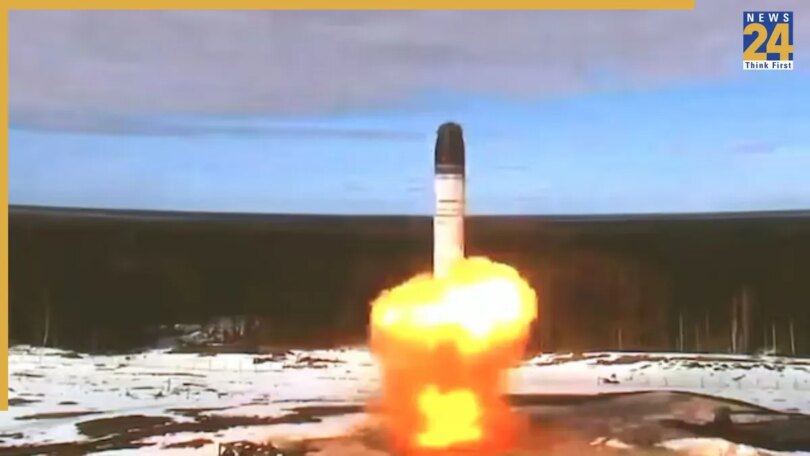
Nuclear weapons remain the most destructive arms ever created, but Russia possesses a unique system that makes its nuclear arsenal even more fearsome. Known as the ‘Dead Hand’ system or ‘Perimeter’ in Russian military terminology, it was designed to ensure a devastating nuclear response even if the country’s leadership is completely wiped out.
As concerns over nuclear tensions grow amid the collapse of several arms-control agreements, renewed attention is being focused on this automated system, which many experts consider one of the most frightening military technologies ever developed.
What is the ‘Dead Hand’ system?
The Dead Hand system was developed by the Soviet Union in 1985 during the Cold War as a backup nuclear command mechanism.
Read More: US launches fresh strikes on Iranian radar, drone sites after MQ-1 shootdown; IRGC claims retaliatory attack on…
Its purpose is simple but chilling: if Russia suffers a massive nuclear attack that destroys Moscow and kills the country’s top leadership, including the president, defence officials and senior military commanders, the system can still launch a retaliatory nuclear strike.
In essence, it was created to guarantee that no enemy could eliminate Russia’s ability to respond to a nuclear attack.
How the system detects a nuclear strike
Russia maintains an extensive network of sensors on the ground and in space to monitor potential nuclear activity.
These sensors continuously track radiation levels, seismic activity, blast pressure waves and sudden flashes of intense light that may indicate nuclear explosions.
Read More: Ranveer Singh’s Dhurandhar made Dawood Ibrahim angry, then D-Company decided to…, sources reveal chilling details
If communication with Russia’s command structure is completely lost and the sensors confirm a nuclear attack, the system can activate automatically from a highly secure command facility reportedly located beneath the Ural Mountains.
How the retaliatory launch works
Once activated, special command missiles are launched into the sky. These missiles do not carry nuclear warheads; instead, they transmit launch codes to Russia’s nuclear forces across the country.
The codes are then relayed to nuclear missiles stationed in silos, mobile launch platforms and submarines, enabling them to carry out a retaliatory strike even without direct orders from surviving leaders.
Read More: Bad news for Shehbaz Sharif, Asim Munir as bankrupt Pakistan spends nearly multimillion dollar every month in Washington for…
The concept behind the system is based on deterrence: ensuring that any nation attacking Russia with nuclear weapons would also face devastating consequences.
Why the system concerns other countries
The Dead Hand system is often described in the West as a ‘fail-deadly’ mechanism because it reduces the role of human decision-making once certain conditions are met.
Unlike conventional nuclear launch procedures, which require approval from political and military leaders, this system is designed to operate according to predefined conditions and automated responses.
Read More: Who was Dave Fiji? Indian-origin pilot killed in US chopper crash hours after wedding; Bride injured
Critics argue that such automation increases the risks associated with nuclear conflict, while supporters maintain that it serves as a powerful deterrent against a surprise nuclear attack.
At its core, the Dead Hand system operates on an ‘if-then’ principle. If sensors detect a confirmed nuclear attack and communication with leadership is lost, the system can initiate the process for a retaliatory launch.
First published on: Jun 01, 2026 05:25 PM IST
Get Breaking News First and Latest Updates from India and around the world on News24. Follow News24 on Facebook, Twitter.
End of Article
Related Story