Washington, DC — The US Department of Justice (DOJ) has established a $1.776 billion fund to compensate individuals who claim they were victims of politically motivated investigations and prosecutions.
The initiative stems from a settlement resolving US President Donald Trump’s lawsuit against the Internal Revenue Service (IRS) over the 2019 leak of his tax returns.
DOJ says there are no “partisan requirements” to seek compensation.
The anti-weaponisation fund will remain in place until December 15, 2028, after which any remaining balance from the original $1.776 billion will return to the federal government
Origins of the fund
The fund, officially named the “Anti-Weaponisation Fund,” was created as part of an agreement in which Trump and his family dropped a $10 billion lawsuit against the IRS.
In return, the DOJ established a compensation mechanism using funds from the government’s Judgment Fund, which is set up to pay legal judgments and settlements involving the US federal government.
Trump’s original suit accused the IRS of failing to protect his and his family’s tax information from unauthorised disclosure.
Under the new settlement, the Trump family receives no direct monetary payout but secures a formal apology and protection from certain past tax audits.
The broader fund addresses what the administration describes as widespread “lawfare” by previous US administrations.
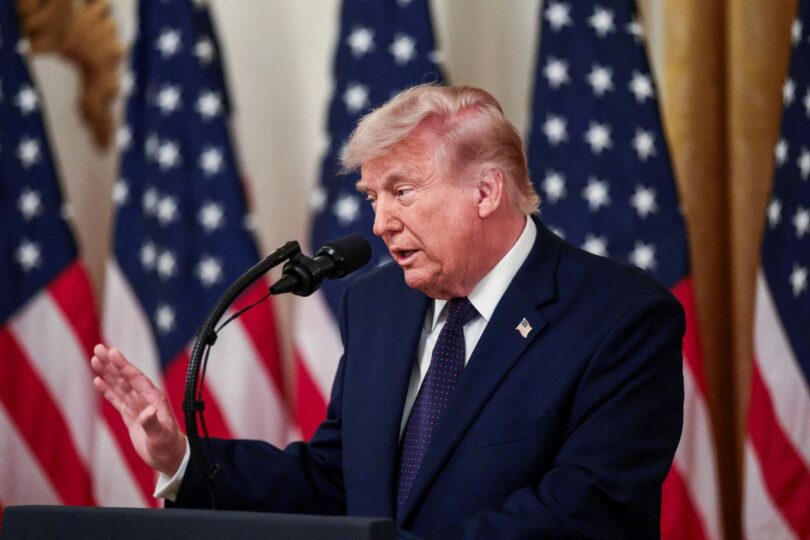
“This is reimbursing people that were horribly treated, horribly treated. It’s anti-weaponisation. They have been weaponised. They have been, in some cases, imprisoned wrongly. They paid legal fees that they didn’t have. They have gone bankrupt. Their lives have been destroyed,” Trump said regarding the fund.
US Vice President JD Vance also weighed in on the issue, “We’re trying to compensate people where the book was thrown at them, they were mistreated by the legal system… We’re going to evaluate these things on a case-by-case basis.”
How the fund works
Nearly $1.8 billion was allocated from the Judgment Fund, with payouts determined by a review process for valid claims.
Open to anyone claiming harm from government “weaponisation,” including alleged censorship, improper investigations, or biased prosecutions.
DOJ has cited examples such as parents protesting at school boards, individuals affected by online speech restrictions, and others targeted by federal agencies.
Paul Figley, a noted legal scholar and former DOJ staffer, notes that the fund is not new. “Obama administration’s use of the Judgment Fund in class action suits for discrimination in Department of Agriculture civil loan programmes struck me as really bad policy.”
Managed through a process established by the Attorney General, with quarterly reports on distributions, Trump, his family, and businesses are excluded from receiving payments.