And then, drifting through that street noise, I hear something that stops me: a clarinet.
Not background music — real playing, with confidence and emotion. And here, that matters. In Ordu, the clarinet isn’t just an instrument. It’s part of the city’s cultural reputation.
This is where the story becomes unexpectedly specific.
Ordu is closely associated with one of Türkiye’s most famous clarinet makers, a craftsman whose instruments became widely respected and helped shape the sound of Turkish music.
His legacy is so significant that a clarinet festival is now held here each year — not as a tourist gimmick, but as recognition of a real tradition.
I visit the workshop connected to that legacy, now carried forward by his family. The story I hear is one of skill built from modest beginnings — a craftsman born into a family of hazelnut farmers, teaching himself, developing his craft, and eventually gaining recognition far beyond his hometown.
Instrument-making is an art you only fully understand when you see what goes into it: the precision, the time, the patience.
A clarinet looks simple from a distance, but it’s made up of careful measurements and delicate parts that must work perfectly together. In a workshop like this, you realise that music doesn’t begin with the musician.
Related
It begins with the maker.
And when someone plays one of these instruments, even briefly, you can hear the purpose of all that work — tone, warmth, clarity.
It’s a reminder that cultural traditions don’t survive on nostalgia alone. They survive because people keep practising them, refining them, and passing them on.
Food for thought
By now, I’m hungry again — and if you want to understand a region in Türkiye, food is often the most direct route.
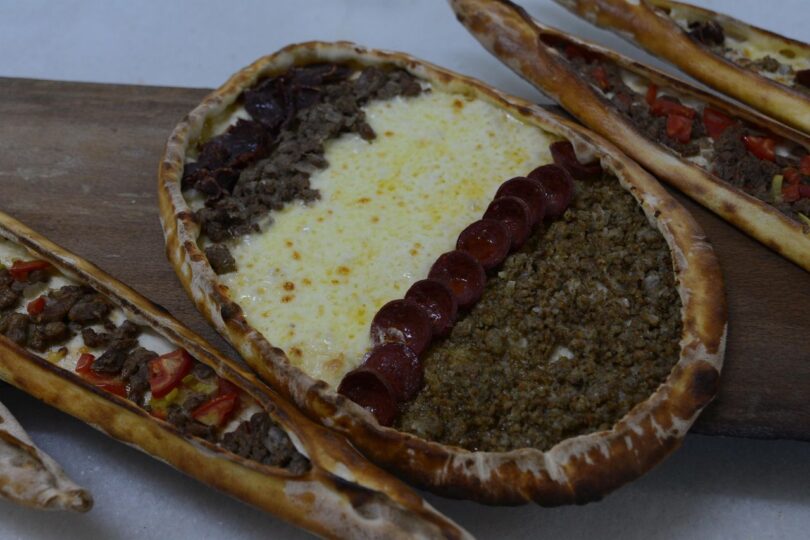
So I go looking for something that belongs to the Black Sea. And that brings me to pide — a long, boat-shaped flatbread baked in a stone oven, usually topped with ingredients like minced meat, cheese, or egg.
Pide matters here because it’s not just “something to eat”. It’s a regional staple with local variations, and it reflects how people in the Black Sea region cook: warm bread, simple ingredients, strong flavours, and food designed for sharing.
A local baker, Hakan, walks me through the options — more than I expected.
Some versions are richer, some simpler, but the fundamentals remain the same: crisp edges, soft centre, and that unmistakable oven-baked smell that makes waiting almost impossible.
You can eat a lot of things in Ordu, but if you leave without trying pide, you’ve missed a piece of everyday culture.
And then comes one of the city’s most popular experiences: the Ordu Boztepe cable car.
Cable cars in coastal cities often feel like a tourist extra, but here it’s genuinely part of how people experience the place.
Boztepe sits above the city, and going up gives you the geography in one glance: the Black Sea stretching out in front, the city laid along the shore, and the green hills rising behind it.
From up there, the name ‘Black Sea’ starts to make sense in a different way. The water can look calm one moment and dramatic the next. The weather shifts quickly. The sea sets the tone.
Back down at sea level, Ordu has a long promenade that locals use every day — not only for visitors, but for walking, meeting friends, and spending time outside. It’s part of the city’s relationship with the coast: the sea isn’t a backdrop here. It’s part of daily life.
And just outside the city, there are more layers still — places like Kurul Castle, which ties the area to older histories that many travellers don’t associate with the Black Sea coast, and newer attractions like Ordu Chocolate Park, showing how the province also invests in family-friendly spaces and local tourism.
What stays with me most, though, is how many identities Ordu holds at once.
It’s an agricultural centre with global connections through hazelnuts. It’s a coastal city with modern energy.
It’s a place that preserves its historic buildings and still finds new uses for them. And it has cultural stories — like clarinet-making — that you would never guess from the outside.
That’s the real pleasure of travelling in Türkiye: the places that surprise you are often the ones that teach you the most.