On April 13, the Israeli platform Telem published an op-ed by General Yaakov (Mendi) Or.
He is neither a human rights activist, a journalist from a “hostile” publication, nor a foreign observer.
He is a man who, for decades, was part of the very system he now describes.
He served as the Israeli government’s coordinator in the occupied Palestinian territories, commanded Israeli forces in the occupied West Bank twice, and led a division in Gaza.
Today, he is a member of the Commanders for Israel’s Security movement, an organisation comprising high-ranking retired officers.
This man is not a bystander, horrified from afar. He travels around the occupied West Bank day and night, leading tours for Israeli politicians and seeing what’s happening with his own eyes.
What he describes is not excesses, not “local excesses.” In his words, it is an institutionalised state strategy of ethnic cleansing.
What exactly is happening, in his words
Or describes four axes of simultaneous pressure on the Palestinian population: land grabs through outposts and “farms,” economic strangulation, the seizure of key government positions by “their own people” – and physical terror.
He personally visited several points in the Jordan Valley.
Related
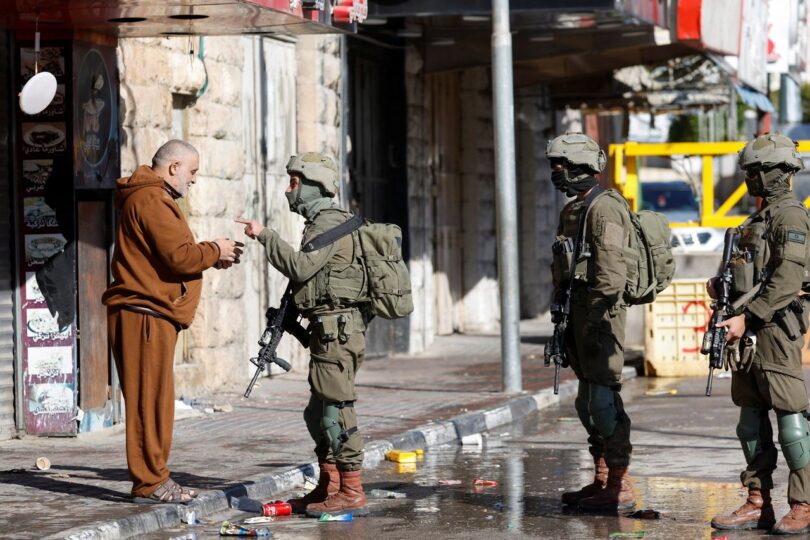
“At night, they cut off power lines and water supplies, emptied water tanks, damaged homes, and beat people. The police received numerous complaints… Soldiers and police either didn’t show up or showed up very late. Sometimes the attackers themselves were wearing Israeli army uniforms,” Or describes the situation in Ras al-Ayn, where hundreds of people lived just two months ago.
The result is that the village is empty, with all its residents having left.
In the community of Humsa, a family’s herd—their primary source of food—was stolen during a pogrom, and one of their sons was abused, including sexual assault.
In Hamam el-Maliah, General Or describes a moment that left a group of veteran commanders in stunned silence.
They watched as a Jewish woman and three children burst into the office of a Palestinian school that had been abandoned following a recent raid.
The children began tearing up notebooks and schoolwork, chanting “The People of Israel Lives” until their voices were hoarse.
After removing the group from the building, the generals—all men who had led troops through major, difficult wars—exchanged a silent look.
In that moment, Or notes, they were all struck by the same haunting thought: they were witnessing the very same kind of ethnic violence that had been used against their own parents and families in Europe just a century ago.
The mechanics of terror
Or methodically explains how it works.
A farm or outpost is established around the community targeted for “cleansing.”
The state invests millions of shekels in infrastructure, security, SUVs (Smotrich jeeps), and herds.
Then come months of constant pressure: shepherds drive livestock, cut off electricity and water at night, steal animals, damage property, beat people, and set houses on fire.
“Each eviction operation takes several months, after which the Palestinian community is forced to leave a place where it has lived for generations,” says an Israeli army veteran.
Since the beginning of 2026, at least 10 Palestinians have been killed in this way, and approximately 270 people have been beaten and wounded.
Over the past three years, more than 30,000 people have been expelled from the occupied West Bank.
The state as an accomplice
Alongside street terrorism, the government is systematically altering the legal landscape.
In January 2026, half a billion shekels ($168 million) will be allocated to roads and infrastructure in the illegal settlements.
In February, decisions will be made to expand Israeli authority in Area C. The land registry will be published, restrictions on land sales to Jews will be lifted, and 240 million shekels will be allocated for land transfers.
A project to build thousands of housing units in Area E1 will cut the occupied West Bank in two.
Or directly names those responsible: Prime Minister Netanyahu, Ministers Katz, Smotrich, and Ben-Gvir. Shin Bet Director David Zini “refuses to define these crimes as terrorism”.
The Central Command Commander and the Chief of the General Staff, according to Or, are turning a blind eye—and this is not a coincidence but policy.
“The Israeli army and the Shin Bet have been almost entirely reluctant to prevent or stop violence, riots, and pogroms; they often turn a blind eye to them in real time; and in many cases, it appears that those in uniform—rightfully or not—are themselves complicit.”
Everyday nightmare
The fact that a man from within the system is this horrified says everything about the nightmare that has become the Palestinian reality.
Their reality isn’t sporadic violence or the “excesses of isolated extremists.” It’s a methodical, state-funded, legally and politically sanctioned campaign of displacement.
Waking up in the morning, a Palestinian family doesn’t know whether someone will come to their yard that night with sheep and clubs, whether the water will be cut off, whether their livestock will be stolen, or whether their car will be set on fire.
They only know that complaining is futile: the police won’t come, will arrive late, or will side with the attackers.
That even if a court rules in their favour on their right to live on their land, no one will enforce it. That their children will arrive at school to find other children ripping up their notebooks.
This is what is called ethnic cleansing – when people’s lives are not taken away by a single decree, but are made unbearable day after day until they themselves leave.
When a man with the pedigree of Yaakov Or—a true insider of the system—is horrified, his comparison to the pogroms of the last century is no mere rhetoric. It is a damning verdict on the era, the state, and the ideology driving Israel’s expansion.
‘I felt like a monster’: Israeli soldiers on what they did in Gaza
While generals describe ethnic cleansing in the occupied West Bank as state policy, another Israeli publication, Haaretz, publishes testimony from within the military machine itself.
These are the voices of soldiers, reservists, and officers, broken not by fear of death but by what they themselves have done—or have silently watched others do.
Experts have given this phenomenon a name: “moral trauma”.