WASHINGTON/BEIRUT/JERUSALEM – US President Donald Trump will greet Lebanese and Israeli envoys at the White House on April 23 as they meet for a second round of US-facilitated talks, with Beirut seeking to extend a ceasefire between Israel and Hezbollah, a day after Israeli strikes killed at least five people including a journalist.
The ceasefire, reached after talks between the two nations’ ambassadors to Washington last week and set to expire on April 26, has yielded a significant reduction in violence.
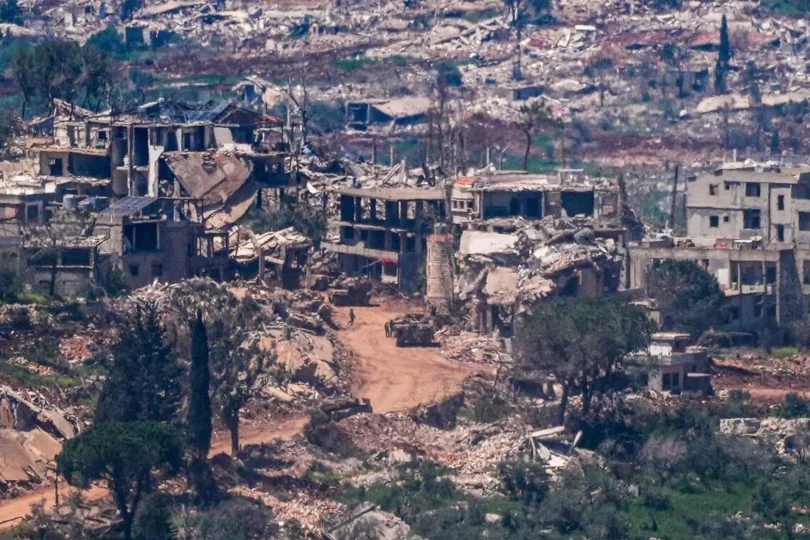
Attacks have continued in southern Lebanon, however, where Israeli troops have seized a self-declared buffer zone.
Iran-backed Hezbollah says it has “the right to resist” occupying forces.
A US official said the April 23 talks, initially set to be hosted by the State Department, were being moved to the White House and that Mr Trump would greet the ambassadors upon their arrival.
“It’s a sign of the importance that they are being given and the priority. I think there’s a feeling of optimism that the ball can move forward,” a separate source briefed on the matter said.
Lebanese President Joseph Aoun said on April 23 that Lebanon’s ambassador to the US, Ms Nada Moawad, would seek a ceasefire extension and a halt to demolitions by Israel in villages in the south.
Recent contacts with Mr Trump and Secretary of State Marco Rubio had focused on halting escalation and launching negotiations aimed at ending the state of war, securing Israel’s withdrawal from occupied territory and deploying the Lebanese army to the international border, the Lebanese presidency said in a statement.
The Israeli military said on April 23 that it killed two armed individuals in southern Lebanon after identifying them approaching soldiers and posing what it described as “an immediate threat.”
It was not immediately clear whether the incident was related to strikes reported earlier in nearby areas by Lebanon’s health ministry, which said an Israeli air strike had killed three people and artillery shelling wounded two others, including a child.
April 22 was Lebanon’s deadliest day since the ceasefire took effect on April 16.
Those killed by Israeli strikes included Lebanese journalist Amal Khalil, according to a senior Lebanese military official and her employer, Al-Akhbar newspaper.
A mourner weeping at the funeral of journalist Amal Khalil, who was killed in Lebanon on April 22 during Israeli strikes.
PHOTO: DANIEL BEREHULAK/NYTIMES
Hezbollah lawmaker Hassan Fadlallah said the group wanted the ceasefire to continue but “on the basis of full compliance by the Israeli enemy”.
At a televised press conference, he reiterated Hezbollah’s objections to the face-to-face talks and urged the government to cancel all forms of direct contact with Israel.
Hostilities between Hezbollah and Israel reignited on March 2, when the group opened fire in support of Iran in the regional war.
The ceasefire in Lebanon emerged separately from Washington’s efforts to resolve its conflict with Tehran, though Iran had called for Lebanon to be included in any broader truce.
Hezbollah said it carried out four operations in south Lebanon on April 22 in response to Israeli strikes.
Nearly 2,500 people have been killed in Lebanon since Israel went on the offensive following Hezbollah’s March 2 attack, according to Lebanese authorities.
Israel is occupying a belt of the south that extends 5km to 10km into Lebanon, saying it aims to shield northern Israel from attacks by Hezbollah, which has fired hundreds of rockets during the war.
Israel’s military reiterated a warning to residents of south Lebanon not to cross into the area.
Mr Fadlallah said full compliance with the ceasefire meant Israel must “halt assassinations, completely cease fire… halt the destruction of villages”, followed by paving the way for an Israeli withdrawal through “procedures undertaken by the Lebanese state but not via direct negotiations”.
A Lebanese official said Beirut wants a ceasefire extension as a prerequisite for talks to expand beyond the ambassadorial level to the next phase, in which Lebanon would push for an Israeli withdrawal, the return of Lebanese detained in Israel and a delineation of the land border.
Israel says its objectives in the talks with Lebanon include securing the dismantlement of Hezbollah and creating conditions for a peace deal. Israel has sought to make common cause with Lebanon’s government over Hezbollah, which Beirut has been seeking to disarm peacefully for the past year.
Israel will be represented by its ambassador to Washington, Mr Yechiel Leiter. Mr Rubio hosted the first meeting between Mr Leiter and Ms Moawad on April 14 – the highest-level contact between Lebanon and Israel in decades.

(From left) US State Department Counsellor Michael Needham, US Ambassador to the UN Mike Waltz, US Secretary of State Marco Rubio, US Ambassador to Lebanon Michel Issa, Lebanon’s Ambassador to the US Nada Hamadeh Moawad, and Israeli Ambassador to the US Yechiel Leiter at the State Department in Washington, on April 14.
PHOTO: AFP
Washington has denied any link between its Lebanon mediation and diplomacy over the Iran war.
Hezbollah says the Lebanon ceasefire was the result of Iranian pressure rather than US mediation. REUTERS