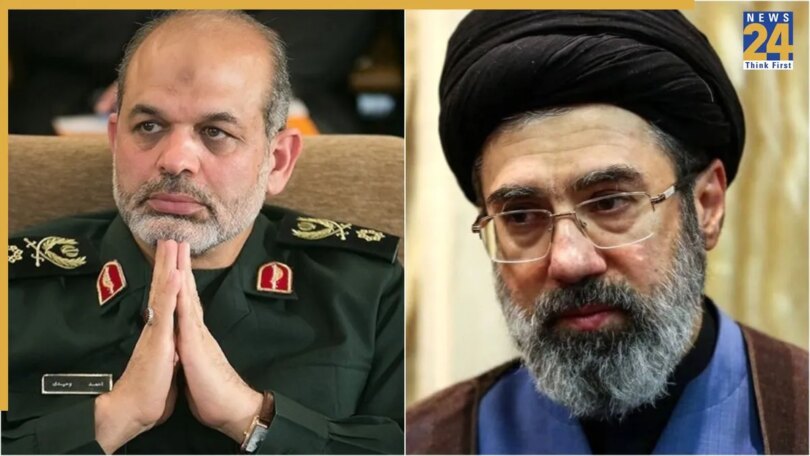
Iran’s powerful Islamic Revolutionary Guard Corps (IRGC) has allegedly taken complete control of the country’s diplomatic and military machinery, and its chief, Major General Ahmad Vahidi, has emerged as the most powerful figure in the Islamic Republic, a media report has claimed.
How Ahmad Vahidi has seized control in Tehran?
According to the New York Post and US think tank Institute for the Study of War, Iran’s military apparatus is now under the control of General Ahmad Vahidi, and is also in charge of the current peace talks with the United States.
The report claims Iran’s Supreme Leader Mojtaba Khamenei is tacitly approving the IRGC’s growing control, while top officials, including Foreign Minister Abbas Araghchi, are left powerless without any decision-making authority.
Why Iran’s power shift is impacting Strait of Hormuz?
The most dangerous impact of this purported power shift is being seen in the Strait of Hormuz as Araghchi was in favour of opening the critical seaway, but the decision was overruled by the IRGC, the report claims.
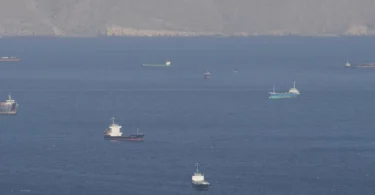
Upon Vahidi’s orders, IRGC Navy’s fast attack ships and gunboats have blocked Hormuz, targeting at least three ships in the past 48 hours. Maritime tracking data shows that shipping via Hormuz has completely stopped, with only Iranian ships using the route, though they have stayed clear of the US blockade around the straits.
What is IRGC’s position on Iran-US talks?
According to the report, Mohammad Bagher Zolgadr, a hardline leader in the Iranian delegation, is close to the IRGC, and has accused Foreign Minister Araghchi, of being “soft” in diplomacy, following which the negotiating team was recalled to Tehran, indicating that Vahidi is attempting to silence moderate voices.
The report claimed that General Vahidi had batted to include Zolghadr in the negotiating team for the first round of Islamabad talks, but Parliament Speaker Mohammad Bagher Ghalibaf and Araghchi, who led the delegation, opposed the move citing Zolghadr’s lack of diplomatic experience.
Experts believe that Zolghadr was sent to monitor the talks on behalf of the IRGC, and later complained to the Revolutionary Guards’ leadership that Abbas Araghchi had overstepped his bounds during the talks and adopted a soft stance on the “Axis of Resistance.”
This prompted the IRGC to intervene in the diplomatic negotiations, following which the the top leadership in Tehran recalled the negotiating team.
Will Iran-US war restart after ceasefire expires?
Earlier today, Iran stated that it does not plan to send a delegation to Islamabad for a new round of talks with the US after an Iranian container ship was seized by the US military last night.
In a statement, Iran’s Foreign Ministry spokesman Esmaeil Baghaei accused Washington of violating the ceasefire from the very beginning, citing US naval blockade of the Strait of Hormuz since April 13, and the overnight capture of an Iranian ship by the US military as breaches of the truce as well as international law.
According to the Institute for the Study of War, IRGC’s interference has virtually eliminated any possibility of meaningful dialogue with the US, even as IRGC-affiliated media also indicated that Iran had rejected the next round of talks, citing excessive US demands.
With Tuesday’s deadline looming, and the ceasefire threads slackening, fears have risen that a second wave of war between the US and Iran could erupt as soon as the fragile truce expires.
Who is General Ahmad Vahidi?
Born in Shiraz on 27 June 1958, Vahid Shahcheraghi better known as Ahmad Vahidi, is a hardline IRGC military commander who previously served as the deputy commander of the elite military force before being appointed as the IRGC’s commander-in-chief following the assassination of his predecessor Mohammad Pakpour during the ongoing Iran war.
Ahmad Vahidi has a a bachelor’s degree in electronics and a master’s degree in industrial engineering as well as a doctorate in strategic studies from Imam Sadegh University, and has previously served as Iran’s Interior minister from 2021 to 2024.
Vahidi, currently a member of the Expediency Discernment Council, is known for its hardline stance which aligns with Tehran’s Ayatollah regime, and publicly threatened punishment for Iranian women who broke the mandatory hijab rules.
Ahmad Vahidi is under sanctions from the United States, Canada, and the European Union for alleged involvement in terrorism and nuclear proliferation, and was charged by an Argentinian court for the 1994 attack on the AMIA Jewish Community center in Buenos Aires.