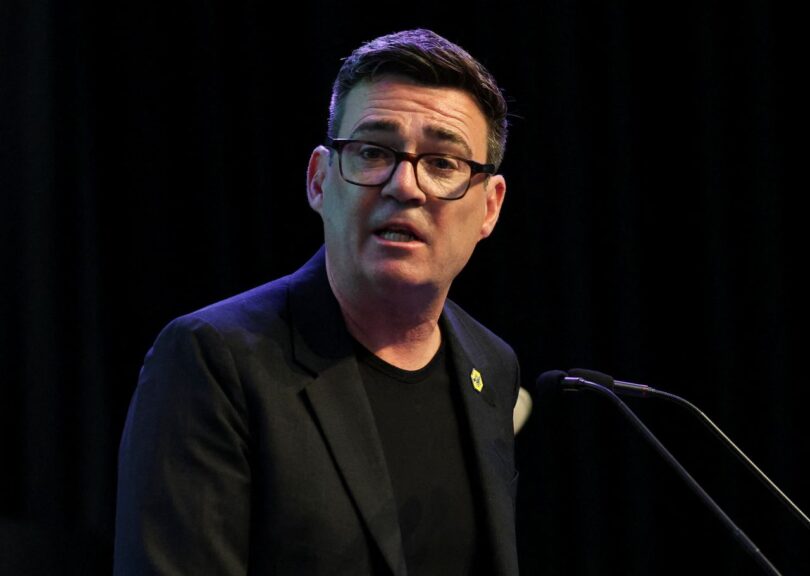
Andy Burnham, the long-serving mayor of Greater Manchester, is widely expected to become the United Kingdom’s next prime minister after Keir Starmer’s resignation triggered a leadership contest.
Burnham, 56, was born in Liverpool and studied English at Cambridge University before being elected Labour MP for Leigh in 2001.
He spent the next decade and a half climbing the Labour ranks under Tony Blair and Gordon Brown, eventually serving as health secretary.
He ran for the Labour leadership twice: in 2010 and again in 2015, when he lost decisively to Jeremy Corbyn. He reinvented himself in 2017 as Greater Manchester’s first directly elected mayor, a post he held for nine years.
As mayor, Burnham renationalised Manchester’s bus network and publicly clashed with the Conservative government over Covid-era funding for the city.
Burnham is expected to adopt a more democratic socialist agenda, says political analyst Klaus Jurgens.
“The key questions will be what that means in practice, how he intends to implement it, and whether he can keep Labour’s hard-left faction onside while doing so,” Jurgens tells TRT World.
The mechanics of his return were meticulously engineered.
A Makerfield by-election was called specifically to give Burnham a parliamentary seat from which to challenge Starmer, and he won it comfortably on 19 June, securing 54.8 per cent of the vote.
Within days, rival leadership contender Wes Streeting threw his support behind Burnham, clearing the field. Shortly after, Starmer announced his resignation.
“The fact is that Burnham, the successful former mayor of Greater Manchester, decided to run for Parliament, clearly planning ahead for a challenge to Starmer, as you must be an MP to become prime minister,” Jurgens says.
“He remains very popular and fought off Reform UK by a margin of 9,000 votes.”
“Prime ministerial material? Yes. Can he secure the backing of 81 fellow MPs? Probably. His biggest challenge will be appeasing Labour’s powerful hard-left faction,” he adds.