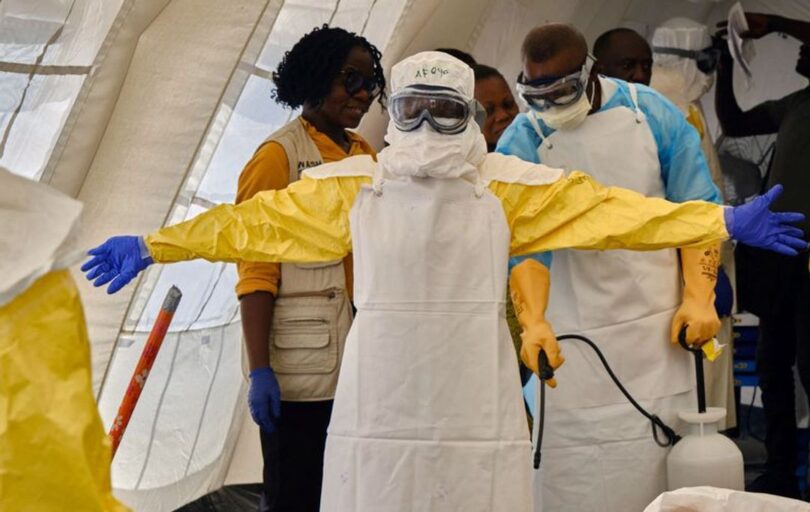
Complicating things further, the current outbreak is caused by the rare Bundibugyo species of Ebola, for which there is no approved vaccine or treatment.
But Tedros hailed “encouraging progress on vaccines and therapeutics”.
Trials for two potential treatments for Bundibugyo patients – the monoclonal antibody MBP134 and the antiviral drug remdesivir – have also been under way in Ituri since July 2.
And this past Monday, the first safety trial began on Monday for the ChAdOx1 vaccine, led by the University of Oxford, Tedros said.
And on Tuesday, a trial of the antiviral obeldesivir began to test its effectiveness in post-exposure prophylaxis for people who had come in contact with confirmed Bundibugyo cases but had yet to develop the disease.
Even without approved vaccines and treatments, 377 people have recovered in the DRC, said Tedros, “showing that with early diagnosis and safe care, this disease can be survived and stopped”.
Treatment centre attacked
The WHO chief said that one of the biggest concerns remained “the complex environment in which the outbreak is happening”, with the vast majority of cases found in conflict-torn Ituri.
“Active armed conflict is hampering access to the affected areas, and hindering the response,” he said, pointing out that on Wednesday, a treatment centre “was attacked” in Ituri’s capital Bunia.
The main priorities, he said, included reducing transmission in Ituri by strengthening surveillance; safe and dignified burials of highly infectious bodies of deceased Ebola patients; and clinical management of the sick.
To do this, he stressed the urgent need for more support from the international community, pointing to “a shortfall of more than $400 million” for a joint plan put forward by the WHO and the African Centres for Disease Control to address the outbreak.
Related