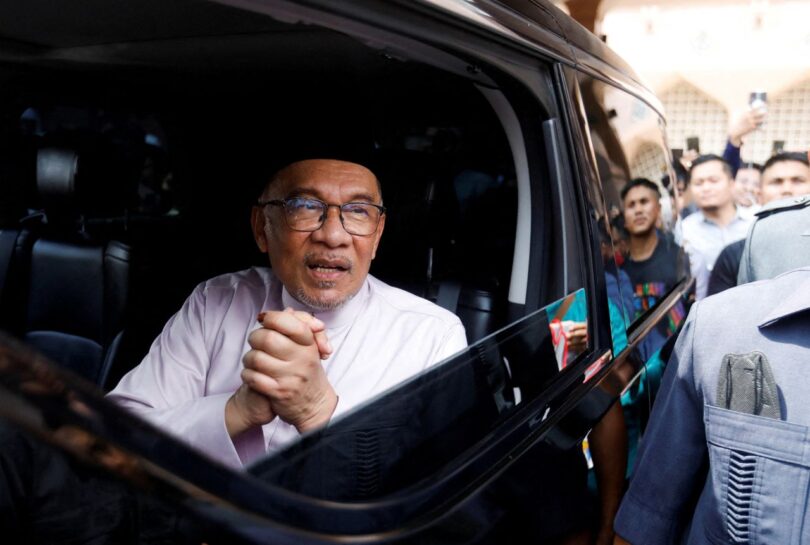
Malaysia’s Prime Minister Anwar Ibrahim has said he would consider calling snap polls if tensions within his ruling alliance worsen.
The next general election is not due until February 2028, but Anwar may seek the consent of the country’s king to dissolve parliament earlier. Media reports suggest an election could be held as soon as July.
An early election would also serve as a test of whether Anwar Ibrahim’s unity government can sustain public backing after years of coalition negotiation and compromise.
The outcome could set the tone for Malaysia’s approach to economic reform, accountability for corruption, ethnic politics, and its balance between Western partners and China.
It would also be closely watched by investors, particularly for signals on subsidy reforms, fiscal discipline and the pace of long-term economic modernisation.
Here’s why the Southeast Asian nation could see early polls:
Synchronising state and federal polls
Malaysia is a federal system, and most state polls are usually held alongside the federal election every five years.
But political instability since 2020 has led to some state governments collapsing before the end of their terms, breaking the election cycle.
Three states are due to hold polls within the next year – Johor and Malacca on the Malaysian peninsula, and Sarawak on the island of Borneo.
The country’s Election Commission said in February that an early general election would allow the state polls to be held concurrently, reducing costs, media reported.
Coalition calm or quiet tension
Anwar took office in November 2022, forming a “unity government” comprising his Pakatan Harapan bloc, former rival Barisan Nasional (BN), and a handful of other parties after a general election that ended in an unprecedented hung parliament.
The administration has been praised for restoring stability after a period of political infighting since 2020 that saw three prime ministers in as many years.