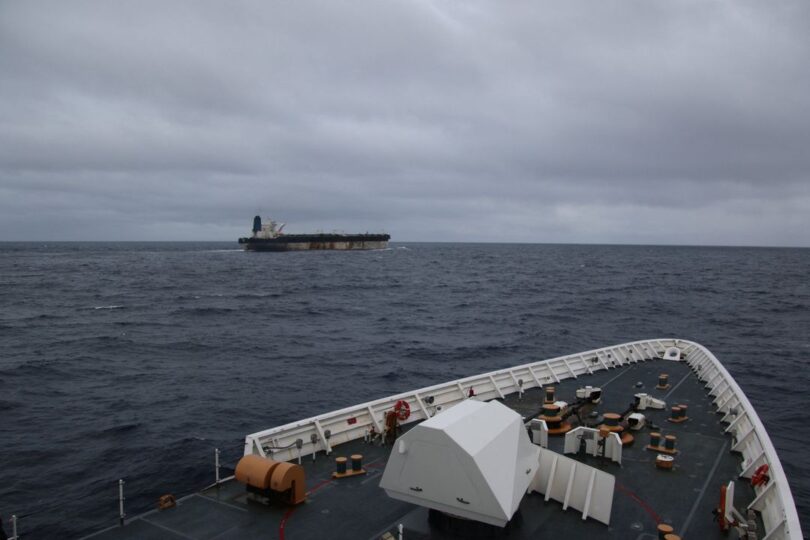
Last week, Iran’s Revolutionary Guard seized two vessels, Panama-flagged MSC Francesca and Liberia-flagged Epaminondas, for what it described as maritime violations and transferred them to Iranian shores.
Iran later said that the two ships had “ties to Israel” and accused the ships of breaching maritime regulations, interfering with navigation systems, and endangering other vessels in the waterway.
Since the war initiated by the US and Israel against Iran began on February 28, Tehran has maintained control of the Strait of Hormuz, stopping oil tankers and container ships from passing through the crucial waterway. In retaliation, the US imposed a naval blockade of Iranian ports on April 13.
Iran and the US have both seized vessels, but these ships are often identified by the flags of the territories where they are registered.
When a tanker is seized, attacked or boarded, initial reports almost always identify the vessel by its flag, most often Panama, the Marshall Islands, Liberia, Togo or other countries.
The true beneficial owner, the individual or company that ultimately controls and profits from the ship, is rarely named in the first wave of reportage.
This is not an accident; it is a part of global maritime practice.
Why is it so?
The vast majority of the world’s merchant fleet, including most oil tankers, sails under so-called flags of convenience (FOCs).
According to various estimates, 75–80 percent of the global fleet is operating under this system.
These are open registries run by countries that allow foreign owners to register ships with few questions asked.
Panama has the world’s largest ship registry, followed by the Marshall Islands and Liberia.
Shipowners choose these flags for lower costs, regulatory flexibility and opacity.
Saving money
Registration fees, taxes and regulatory burdens are far lighter in FOC countries than in traditional maritime nations. Ship owners can also hire cheaper international crews with fewer labour protections, helping them cut costs.
In fact, the FOC system started in the 1920s and 1930s, when the US shipowners started registering their vessels under Panama’s flag to avoid strict American labour laws and taxation.
Flag states generally apply lighter oversight on safety, environmental standards and inspections.
Traditional nations like the UK and EU member states also typically have stricter rules, such as the EU Emissions Trading System, with heavy fines for carbon emissions.
They also support or require investments in alternative fuels, scrubbers, or energy-saving technologies more aggressively than many open registries.
Oil spills
Owners may use FOCs strategically after high-profile spills to shield themselves from full financial and legal responsibility in case of an oil spill.