LONDON – All the Arab states of the Gulf are reassessing their security arrangements in the wake of the Iran war.
Nowhere is this search for new security more evident than in the urgent reviews under way in Bahrain, Kuwait, Iraq, Oman, Qatar, the United Arab Emirates (UAE) and Saudi Arabia over the feasibility of building new pipelines to deliver their oil and gas to world consumers.
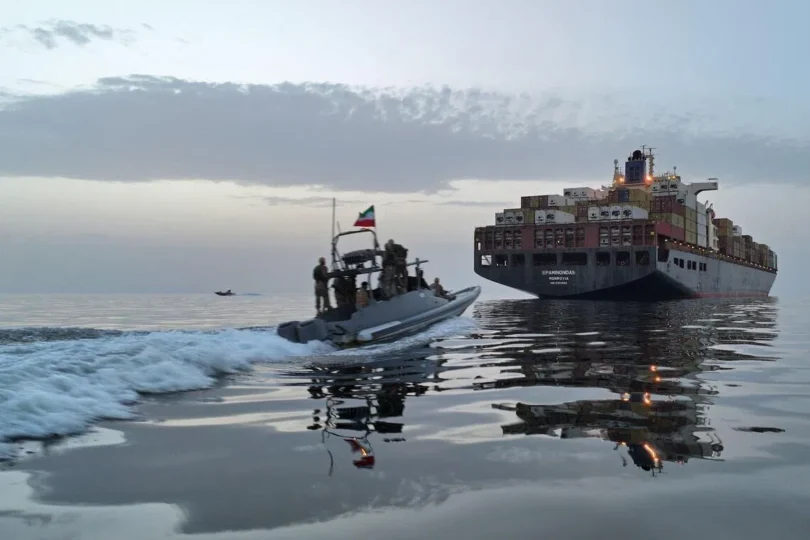
The regional states remain determined never to be held hostage again by Iran’s ability to throttle navigation through the Strait of Hormuz.
While reducing reliance on the strait is technically possible, the effort will be very costly and unlikely to fully compensate for the far bigger volumes of oil and gas that can be transported by sea through Hormuz.
At best, new pipelines can reduce dependence on Hormuz rather than eliminate it.
For decades, the prospect that Iran may close this international waterway was acknowledged as a significant danger by strategic experts.
The Strait of Hormuz normally carries around one-fifth to one-quarter of the global seaborne oil trade. For liquefied natural gas (LNG), the imbalance is starker: LNG exports through Qatar and other Gulf producers are hugely concentrated on maritime routes, and pipeline alternatives are largely irrelevant. This is why Hormuz remains the world’s most critical energy chokepoint.
The real surprise in the current war is that Iran closed the strait right from the start of the conflict. Arab governments had assumed that the Iranians might block the waterway as a last, rather than first, resort in any conflict.
Furthermore, few believed that even if the strait were closed, a blockade could last for months with no end in sight.
Qatar and Kuwait have seen their oil and gas exports seriously disrupted. And even Saudi Arabia and the UAE, which have access to some bypass pipeline infrastructure, have only been able to partly circumvent the waterway’s closure.
To some extent, the leaders of Saudi Arabia and the UAE had prepared for this eventuality. Saudi Arabia’s East-West pipeline to Yanbu on the Red Sea can transport up to about seven million barrels a day from the oil fields near the Gulf to a port on the other side of the Arabian Peninsula. The UAE’s Habshan-Fujairah pipeline can move around 1.5 million barrels daily.
But the inadequate terminal facilities on the Red Sea mean that the Saudis can shift only around four to five million barrels a day through their alternative pipeline, which amounts to about 70 per cent of their export potential. And only half of the Emirates’ daily export capacity can be handled by the pipeline, which circumvents the strait.
So, the race is on to develop new pipeline projects.
In theory, expanding oil export facilities on the Red Sea makes perfect sense: They supplement existing pipelines and move export traffic farther from Iran.
Iraq is examining a project to build a pipeline from its southern port of Basra to Jordan’s Red Sea port of Aqaba, which would allow Iraqi crude to avoid Hormuz altogether and load into the Red Sea system. The Saudis, meanwhile, are planning additional pipelines.
The snag, however, is that tankers loading oil through the Red Sea could still be held hostage by the Iran-aligned Houthi rebels in Yemen, who previously blocked the Bab el-Mandeb Strait connecting the Red Sea to the Gulf of Aden and the Indian Ocean.
For this reason, the other projects under consideration involve new infrastructure corridors, including pipelines, roads and rail tracks, to transport energy products from Saudi refineries on the shores of the Gulf to UAE ports like Khor Fakkan on the Gulf of Oman, from where shipments could go directly to main overseas markets.
There is also the possibility of reviving the use of the Trans-Arabian Pipeline (Tapline), constructed in the 1940s to connect Saudi oil fields to the Lebanese ports on the Mediterranean Sea via Jordan and Syria. The Tapline ceased operations in the 1980s, but Aramco, the Saudi oil giant that owns it, claims that it remains in an “excellent” condition.
An even grander idea is to cut a canal from the Gulf through the UAE territory to the Gulf of Oman, which would supposedly allow tankers to avoid Hormuz altogether.
However, the obstacles to all these proposals remain formidable.
The first is cost. The so-called “New Suez” canal idea, mimicking the Suez Canal constructed in Egypt in the 19th century, would make sense only if it were deep and wide enough to accommodate today’s supertankers, capable of carrying three million barrels of oil each. Yet even if environmental concerns are ignored, the construction of such a canal is estimated to cost hundreds of billions of US dollars.
Meanwhile, any proposal to divert Gulf oil exports westwards makes little economic sense. The Gulf’s main customers are countries farther east, such as China or India, not the European markets of the past.
Politics is another hindrance to the diversification schemes. The Tapline was originally conceived to offload Arab oil via the Palestinian port of Haifa, then under British control. Haifa is now Israel’s main port, and although the Tapline was redirected to Lebanon, the Saudis will remain suspicious of transporting much through Syria or Lebanon.
Nor are current Saudi-UAE relations particularly good, leaving little political incentive to dig a canal between the two nations.
But the biggest problem is that while new export routes will diminish Iran’s ability to blackmail its neighbours, new pipelines remain vulnerable to Iranian air attacks. The pipelines would make sense only if they were combined with boosted anti-Iranian air defences.
There is no question that over the longer term, the Iranians are exploiting a strategic asset with diminishing value. Ultimately, Arab exporters will find other routes for their oil and LNG.
But at least for the next few years, Iran’s ability to pressure its neighbours remains high, since none of the options being considered can compensate for the volumes of oil and LNG transported through Hormuz.