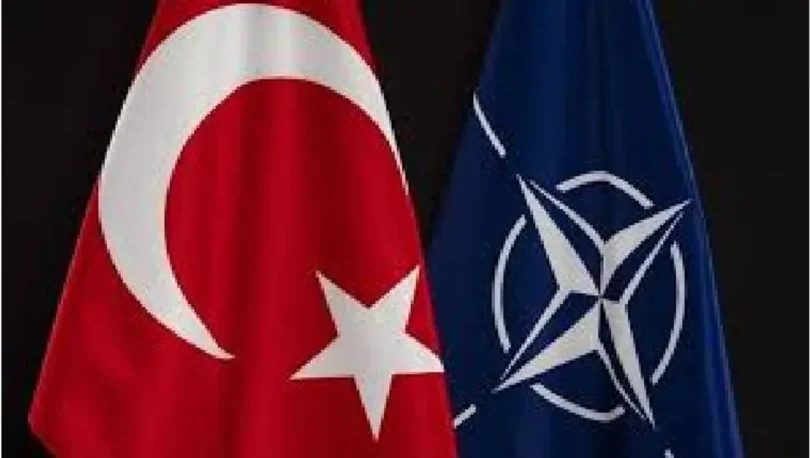
On July 7 and 8, the heads of state and government of the world’s most important defence alliance will meet in the Turkish capital, Ankara, to discuss the future of NATO and the Euro-Atlantic security architecture.
German-European-Turkish relations have experienced numerous highs and lows in recent years.
For years, a reserved attitude in Germany and Europe characterised the relationship.
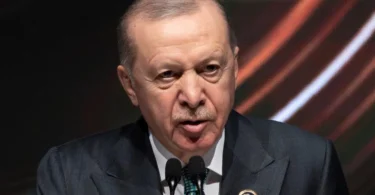
This was evident in the President Recep Tayyip Erdogan’s “one-minute” speech in Davos, the position of European partners after the failed coup attempt of July 15, the so-called “Armenian Resolution” in the Bundestag, the withdrawal of German troops from the İncirlik military base, and Euro-Atlantic arms embargoes: all of these marked a low point in relations with the West.
Those who supported Erdogan or acknowledged Türkiye’s successes sometimes faced exclusion or even denunciation.
In a rapidly changing world, relying on old patterns is no longer sufficient. The US is withdrawing from Europe.
Related
NATO is searching for new balances of power. Energy supplies, especially in Europe, have become more fragile. Germany faces the question of reliable partners in a multipolar world.
In this context, Türkiye comes into focus: a NATO member with the alliance’s second-largest army, it has undergone a remarkable strategic, economic, and technological transformation over the past two decades.
Its geographical location also makes it a natural energy hub and logistics centre.
Türkiye on its path to becoming an arms power
NATO Secretary General Mark Rutte summed it up perfectly after his visit to Ankara at the end of April: “We can learn a lot from what Türkiye is doing here.”
The message was clear: Without Türkiye, Europe’s security architecture will not function fully in the long run.
The Turkish defence industry has undergone a remarkable transformation over the past two decades: Exports rose from $248 million in 2002 to $10 billion last year.
According to data from the Stockholm International Peace Research Institute (SIPRI), Türkiye has gone from being an arms importer to the world’s eleventh-largest arms exporter.
Turkish arms exports increased by a staggering 122 percent between 2021 and 2025 alone, compared with the previous five years.
Furthermore, what was showcased at the SAHA Expo 2026 arms fair in Istanbul in May caught the attention of military experts worldwide: the Yildirimhan intercontinental ballistic missile, the KAAN hypersonic fighter jet, the Baykar drone fleet, and the TCG Anadolu amphibious assault ship.
The list of technological breakthroughs is impressive.
Related
The German government is also reportedly considering acquiring the Turkish Yildirimhan intercontinental ballistic missile – with a range of up to 6,000 kilometres – and the Tayfun Block-4 hypersonic missile.
For European standards, this is a remarkable development. Unthinkable just a few years ago, it signals that strategic reasoning is slowly gaining ground.
Türkiye is no longer just a consumer of technology but increasingly a producer and partner. This opens up new possibilities: joint arms projects, technology transfer, and closer military cooperation within NATO.
The international order is undergoing profound change.
The gradual reduction of the US military presence in Europe, a process that has been unfolding for years and is now gaining momentum, is causing growing concern across the continent.
Approximately 35,000 US troops are currently stationed in Germany, with more than 5,000 scheduled for withdrawal in the coming months.
NATO anticipates further withdrawals. US General Alexus Grynkewich, NATO’s top commander in Europe, described it as an “ongoing process spanning several years” and stated that deploying intermediate-range missiles to Germany is off the table.
It was recently revealed that the US will further reduce its military presence in Europe. According to the “New York Times,” the number of fighter jets is to be reduced by a third. In addition, the withdrawal of a submarine and an aircraft carrier is reportedly planned.
This will further intensify NATO’s focus on its southern neighbourhood, according to a recent analysis by the Konrad Adenauer Foundation. Few countries are as present in the current crisis zones as Türkiye.
It mediates between Russia and Ukraine, facilitated the grain agreement, and organised prisoner exchanges, among other things. It is an anchor of stability, from the Caucasus to the Mediterranean.
Even on the African continent, Turkish peacekeeping missions are noticed. Türkiye also distinguished itself as a discreet mediator behind the scenes, helping to end the war between the US, Israel, and Iran.