
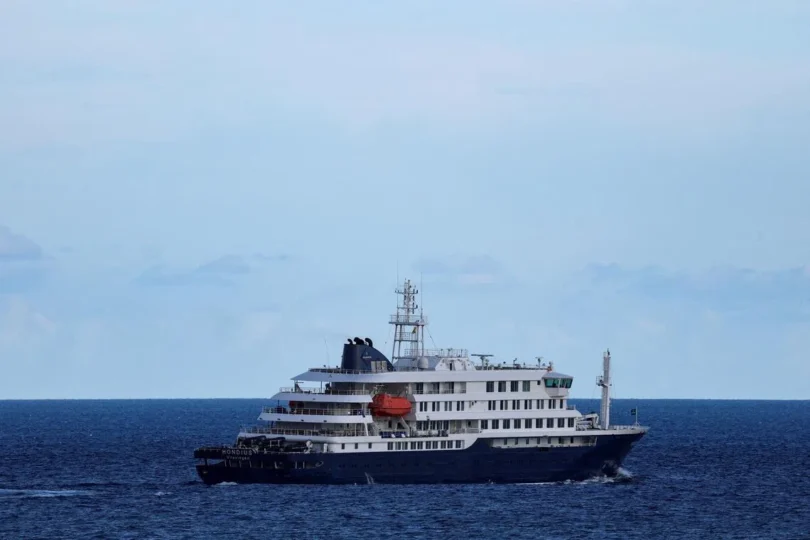
Fifteen US citizens exposed to hantavirus on the Hondius cruise ship are under observation at the National Quarantine Unit in Omaha, Nebraska, but their accommodations are closer to ship’s cabins than cold hospital rooms.
“It is much more like a hotel than a patient care space,” said Ms Angela Hewlett, medical director of the biocontainment unit at a briefing on May 11 held by the University of Nebraska Medical Center (UNMC), home of the quarantine unit.
The travellers can expect TVs, Wi-Fi, en-suite bathrooms and exercise equipment, she said, all there to ease their next few weeks of medical observation as doctors and health officials work to stop the outbreak in the US.
The National Quarantine Unit, a federally funded isolation facility, has only been activated once before, at the onset of the Covid-19 pandemic. Established in 2019, the centre contains 20 rooms with individual negative air pressure systems in addition to creature comforts.
The US passengers in quarantine range from their late 20s to their early 80s in age, according to Mr Michael Wadman, director of the National Quarantine Unit.
The National Quarantine Unit at the University of Nebraska Medical Center campus has only been activated once before, at the onset of the Covid-19 pandemic.
PHOTO: AFP
The recommended isolation for 42 days is the incubation period of the Andes strain of the hantavirus – a “conservative time frame”, said Mr Brendan Jackson, acting director for high-consequence pathogens at the US Centers of Disease Control and Prevention.
All the ship’s confirmed cases were caused by the Andes strain, the only one known to move from person to person.
But the US passengers are not being forced to be there. If a patient chooses to go home, doctors will evaluate if the person is symptom-free, has access to medical care and can isolate in a separate part of their home to avoid contagion.
“We want to do this in the least restrictive way possible that is still safe, that protects the health and safety of both the passengers and their communities,” Mr Jackson said.
One more patient from the ship, who had tested positive for hantavirus prior to arriving, has been isolated in UNMC’s Biocontainment Unit. That hospital room can treat anyone from patients who have tested positive but are stable, as the current individual is, to those who are critically ill.
Another two US passengers, a couple, are isolated at Emory University in Atlanta after one of them developed symptoms though has not tested positive.
Officials have elected to distribute care among different facilities to reduce the strain on a single hospital system, said Mr John Knox, principal deputy assistant secretary at the US Health and Human Services’ Administration for Strategic Preparedness and Response.
While all the US passengers of the Hondius have elected to remain quarantined, it is essential that any who choose to leave remain close to a hospital, said Ms Hewlett, since there are no US approved treatments for the Andes hantavirus.
“Because of that, we rely on aggressive support care,” Ms Hewlett said, which ranges from IV fluids to extracorporeal membrane oxygenation – a life-saving measure that pumps blood to a heart-lung machine to remove carbon dioxide and get oxygen back into the body. BLOOMBERG