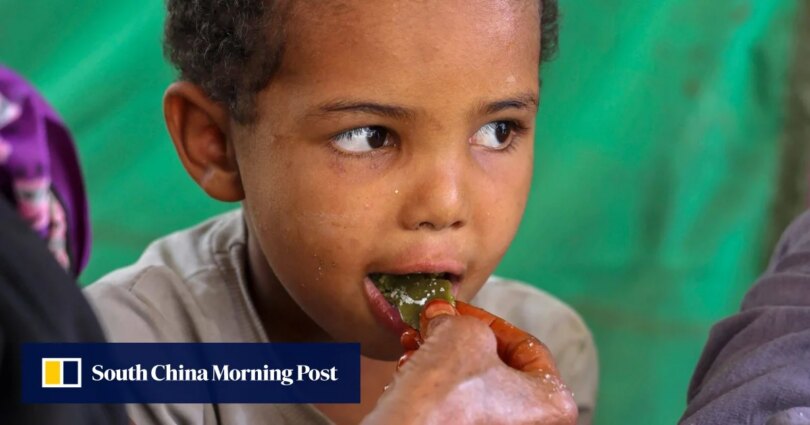
With no food aid, 65-year-old Saeedah Mohammed heads out with a plastic bag to pick tree leaves near her displacement camp in southern Yemen, before serving them to her grandchildren to stave off hunger.
Behind the camp wooded hills stretch under a clear sky, while on the ground, yellowed and stony earth is strewn with rubbish.
Amid the trash and destitution, daily life manages to organise itself, however imperfectly.
Worn-out clothes dry on lines strung between spindly trees, and two old discarded tyres lie in the dust.
In Al-Manij camp near Taez in southwest Yemen, Mohammed lives in a makeshift tent with her two divorced daughters and their six children.
Aid from the World Food Programme (WFP), on which her family depended, stopped more than six months ago.