
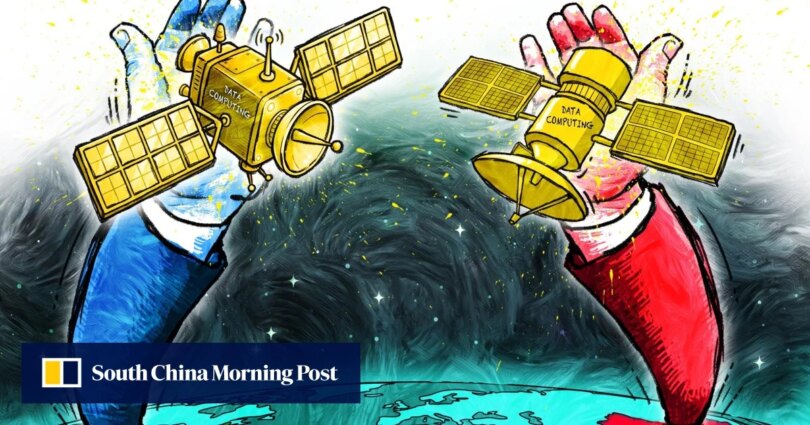
In 1957, the Soviet Union kicked off the Cold War’s space race, shocking the world by sending Sputnik, the world’s first artificial satellite, into orbit.
For the two superpowers, the space race was an ideological contest measured in firsts – with each milestone setting down a marker for technological know-how, national pride and a renewed commitment to push beyond the bounds of Earth.
Half a century later, a new space race is taking shape, with China emerging as one of the leading actors.
However, this competition is about more than symbolic firsts. Countries are seeking to make the technological achievements necessary to occupy, operate and utilise space, creating a new layer of digital infrastructure through satellites, networks, sensors and computing systems.
SpaceX, the US tech giant gearing up for what is expected to be the world’s biggest initial public offering as early as next month, has become a major player in this contest, releasing plans for orbital data centres, an experimental technology that is nonetheless sending ripples through global supply chains by driving demand for base metals, chips, satellites and rockets.