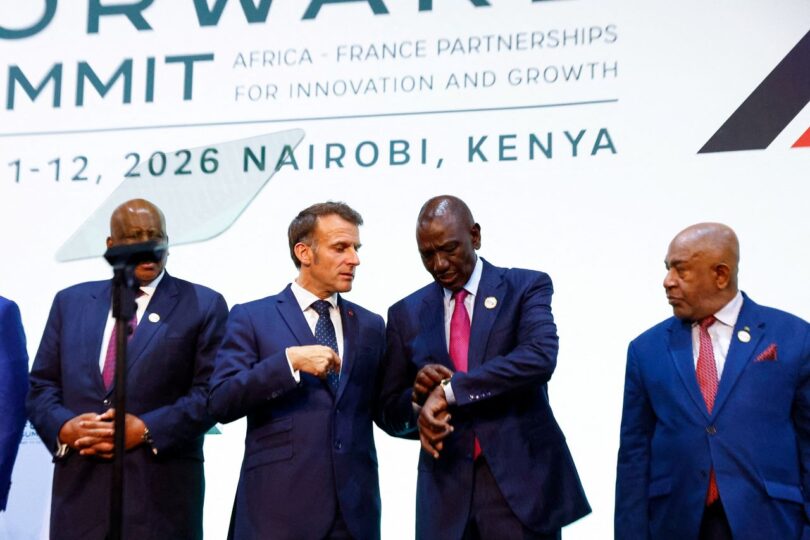
The recently concluded Africa Forward Summit in Nairobi has left many young Africans like myself caught between two worlds.
On one hand, the Nairobi Declaration is filled with the kind of pan-African, future-oriented language we have long craved. It speaks of industrialisation, sovereignty, and a “partnership of equals” between Africa and France.
On the other hand, a familiar wave of skepticism has flooded social media. Many point to the long, complicated history of French intervention on the continent as a reason to dismiss the summit entirely.
As a young African, I understand the anger, but I believe we are asking the wrong questions.
The real issue is not whether France is a “good” partner. The real issue is whether African institutions are strong enough to ensure that the deals signed in Nairobi, like the €23 billion investment platform, actually serve our people.
Africa first?
First, we must be clear-eyed about how the world works. There is no version of history where France, the United States, China, or Russia will create a foreign policy that centres African interests. That is not diplomacy, and it simply won’t happen.
A French diplomat at the table is there to fight for French interests. A Chinese diplomat is there to secure Chinese interests. America will always do the same.
To expect a foreign power to prioritise our development over its own economic gain is a fundamental misunderstanding of international relations.
Instead of claiming a summit is flawed because it doesn’t centre African interests, we should be asking how we can change that dynamic through our own diplomacy.
Isolation is not a viable strategy in our modern world. It is a form of political suicide. Even the biggest rivals on the global stage, like the United States and China, find ways to engage each other and work together where their interests overlap.
If the world’s superpowers recognise that they cannot afford to ignore one another, Africa certainly cannot afford to stand alone. We cannot win by staying away from the table. We win by changing how we show up to it.
Cycle of reaction
The current problem is that Africa is often stuck in a cycle of reaction. We wait for global powers to set the terms of engagement, and then we show up to react to them. This is why we feel sidelined.
One way Africa will start winning is by setting its own foreign policy and strategy first.
We need to move from being reactors to being rule-setters. We must reform our own institutions and strengthen them so we don’t get called to the table to sign a pre-written document. Instead, we should bring our own document to the table.
The Nairobi Declaration mentions the need to reform the United Nations Security Council and the international financial architecture. These are massive, messy goals that require the cooperation of global powers.