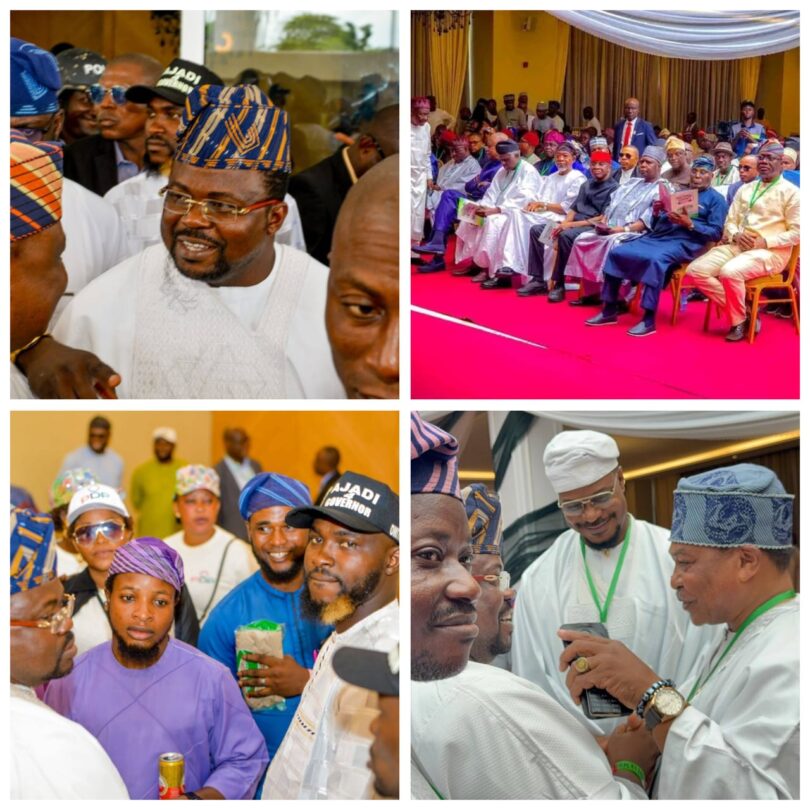
In a significant political convergence that could reshape Nigeria’s democratic landscape ahead of the 2027 general elections, prominent opposition leaders, including Atiku Abubakar, Peter Obi, Rabiu Musa Kwankwaso, and Oyo State Governor, Seyi Makinde, gathered in Ibadan on Saturday for the National Summit of Opposition Political Parties Leaders.
The high-level summit, held at the Banquet Hall of the Government House Ibadan, also drew the participation of governorship aspirant in Oyo State under the Peoples Democratic Party (PDP), Ambassador Olufemi Ajadi Oguntoyinbo, alongside several political heavyweights and stakeholders across party lines.
Convened under the theme, “That We May Work Together for a United Opposition to Sustain Our Democracy,” the summit brought together representatives from major opposition platforms including the Peoples Democratic Party (PDP), Labour Party, New Nigeria Peoples Party (NNPP), African Democratic Congress (ADC), and the Peoples Redemption Party (PRP).
Other notable figures at the summit included former Senate President David Mark, former Osun State Governor Rauf Aregbesola, former Rivers State Governor Rotimi Amaechi, and former Sokoto State Governor Aminu Tambuwal.
Also in attendance were elder statesman Olagunsoye Oyinlola, former Niger State Governor Babangida Aliyu, political economist Pat Utomi, social activist Aisha Yesufu, and former APC National Secretary John Akpanudoedehe, among others.
Speakers and stakeholders at the summit examined critical national issues, including electoral reforms, national security, economic recovery, and the need for stronger democratic institutions, as part of efforts to forge a united opposition front ahead of 2027.
Ambassador Olufemi Ajadi Oguntoyinbo, who actively participated in the summit, spoke with journalists shortly after stepping out of the Banquet Hall. Addressing newsmen, Ajadi described the gathering as a turning point for opposition politics in Nigeria.
“This summit represents a new beginning for the opposition in Nigeria. What we are seeing is a deliberate effort to put aside differences and work towards a common goal,” Ajadi said.
He noted that the collaboration among diverse political actors signals a renewed commitment to national development and democratic consolidation.
“Nigerians are looking for direction and credible leadership. The responsibility is on us as opposition leaders to provide that alternative and restore confidence in governance,” he added.
Analysts say the Ibadan summit marks one of the most coordinated efforts by opposition forces in recent years, signaling early realignments and possible coalition-building ahead of the next general elections.
As deliberations continue, political observers believe the outcomes of the summit could significantly influence Nigeria’s political direction, particularly if the unity advocated by participants translates into concrete alliances.