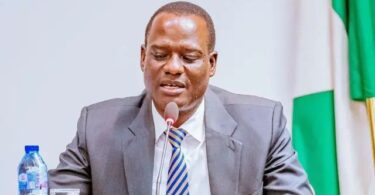
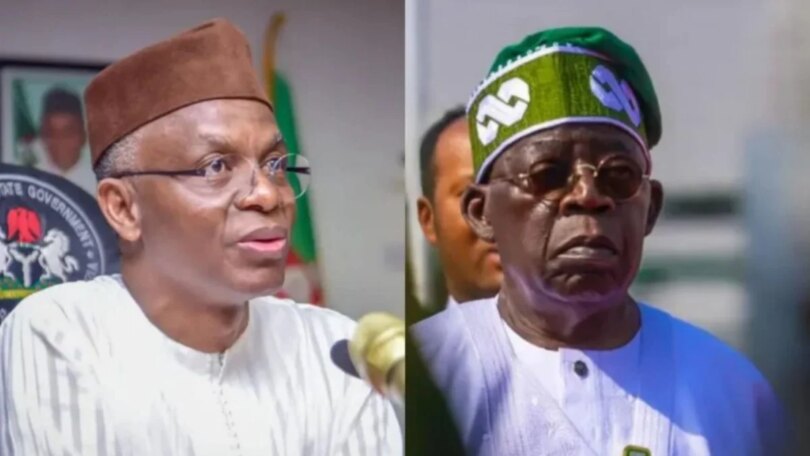
A former Southeast spokesman of the All Progressives Congress Presidential Campaign Council, Denge Josef Onoh, has appealed to President Bola Ahmed Tinubu to intervene in the legal challenges involving former Kaduna State Governor, Nasir El-Rufai, and consider granting him clemency.
Onoh made the appeal in an open letter dated September 24, 2026, addressed to Tinubu through the President’s Chief of Staff, Femi Gbajabiamila.
The APC chieftain urged the President to embrace reconciliation and statesmanship in handling the former governor’s situation.
El-Rufai is facing an ongoing criminal trial before the Federal High Court in Abuja over allegations of unlawful interception of telephone communications. The court on Tuesday fixed October 26 to rule on his no-case submission after hearing arguments from the defence and the Department of State Services.
Onoh appealed to Tinubu not to overlook El-Rufai’s contributions to the APC, particularly his role in the campaign that culminated in Tinubu’s election as President in 2023.
“We cannot quickly erase from our memories the immense, foundational role Mallam El-Rufai played in ensuring the victory of the All Progressives Congress and your historic election in 2023,” he said.
While acknowledging El-Rufai’s reputation as a strong-willed politician, Onoh described him as “rigid, intensely opinionated, and notoriously difficult to align with,” arguing that the same attributes had also reflected his loyalty to people and causes to which he was committed.
Onoh also expressed concern over the alleged silence of some of El-Rufai’s former allies and associates, saying he was unwilling to abandon his friend because of political considerations.
He urged Tinubu to draw from historical examples of political reconciliation, citing Julius Caesar’s clemency towards political opponents and former President Shehu Shagari’s pardon of late Biafran leader, Chukwuemeka Odumegwu-Ojukwu, in 1982.
According to him, such precedents demonstrated how political leaders could deploy mercy and reconciliation to reduce divisions.
Onoh further cited Sections 174 and 175 of the 1999 Constitution, which respectively provide constitutional mechanisms concerning the discontinuance of criminal proceedings by the Attorney-General and the President’s prerogative of mercy.
He said Tinubu’s intervention would “not be an act of weakness” but an indication of statesmanship and political maturity.
“Leaving a former ally and a key architect of our current democratic dispensation to languish in confinement risks deepening political fractures at a time when our country desperately needs structural stability and unity,” Onoh said.
He therefore appealed to the President to choose “reconciliation over retribution” and “compassion over confinement,” urging him to turn El-Rufai’s situation into an opportunity for national healing.
The appeal came a day after El-Rufai, in a personal statement titled “My Relationships and the Aftermath,” reflected on the silence of some colleagues, friends and family members amid his current difficulties.
The former governor said he had no regrets about supporting people and causes he believed in, stressing that his decisions had been guided by his faith, upbringing, personal values and conscience rather than expectations of gratitude or reciprocity.
He said those he had previously supported were free to make their own choices now that circumstances had changed, adding that some might speak, remain silent, distance themselves or attempt to rewrite their past relationships with him.
El-Rufai also said adversity could reveal the nature of relationships, but maintained that he would not seek revenge or retribution over any perceived injustice or ingratitude.
“I have no regrets about standing by people or for causes when I believed it was right to do so, and I bear no resentment towards anyone who chooses not to do the same for me,” he said.