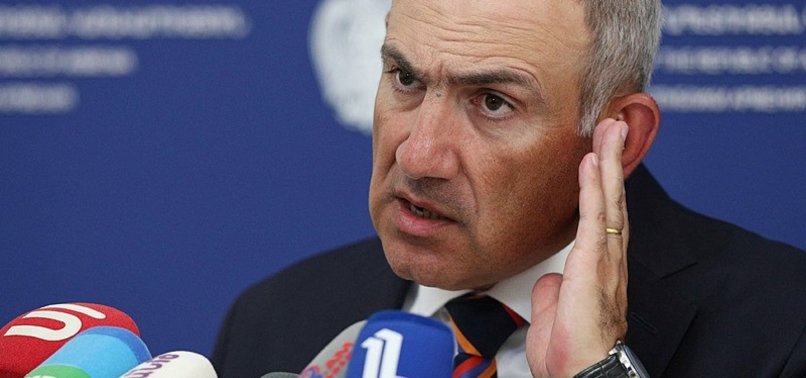
Armenian Prime Minister Nikol Pashinyan on Monday rejected Russian leader Vladimir Putin’s call for Yerevan to hold a referendum on joining the EU, amid pressure from Moscow a week before a parliamentary vote.
Armenia has in recent years looked for other allies, frustrated that Moscow did not protect it in a dispute with neighbouring Azerbaijan. Its attitude has angered the Kremlin.
Putin last week criticised Armenia’s rapprochement with the European Union and called for a referendum “as soon as possible”, saying membership of both the EU and the Moscow-led Eurasian Economic Union (EEU) was impossible to reconcile.
Pashinyan said in a video address on Facebook that “holding a referendum is illogical” until the choice between the two blocs “becomes inevitable, until Armenia has officially applied to the EU for membership or has come close to receiving candidate status.”
On Saturday, Moscow recalled its ambassador to Armenia for “consultations” over Yerevan’s growing EU ties.
Putin said the previous day that the “Ukrainian scenario” began with Kyiv trying to join the EU, warning Armenia against pivoting toward Brussels.
Pashinyan said Armenian-Russian relations “are in a stage of transformation”.
“We are building new relations with Russia, and I am confident we will succeed, including because our relations with Russia are open and sincere,” he said.
The Kremlin said Monday that Putin and Pashinyan spoke by phone, saying only that the pair had discussed last week’s Eurasian summit in Kazakhstan, where Putin had made the warnings, without giving details.
Moscow also said Putin had passed on birthday wishes to Pashinyan.
Still formally allied with Moscow, Armenia remains a member of the EEU.
But relations have deteriorated sharply since Azerbaijan’s 2023 military takeover of the then-disputed Karabakh region, which prompted the exodus of its ethnic Armenian population.
Yerevan has accused Russia of failing to protect Armenia and froze its participation in Moscow-led security arrangements in 2024.