The National Chairman of the All Progressives Congress (APC), Professor Nentawe Yilwatda, has warned that former Vice President Atiku Abubakar’s call for the return of fuel subsidy could reverse the gains of the Federal Government’s ongoing economic reforms. In a statement signed by Abimbola Tooki, Special Adviser to the National……
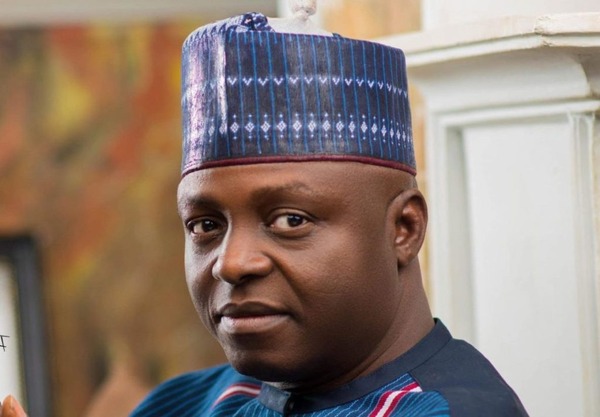
The National Chairman of the All Progressives Congress (APC), Professor Nentawe Yilwatda, has warned that former Vice President Atiku Abubakar’s call for the return of fuel subsidy could reverse the gains of the Federal Government’s ongoing economic reforms.
In a statement signed by Abimbola Tooki, Special Adviser to the National Chairman of the APC on Media and Information Strategy, on Sunday, Yilwatda said the proposal could return Nigerians to fuel queues, undermine the new minimum wage and affect funding for education and other essential services.
Yilwatda made the remarks in Abuja while receiving a delegation of economic stakeholders who visited him to discuss the state of the Nigerian economy, ongoing reforms and prospects for sustainable economic growth.
He said the debate over fuel subsidy should not be reduced to political rhetoric but assessed against the country’s experience under previous administrations, particularly the fiscal burden imposed by the policy and its impact on states, workers, education and infrastructure.
Read Also: Atiku’s Fuel Subsidy Proposal Will Scare Away Investors – IMPI
“Subsidy may appear attractive because it promises cheaper petrol, but Nigerians must also ask the bigger question: who pays for the subsidy and what happens to the resources that government must divert to finance it?
“A policy cannot be judged only by its immediate benefit at the pump. We must examine its impact on government revenues, salaries, pensions, education, healthcare, infrastructure and the overall capacity of government to meet its obligations to citizens.”
The APC chairman said several state governments previously faced difficulties meeting salary obligations, with some unable to pay workers regularly and others resorting to partial salary payments.
He said the removal of subsidy and the resulting increase in federal allocations had improved the fiscal position of many states, allowing them to meet salary and pension obligations while also undertaking development projects.
Yilwatda cautioned that any attempt to reintroduce subsidy must therefore be subjected to rigorous economic scrutiny to prevent the country from returning to previous fiscal pressures.
He also raised concerns about the possible impact of reduced government revenue on education, recalling prolonged disruptions to academic activities in Nigerian universities under the previous administration.
“A return to a fiscally unsustainable subsidy regime could have consequences far beyond the price of petrol. When government revenue is squeezed, the first victims are often the critical sectors that directly affect the welfare and future of our people,” he said.
On the new minimum wage, Yilwatda said the sustainability of improved workers’ wages must also be considered in the subsidy debate.
He explained that higher wages require corresponding improvements in the capacity of federal and state governments to meet recurrent obligations without sacrificing investments in infrastructure, education, healthcare and other essential services.
The APC chairman also highlighted developments in Nigeria’s foreign-exchange and digital payment infrastructure, saying they were creating opportunities for young Nigerians, content creators, freelancers and other digital entrepreneurs operating in the global economy.
“Our young people are no longer limited by geographical boundaries. A Nigerian content creator, software developer, consultant or freelancer can provide services to clients anywhere in the world. But that opportunity requires a financial and payment system capable of supporting the global digital economy.
“We must therefore be careful about policies that could undermine the progress being made in strengthening Nigeria’s financial and digital ecosystem.”
Yilwatda further highlighted the Nigeria Education Loan Fund (NELFUND), describing it as an important intervention that has expanded access to tertiary education financing and reduced the immediate financial burden on many families.
He said sustainable education financing was critical to ensuring that young Nigerians do not abandon their studies because of financial difficulties.
The APC chairman acknowledged the hardship Nigerians experienced following the removal of fuel subsidy but said the government must continue strengthening measures to cushion the impact of reforms on vulnerable citizens.
“The hardship Nigerians have experienced is real, and government must continue to respond to it. But the answer cannot simply be to return to a system whose long-term fiscal implications created serious distortions in our economy.
“What Nigerians deserve is an economy that can sustainably finance good wages, quality education, healthcare, infrastructure and social protection without depending on an opaque and expensive subsidy system.”
Yilwatda called for a robust and fact-based debate on economic policy, urging political leaders advocating a return to subsidy to explain its cost, funding mechanism, duration and long-term sustainability.
“Whenever anybody proposes a return to subsidy, Nigerians should ask: how much will it cost? Where will the money come from? What programmes will be sacrificed to finance it? And for how long can the government sustain it?
“These are legitimate questions that must be answered before the country embarks on another expensive policy experiment.”
He said the APC-led Federal Government remained committed to reforms aimed at building a more productive, competitive and sustainable Nigerian economy.
Yilwatda urged economic stakeholders, professional bodies, labour organisations, businesses and citizens to continue engaging constructively with the government on ways to improve the reforms and ensure that their benefits are more widely shared.