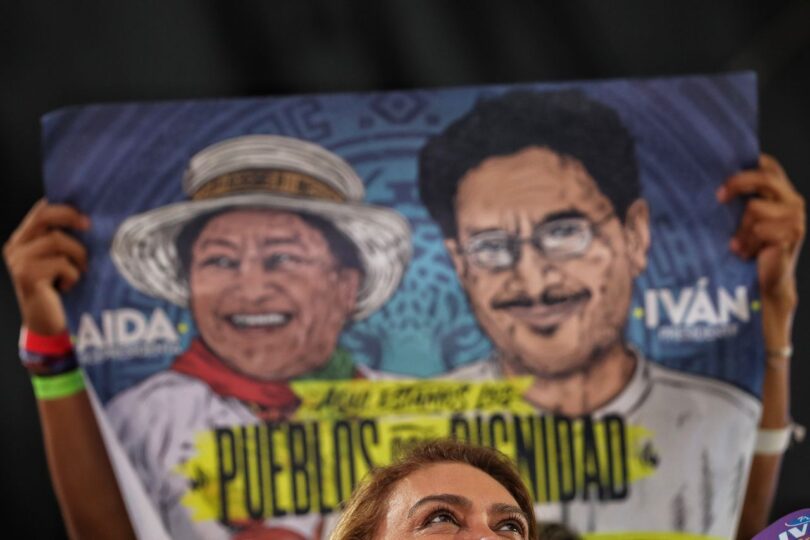
“Right now, the strongest prospect is Ivan Cepeda, not simply due to polling advantages, but because of the structure of the political field. Following Petro’s 2022 victory, the Colombian left is no longer an outsider force,” argues Abraham.
“It has institutionalised itself and now commands a relatively stable electoral base. Cepeda benefits from this consolidation while representing a degree of continuity without fully inheriting the political costs of the Petro administration,” he adds.
Abraham notes that Cepeda, backed by Petro, is not merely a replica of the president; he offers a distinct profile, particularly through his key role in peace processes.
“Cepeda has been deeply involved in negotiations with armed groups and is often viewed as a more methodical and consistent diplomat, arguably more cautious and strategically coherent than Petro himself,” Abraham says.
Another factor favouring Cepeda is the fragmented nature of the opposition.
Potential run-off
Although Cepeda currently leads the polls, Colombian elections frequently proceed to a run-off. Since the introduction of the second-round system in 1991, only the 2002 election was decided in the first round; six others have required a run-off.
If this occurs again in 2026, the likely scenario would feature a showdown between Cepeda and de la Espriella on June 21. Abraham believes that Valencia faces an “electoral ceiling”.
“The key dynamic is the division of the right between a traditional, institutional current — represented by figures like Paloma Valencia — and a hardline, outsider-style politics focused on security and militarisation, embodied by de la Espriella,” Abraham adds.
“Given Colombia’s current climate, where security concerns remain paramount, the more aggressive law-and-order candidate is better positioned to consolidate the anti-government vote in a second round. De la Espriella has leaned heavily into this narrative, rejecting peace negotiations and proposing military offensives to restore order and investor confidence.”
Broader restructuring of political spectrum
Valencia is not alone in struggling to capture anti-establishment sentiment due to her traditional right-wing background and political lineage.
De la Espriella’s campaign is also controversial, particularly regarding his links to Alex Saab, a figure accused of acting as a financial operator for the Venezuelan government.
Abraham says competition is also emerging for the centre-left vote, stressing that figures such as former Bogota mayor Claudia Lopez could draw support away from Cepeda among moderate voters.
“What we are observing is not just an electoral contest, but a broader restructuring of Colombia’s political spectrum, where Uribismo (a dominant right-wing political movement in Colombia) is no longer hegemonic but one of several factions competing for influence.”