NAIROBI/LONDON/DAKAR, June 17 – Health workers battling an Ebola outbreak in eastern Democratic Republic of Congo lack the personnel to identify suspected cases, the ambulances to transport them and even the construction materials to build isolation wards, officials and aid workers told Reuters.
A month after the World Health Organization declared an international emergency, the outbreak of the rare Bundibugyo strain has grown to more than 800 confirmed cases, with warnings mounting that it could become the worst on record — surpassing the 2014-16 West Africa epidemic that killed more than 11,000 people.
Health teams are so stretched that tens of thousands of contacts of those cases remain untraced, Jean Kaseya, director general of the Africa Centres for Disease Control and Prevention, told Reuters, pointing to insecurity and the urban, mining-heavy setting of the outbreak as central obstacles.
“After four weeks we have an outbreak in an urban area where there is insecurity, where there is this mining and trade activity, and also where we are not reaching all the people who must be in the contact list,” he said late on Tuesday.
“If we don’t reach these people, we cannot say that we can win with this outbreak.”
PATIENTS ESCAPING, LEFT WAITING
Even the identified cases, which may represent just a fraction of the total due to insufficient testing and data gaps, are not always isolated and cared for, he said.
“We have people who were admitted who decide to escape for many reasons. We have people who are positive who are not admitted. And we saw also a number of people who are admitted but we believe that they are not getting appropriate support,” Kaseya added.
A WHO report showed roughly a third of the 241 alerts about new suspected cases in Ituri, the worst-hit province, were not being followed up as of June 14.
Manel Rebordosa, Oxfam Ebola Response Coordinator in the city of Bunia, told Reuters a woman with symptoms including fever and bleeding at a Rwampara medical centre he visited this week had been left waiting for hours.
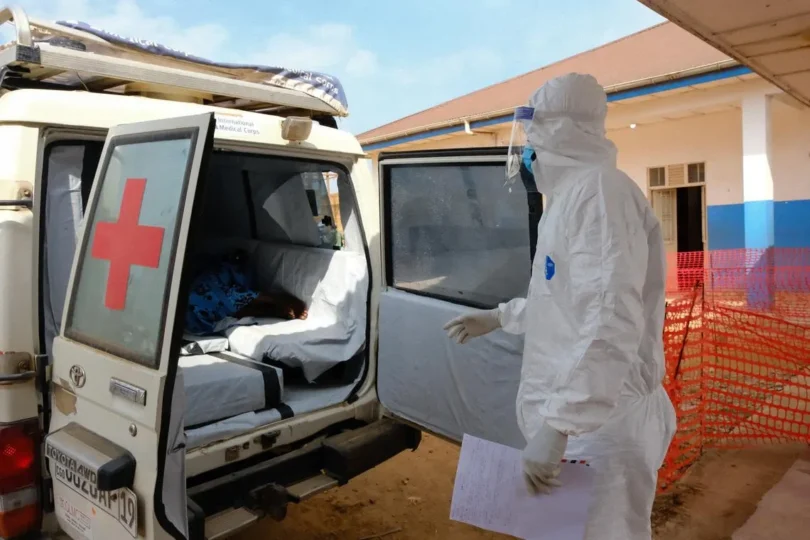
“They were calling the surveillance system but they didn’t show up as they cover many health zones and don’t have enough ambulances,” he said.
Africa’s CDC said teams handling safe burials and decontamination in Ituri had only about 15% of the required personnel and 7% of the necessary vehicles in place.
Congo’s health minister Samuel-Roger Kamba rejected suggestions the outbreak was outpacing the response, telling a government briefing on Monday the ministry had trained 1,200 community relay workers and deployed 1,000 of them to go door-to-door tracking contacts and suspected cases, with contact follow-up currently running at 63%.
RESOURCES NEEDED FOR ‘ALMOST EVERYTHING’
Professor Salim Abdool Karim, who advises the Africa CDC and visited Ituri last week, said the biggest challenge was supplies.
“There is a need for more resources of almost everything from PPE (Personal Protective Equipment) to gravel,” he said in a report he will present at an emergency meeting soon.
Gravel shortages have delayed construction of isolation wards, he said, adding that prefabricated panels for walls, floors and roofs were lacking and that the absence of USAID — dismantled by U.S. President Donald Trump last year — was noticeable.
The U.S. says it is the biggest donor to the response and has asked others to contribute.
Medics lack masks, and dozens of them have caught the Bundibugyo strain, for which there is no proven vaccine or treatment.
Africa CDC’s Kaseya sometimes the needed supplies are “sitting somewhere in a warehouse”.
The African Union says it has received only a fifth of the funding for its $518 million response plan and aid workers say donor support has fallen versus previous Ebola outbreaks.
Asked if Western governments should do more, Kaseya said: “I think they are starting to understand that it’s serious.” REUTERS