The Republic of Congo is seeking to adapt Nigeria’s Local Content policy to strengthen indigenous participation and ensure greater economic benefits from its oil and gas resources.
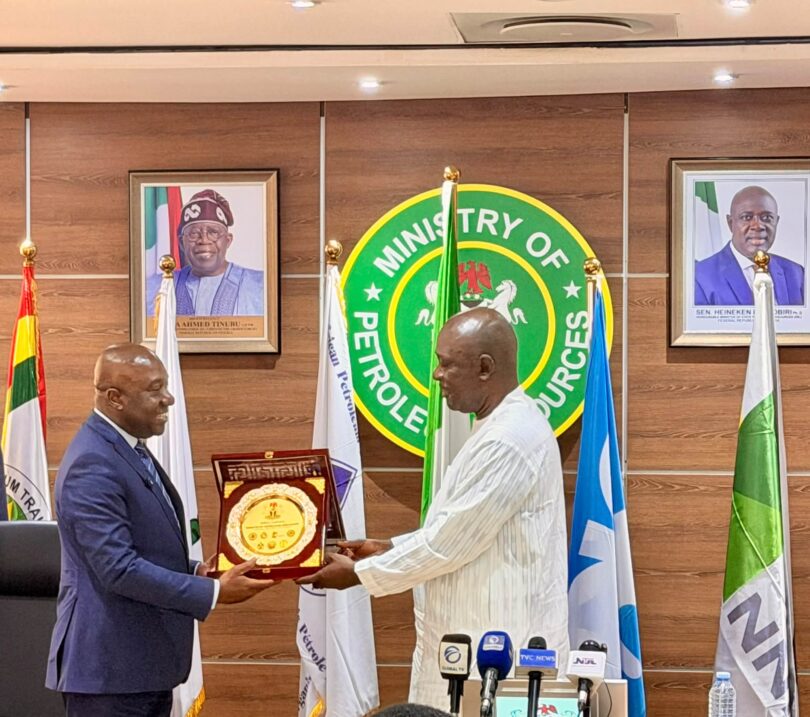
Minister of Hydrocarbons of the Republic of Congo, Stève Simplice Onanga, made this known when he led a high-powered delegation of senior government officials to Abuja on a study visit on Monday.
A statement by the Nigerian Content Development and Monitoring Board, NCDMB, said the visit focused on Nigeria’s experience in developing and implementing its Local Content framework.
It noted that during a courtesy visit to the Minister of State for Petroleum Resources, Oil, Senator Heineken Lokpobiri, the delegation said it was particularly interested in how Nigeria’s policy had supported the growth of indigenous companies, expanded local participation, created employment and retained greater value within the domestic economy.
Onanga said the delegation chose Nigeria because of the progress the country had made over the years in implementing its Local Content policy.
“It is a great pleasure for us to be here. Our visit is based on the experience you have had over the years, and we are here to understudy your Local Content policy,” he said.
He said the objective was to acquire practical knowledge that could help Congo strengthen its own Local Content framework and ensure that its oil and gas resources generated greater opportunities for its citizens.
“The objective is mainly on Local Content and improving our own Local Content policies in the Republic of Congo. We really wish to develop our Local Content for the benefit of the Congolese people,” he stated.
Responding, Lokpobiri welcomed the delegation and reaffirmed Nigeria’s readiness to deepen bilateral cooperation with Congo, particularly in Local Content development.
He said Nigeria was willing to share the lessons of its more than 15-year Local Content journey with its “brother country”, noting that the policy had helped create opportunities for Nigerian companies across the petroleum value chain.
According to him, the development of a legal framework for Local Content provided a structured approach to increasing indigenous participation in an industry that had previously been dominated in several areas by foreign companies.
Lokpobiri said Nigerian companies had progressively developed the capacity to provide specialised services, work alongside international oil companies and compete across different segments of the petroleum industry.
He also pointed to the divestment of some international oil companies as creating additional opportunities for indigenous businesses to acquire assets and infrastructure and expand their presence in the sector.
The minister stressed the broader importance of African countries developing indigenous capacity to address their energy challenges.
“It is my belief that the solution to solving Africa’s energy problems lies more on Africa,” he said.
Lokpobiri expressed confidence that Congo could achieve similar progress by adapting relevant elements of Nigeria’s experience to its own circumstances.
“If Nigeria can do it, I believe Congo can do it as well,”he added.
He further explained that the Nigerian Content Development and Monitoring Board, NCDMB, is funded through a statutory one-per-cent contribution from contracts in the Nigerian oil and gas industry, rather than relying on direct annual government funding.
According to him, the financing model provides the Board with a sustainable source of funding to pursue capacity development, technology acquisition, financing and industrial growth in support of Local Content.
The visit underscores growing interest in Nigeria’s Local Content experience as other African oil-producing countries seek ways to translate their petroleum resources into greater domestic participation, industrial development and economic value.