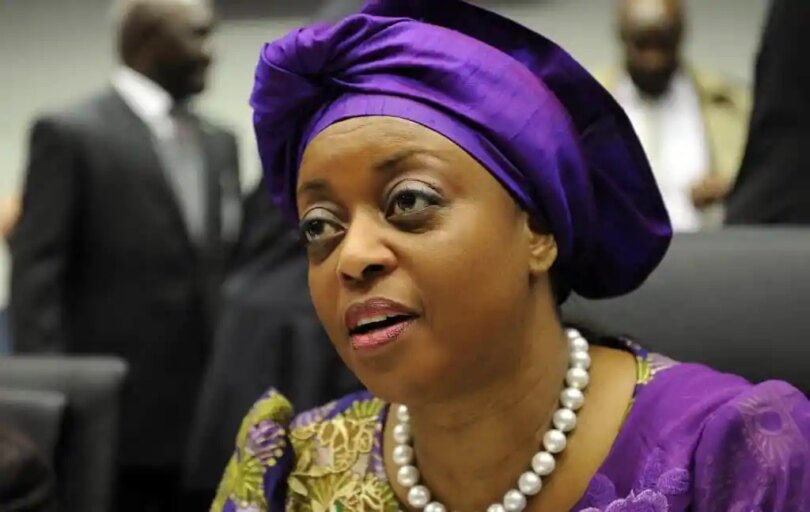
Former Minister of Petroleum Resources, Diezani Alison-Madueke, has suggested that the United Kingdom and Nigeria should bear responsibility for the collapse of the prosecution’s case.
Naijaonpoint recalls that the former minister, who served under ex-President, Goodluck Jonathan, between 2010 and 2015, was recently acquitted by a jury at Southwark Crown Court of five counts of accepting bribes and one count of conspiracy to commit bribery after a trial that began in January.
Asked who should be blamed for the collapse of the prosecution’s case, during an interview with the BBC, Diezani replied: “There’s a bit of blame everywhere.
“The Nigerian authorities need to look into the processes and practices that they deploy in these cases; the long arm of the law when you go into other countries, particularly in politically motivated cases, needs to have a lot more sensitivity.”
Alison-Madueke also questioned the handling of evidence linked to the case, claiming documents that could have aided her defence disappeared after being taken from her Abuja residence in 2015.
She stated, “Those items were taken away by our intelligence forces.”
Speaking further, Alison-Madueke claimed that her efforts to tackle corruption in Nigeria’s oil industry and the powerful interests affected by those reforms contributed to the legal and political battles that followed her tenure.
According to her, the UK’s National Crime Agency (NCA) failed to properly understand the realities of Nigeria’s oil sector before pursuing a case against her.
She said investigators treated her as low-hanging fruit, while ignoring the anti-corruption efforts she undertook as petroleum minister and the enemies she made in the process.
She said, “I think that being such a low-hanging fruit in terms of opposition and the accusations they were throwing at me throughout that period, I wish they had taken a step back and looked with a little more depth at the actual truth of the situation on ground.
“Also, the things that I tried to do to put in place in terms of pushing back and fighting corruption in oil sector, which had not gone down well with many of the cabals in the sector at home.
“I was the first female to enter this sort of position as petroleum minister and as head of OPEC in a very misogynistic society. NCA should have taken a step back and looked with a little more depth at the truth of the situation on the ground.”