
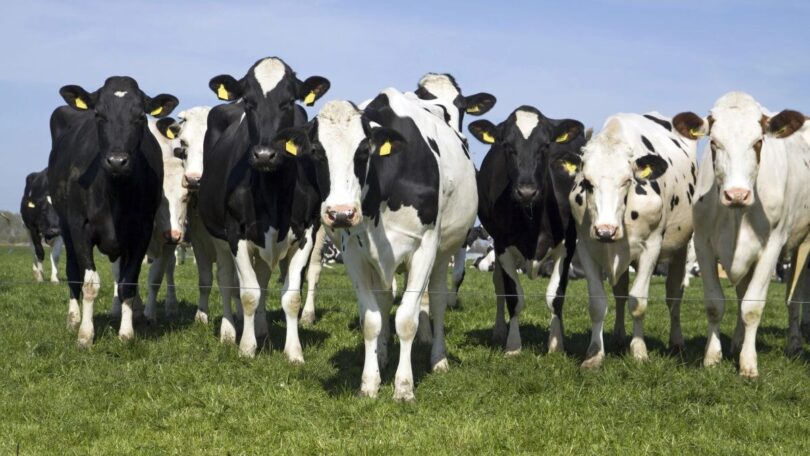
Dutch farmers could face compulsory livestock cuts after the government’s nitrogen plan failed to meet its 2035 target.
The Netherlands Environmental Assessment Agency, known as PBL, reviewed the cabinet’s €20 billion plan.
PBL described the plan as an important step. However, it found that the measures presented so far would leave an emissions gap.
The agency said farmers may still need a general cut of between 5% and 10% in their livestock rights. These permits control how many animals each farm can keep.
The coalition government has said compulsory cuts would only be used as a last resort if the Netherlands misses its targets in 2035.
Agriculture Minister Jaimi van Essen described the measure as an “emergency brake” and “a no-go for the cabinet.”
Under the package agreed in June, farmers must reduce ammonia emissions by between 42% and 46% by 2035. The government will measure this against 2019 levels.
PBL expects the number of animals on Dutch farms to fall even without a compulsory cut. Farms must adjust to the new rules, and some may have to close.
The agency said the plan could improve the environment. However, nitrogen levels could still remain too high across more than half of the Netherlands’ most sensitive protected areas in 2035.
Environmental groups described the measures as the minimum action needed to repair damage caused over several decades.
The farmers’ party BBB and agricultural organisation LTO rejected the possibility of additional livestock cuts. LTO will continue negotiating the remaining parts of the plan.