The postponement of the arraignment the ex-Warri refinery MD comes a day after the EFCC arraigned his Port Harcourt refinery counterpart on similar money laundering charges.
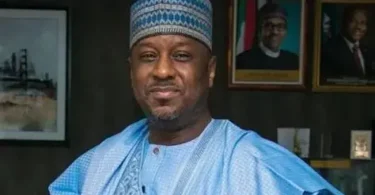
The planned arraignment of former Managing Director of Warri Refining and Petrochemical Company Limited (WRPC), Jimoh Yisawu, on alleged money laundering allegations stalled before the Federal High Court in Abuja on Friday.
The court rescheduled the arraignment for 20 July as the trial judge, Inyang Ekwo, was said to be away on an official engagement.
The Economic and Financial Crimes Commission (EFCC) brought eight money laundering charges that stemmed from Mr Yisawu’s activities during his tenure as managing director of the Warri refinery and his service as a public officer with the Nigerian National Petroleum Company (NNPC) Limited.
The postponement of Mr Yisawu’s arraignment comes a day after the EFCC arraigned former Managing Director of Port Harcourt Refining Company Limited (PHRC), Ahmed Dikko, on Wednesday, on 12 counts of money laundering.
Judge Ekwo, who also oversees Mr Dikko’s trial, granted him bail in the sum of N150 million with one surety and fixed 12, 13 and 14 October for the commencement of trial.
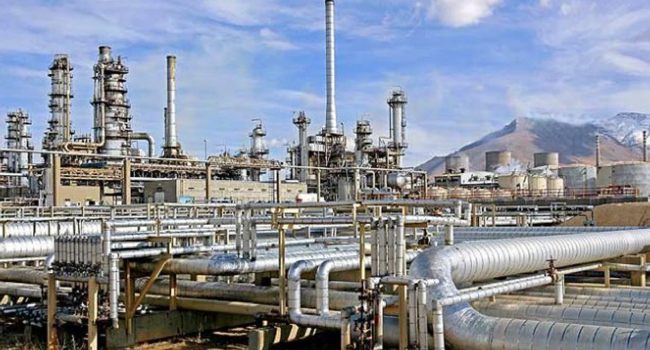
Their prosecutions form part of the EFCC’s wider efforts to hold former refinery officials accountable over funds released for the rehabilitation and turnaround maintenance of the country’s refineries.
Successive governments, including the administration of former President Muhammadu Buhari, continued to spend public funds on the turnaround maintenance of the government-owned refineries despite their failure to produce refined petroleum products.
The commission accused the two former refinery chiefs of laundering alleged proceeds of unlawful activities, receiving payments from contractors engaged by the NNPC operating accounts allegedly used to conceal illicit funds and carrying out large cash transactions contrary to the Money Laundering (Prevention and Prohibition) Act, 2022.
PREMIUM TIMES also reported that the EFCC recovered more than N9.4 billion and $21.2 million, valued at about N29.26 billion, as well as several landed properties during the investigation. The recoveries brought the total value of cash and assets traced in the refinery probe to about N38.66 billion.
In the eight counts brought agsinst Mr Yisawu, EFCC accused him of money laundering involving diversion of public funds and used part of the proceeds to purchase treasury bills for himself.
The eight charges filed on 22 June by EFCC lawyer Ekele Iheanacho, a Senior Advocate of Nigeria (SAN), names Mr Yisawu as the sole defendant.
In the first count, the EFCC alleged that between October 2023 and May 2025, Mr Yisawu indirectly converted $789,950 through Samaila Bala. The commission alleged that the money exceeded his lawful earnings as a former public officer and represented proceeds of unlawful activity.
The second count accused him of making cash payments totalling $789,950 to Mr Bala during the same period without routing the transactions through a financial institution, contrary to the Money Laundering Act.
In the third count, the EFCC alleged that between February 2024 and March 2025, Mr Yisawu indirectly converted $122,600 through Rasheed Olaitan Yusuf of Rasheedat Anike Global Ventures. The commission alleged that the money did not form part of his lawful earnings as a public officer.
The fifth count accused Mr Yisawu of receiving N25.563 million into his Zenith Bank and Access Bank accounts from JKpeez Impex Co., a contractor with an NNPCL subsidiary, when he allegedly knew or ought to have known that the money represented proceeds of unlawful activity.
In the sixth count, the EFCC alleged that on 21 February 2024, Mr Yisawu transferred N65.86 million to Cordros Securities Limited to purchase treasury bills for himself with funds suspected to be proceeds of unlawful activity.
The commission said the alleged offences contravened the provisions of the Money Laundering (Prevention and Prohibition) Act, 2022.