ANKARA, May 13 – Turkey’s attempt to finish its decades-old conflict with the Kurdistan Workers’ Party (PKK) militant group has stalled, with both sides waiting for the other to act in a peace bid complicated by the Iran war.
The apparent stalemate has held up a resolution to one of the world’s longest-running conflicts, which has killed more than 40,000 people since 1984, exacted a huge economic cost and sowed political and social divisions in Turkey.
Here are key questions about the insurgency and the current stalled process.
WHAT IS THE CONFLICT ABOUT?
The Kurds, a people with a distinct language and culture spread across Turkey, Syria, Iran and Iraq, are one of the world’s largest ethnic groups without a state.
Abdullah Ocalan founded the PKK in southeast Turkey in 1978. It launched an armed insurgency against the Turkish state in 1984, initially seeking an independent Kurdish state before later shifting toward demands for greater Kurdish rights and limited autonomy.
The conflict was long concentrated in Turkey’s predominantly Kurdish southeast, particularly in the mountainous areas along the Iraq and Iran borders. Over time and under Turkish military pressure, the fighting shifted to northern Iraq, where the PKK is based. It gained a wider regional dimension as a Kurdish militia that Ankara regards as a PKK offshoot took control of swathes of northern Syria during the civil war there.
The PKK is designated a terrorist organisation by Turkey, the United States and the European Union.
Ocalan was captured in Kenya in 1999 by Turkish special forces and has since been imprisoned on an island south of Istanbul. He remains the movement’s most influential figure.
WHAT HAPPENED IN THE NEW PEACE PROCESS?
The latest peace initiative began in October 2024, when nationalist leader Devlet Bahceli, a close ally of President Tayyip Erdogan, suggested Ocalan could address parliament if he called on the PKK to end its insurgency.
In December 2024, pro-Kurdish DEM Party lawmakers visited Ocalan in prison for the first time in nearly a decade. On Feb. 27, 2025, Ocalan called on the PKK to dissolve and disarm, and the group declared a ceasefire the next day.
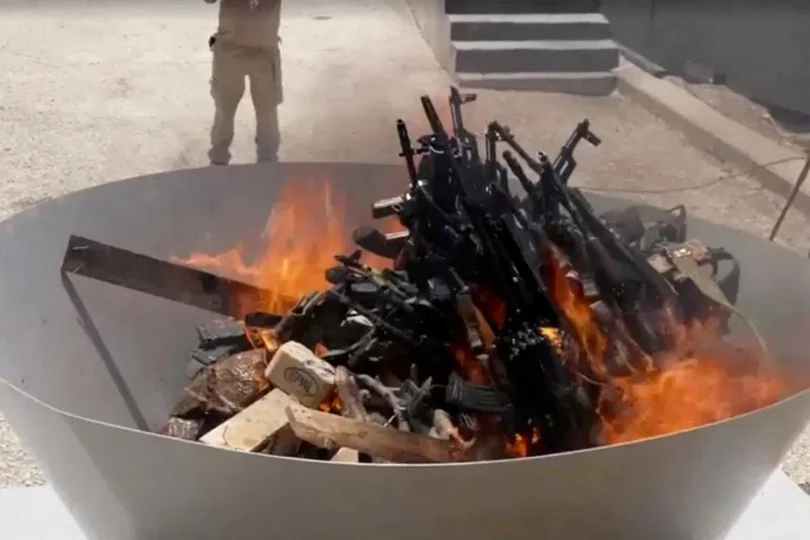
In May 2025, the PKK announced it would dissolve and end its armed struggle. Two months later, dozens of militants burned weapons in a symbolic ceremony in northern Iraq. Turkey’s parliament later established a commission to oversee the process and, in February 2026, approved a report envisioning legal reforms alongside disarmament.
WHY HAS THE PROCESS STALLED?
The main dispute centres on sequencing and is complicated by the Iran war. Ankara says the PKK must fully disarm before laws can be enacted to protect or integrate former militants. The PKK says disarming without legal guarantees would leave its members exposed, especially as the region was engulfed in war.
Turkish officials have warned that instability in Iran could encourage renewed Kurdish militant activity in the region, though there is little evidence it has happened.
WHY IS OCALAN CENTRAL TO THE TALKS?
Ocalan’s February 2025 call for the PKK to dissolve was the breakthrough moment that enabled the process to move forward. The PKK has repeatedly said he should play a direct role in overseeing implementation of any agreement.
In early May, Bahceli proposed creating a formal “Peace Process and Politicisation Coordination Office” for Ocalan to help manage the process. The government has not publicly backed any change to his status.
WHAT IS AT STAKE FOR TURKEY?
Failure to secure peace could prolong one of the region’s longest-running conflicts and risk renewed violence after a rare period of momentum. The collapse of an earlier peace process in 2015 was followed by some of the deadliest fighting in years.
The issue also carries major political implications ahead of elections expected as soon as next year, with Kurdish voters likely to remain influential. REUTERS