
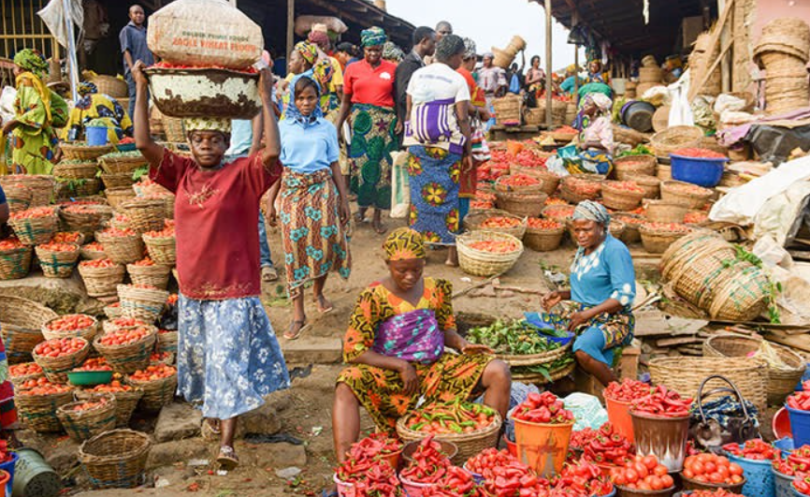
The Federal Government has said that if the country can reduce post-harvest loss of farm produce by just 10%, it will drive food availability.
The government highlighted the alarming rate of agricultural produce wastage in Nigeria, with farmers losing up to 70% of their harvest due to inadequate storage and poor post-harvest management.
Senator Abdullahi Aliyu, Minister of State for Agriculture and Food Security, made the disclosure during the 2026 Post-Harvest Connect and Root, Tuber, and Banana Conference in Abuja, where he stressed that improving post-harvest management could significantly improve food availability and affordability across the country.
Senator Aliyu emphasized that the levels of wastage among farmers are not only concerning but also unsustainable for food security in Nigeria.
Despite Nigeria’s leading global position in root and tuber crop production, including over 60 million tonnes of cassava and yam annually, Aliyu pointed out that these crops often never make it to consumers due to poor storage infrastructure.
In March 2026, Nigeria’s headline inflation rose to 15.38%, up from 15.06% in February, driven largely by food costs.
Urban areas saw significant inflation, with month-on-month inflation reaching 3.16%, while rural areas experienced even sharper increases at 6.73%.
The rising cost of food has been compounded by exchange rate issues and supply constraints, with post-harvest losses being a critical factor in the food supply chain.
The conference, organized by the Nigerian Stored Produce Research Institute (NSPRI), focused on scaling up post-harvest technologies to enhance agricultural productivity and competitiveness.
Prof. Lateef Sanni, Executive Director of NSPRI, emphasized that Nigeria’s dominance in the production of root, tuber, and banana crops offers significant economic opportunities, but these will remain untapped unless value chains are fully exploited.
He called for stronger collaboration between the government, private sector, and financial institutions to tackle the underlying challenges.
Experts agreed that addressing post-harvest losses is crucial to Nigeria’s food security strategy, which aims to ensure availability, accessibility, affordability, and nutritional adequacy of food for all citizens.
Nigeria’s food security discussions often focus on production figures like tonnes harvested, hectares cultivated, and output growth.
While these metrics are vital, they fail to address deeper structural challenges that hamper the agricultural economy.
A significant portion of locally produced food never reaches consumers in good condition due to weak infrastructure in storage, preservation, and transportation.
Solving these challenges can help not only improve food security but also drive down prices for consumers.