The Federal Government has begun reviewing its foreign scholarship and bilateral education programmes, with the aim of reducing public expenditure and redirecting funds to strengthen tertiary institutions in Nigeria.
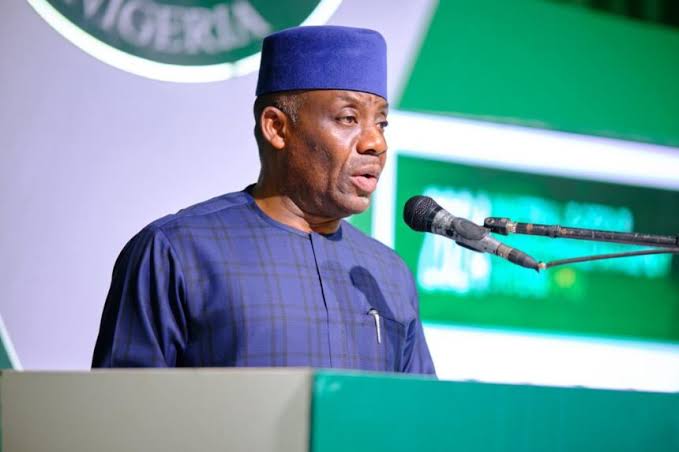
The Minister of Education, Dr Tunji Alausa, said the government could no longer justify funding overseas education for courses already available in Nigerian universities, polytechnics and colleges of education.
Alausa explained that the review was necessary to ensure better value for public funds and build Nigeria’s domestic educational capacity.
He cited a proposal presented to him after assuming office involving about 100,000 Nigerian students travelling to Morocco to study courses taught in English, including mass communication and journalism.
The minister said the proposal was difficult to justify because the programmes were already available in Nigeria, while the students were expected to spend their first year learning French before commencing their courses.
“Number one, we have all those courses in Nigeria. And yet, number two, they were going to spend the first year learning French before they started the programme,” he said.
According to Alausa, the cost of sponsoring large numbers of students abroad could be better deployed to support education within Nigeria.
“So the Bilateral Education Agreement was not making sense, again, to us in government. It was a way to waste government funds,” he said.
“And this President will not waste any public funds.”
The minister said the Federal Government had therefore discontinued new government-funded scholarships under the Bilateral Education Agreement (BEA), while existing beneficiaries would continue to receive support until they complete their studies.
He clarified that the policy does not constitute a ban on foreign scholarships, noting that foreign governments willing to sponsor Nigerian students remain free to do so.
Alausa said the circumstances that led to the establishment of many overseas scholarship arrangements decades ago had changed, as Nigeria had since expanded its capacity in universities, polytechnics and colleges of education.
“When those programmes were set up 20 years ago, they were meant to get students to go to the government colleges where we did not have capacity,” he said.
“But in the last 20 years, we’ve built a number of capacities in the tertiary institutions — universities, polytechnics and colleges.”
He said the government’s priority was now to strengthen domestic institutions, improve technical and vocational education, promote research and innovation, and expand financial support for students.
The minister added that education spending must deliver measurable outcomes, particularly given Nigeria’s limited public resources and competing development needs.
He said the government was also strengthening local student support mechanisms, including scholarships, bursaries and the Nigerian Education Loan Fund.
Alausa maintained that the broader objective was to build a tertiary education system capable of producing the skills, research and innovations required to drive Nigeria’s economic development.
“We want undergraduate researchers to see a clear pathway from academic research to industrial application, enterprise, innovation, and national development,” he said.
He added that Nigeria’s education system must move beyond producing certificates to transforming knowledge and research into solutions, innovation and economic value.