Former United Bank for Africa (UBA) Chairman Hakeem Bello-Osagie said the lender was effectively bankrupt when his team acquired a controlling stake in the bank, forcing a painful restructuring that he said transformed it into one of Nigeria’s leading financial institutions….
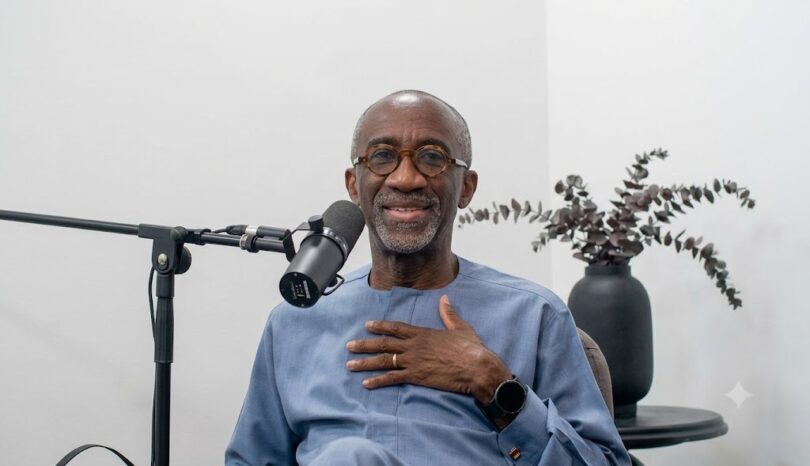
Former United Bank for Africa (UBA) Chairman Hakeem Bello-Osagie said the lender was effectively bankrupt when his team acquired a controlling stake in the bank, forcing a painful restructuring that he said transformed it into one of Nigeria’s leading financial institutions.
Speaking in an interview, Bello-Osagie recalled being dubbed the “whiz kid” after becoming a bank owner at the age of 38 or 39, but said the scale of UBA’s financial problems only became apparent after the acquisition.
“After the first week or two, I realised that the bank was bankrupt,” he said. “For years, they’d basically been playing games with the accounts. It was in bad shape.”
He said the bank had suffered heavy losses at its New York office and had failed to consolidate those accounts properly, while critics portrayed the new management as too young and inexperienced to run a major financial institution.
“People were trying to represent us as these young, irresponsible, inexperienced characters who didn’t know what they were doing,” Bello-Osagie said. “In actual fact, the older, more experienced people had run the place into the ground.”
He said the new owners embarked on a lengthy restructuring programme that eventually restored the bank’s fortunes.
“It was painful. It took a long time. But I’m immensely proud that we turned it from a bankrupt entity into one of the most successful of them all,” he said.
Bello-Osagie said he had warned that Nigeria’s dominant banks would lose their market leadership unless they embraced sweeping reforms, predicting that smaller lenders such as Zenith Bank, Diamond Bank and Guaranty Trust Bank would eventually overtake them.
“I said that of the big four, we in UBA wanted to be there, and we had to make these changes,” he said.
The former chairman said the turnaround attracted political pressure and repeated investigations.
“There was a lot of political attack against us. We were investigated by 10 or 15 organisations,” he said, adding that ambitious reforms often attract resistance driven by “envy and jealousy.”
Reflecting on the investment, Bello-Osagie said UBA was valued at about $10 million to $15 million when his group acquired it, but was worth between $250 million and $300 million by the time they exited, despite the devaluation of the naira.
“All in all, I think we did a good job,” he said