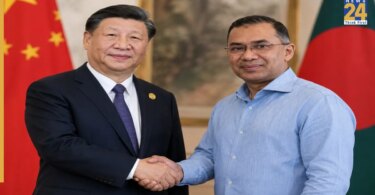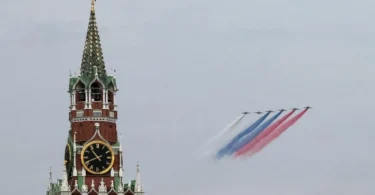
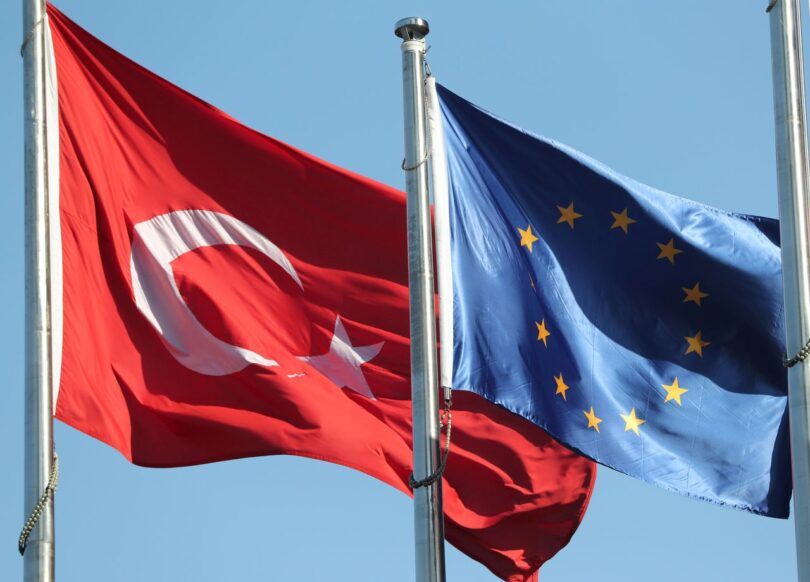
Türkiye, a NATO member that has contributed to Europe’s defence for decades, appeared to be overlooked when Ursula von der Leyen suggested that the EU must shape its future in a way that “it does not fall under Russian, Turkish, or Chinese influence”.
The European Commission President’s remark prompted senior officials in Ankara to reread her statement to fully grasp what she meant. Yet repeated readings did not change the conclusion: Türkiye, a country that has demonstrated sustained interest in joining the European club for decades, was being politically grouped alongside Russia and China, widely seen as anti-Western powers.
This interpretation prompted Turkish President Recep Tayyip Erdogan to caution European leaders against misinterpreting Ankara’s ongoing interest in EU accession, emphasising that Europe should not marginalise Türkiye while continuing to depend on it for security, migration, and energy matters.
Ankara’s expanding defence capabilities underline its growing influence across several regions, from Ukraine to the Horn of Africa, the Caucasus, and Central Asia, as Türkiye positions itself as a mediator in conflicts spanning Ukraine, Ethiopia, and the Gulf.
“Today, Europe’s need for Türkiye is greater than Türkiye’s need for Europe, and tomorrow this need will grow even more,” said the Turkish president.
“We are not a country whose existence is remembered only when needed, whose door is knocked on only in times of necessity, and which is pushed aside at other times. We are not, and never will be, such a country.”
President Erdogan’s remarks refer not only to Europe’s migration challenges but also to its worsening energy crisis following the Ukraine war, which has significantly reduced Russian gas supplies. With the Strait of Hormuz effectively constrained for oil and gas trade, Europe’s energy vulnerabilities could deepen further.
Against this background, Türkiye’s position as a potential energy hub becomes more significant.
It offers one of the most viable transit routes to Europe for resources from both Central Asia and the Gulf.
Amid tensions in the Strait of Hormuz, Gulf states such as Saudi Arabia are reportedly in discussions with Ankara to develop overland energy corridors, including pipelines that could carry oil and gas to Europe via Turkish territory.
Related
Despite Ursula von der Leyen’s remarks, which treat Türkiye not as a partner but, at best, a competitor and, at worst, a potential adversary, experts say the EU’s mounting geopolitical challenges could ultimately force Brussels into a position where debates over Türkiye become politically irrelevant.
“If the war in Ukraine deepens and the US withdraws its support, the EU may become dependent on Türkiye, in which case I don’t think the EU will consider any of its objections against Ankara as a problem. When they need to, EU criteria and everything else will be shattered,” Muzaffer Senel, an expert in European studies, tells TRT World.
After the US, Türkiye has one of the largest numbers of troops stationed beyond its borders and ranks among the countries with the most overseas military bases, with roughly one in five Turkish soldiers deployed abroad.
Over the past two decades, Türkiye has significantly strengthened its ability to conduct independent military operations.
“Apart from France, no other country in the EU has this capacity. Until the EU develops its own military capabilities independent of NATO – which doesn’t seem likely in the near future – it needs Türkiye. Surveys among EU citizens revealed how reluctant Europeans are to defend their own countries,” Senel tells TRT World.
‘Exclusionary lens, not a partnership lens’
According to a 2024 Gallup International survey, only about 32 percent of EU citizens say they would be willing to fight for their country in the event of war, among the lowest regional rates globally. The figures drop to around 20 percent in countries such as Germany, Austria, Belgium, and the Netherlands.
Related
Like Senel, other experts also view von der Leyen’s approach toward Türkiye as strategically unwise given the EU’s growing list of internal and external challenges. The challenges have been showcased by Trump’s recent decision to withdraw 5,000 American soldiers from Germany.
As the EU debates “strategic autonomy” and post-Ukraine rearmament in response to increasingly adversarial positions from the Trump administration, excluding Türkiye, which has NATO’s second-largest army and a unique geographic reach from the Black Sea to the Eastern Mediterranean, is “strategically incoherent,” says Abdulaziz Ahmet Yasar, a Hamburg-based EU expert.
“No serious European defence architecture works without Ankara, but EU institutions struggle to admit this politically,” Yasar tells TRT World, referring to the European Commission President’s recent remark against Türkiye.
Von der Leyen’s framing “reflects a Brussels narrative” that treats Türkiye, an increasingly assertive middle power outside the EU’s normative orbit, “as a strategic competitor, regardless of NATO membership or actual alignment,” Yasar says.