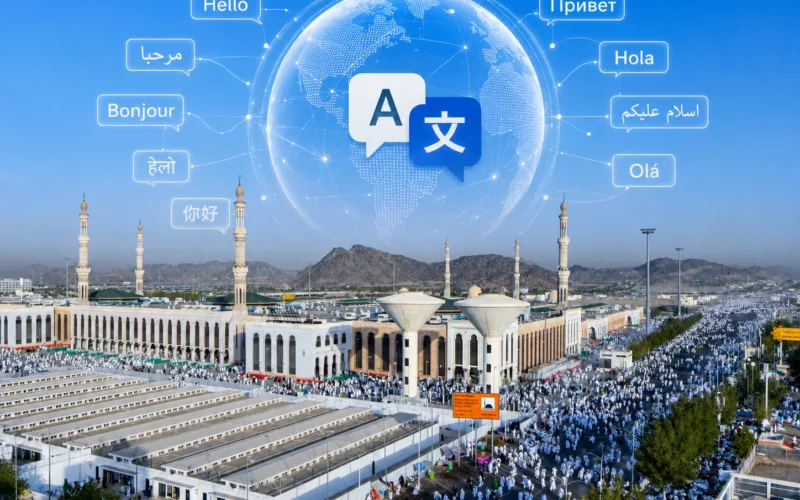
Authorities in Saudi Arabia have announced that the 2026 Hajj Arafah sermon will be translated live into 35 international languages, including Hausa and Yoruba, to enable millions of Muslims around the world to follow the sermon in languages they understand.
The initiative is being coordinated by the General Presidency for the Affairs of the Grand Mosque and the Prophet’s Mosque as part of efforts to expand access to the annual sermon through modern digital platforms and media channels linked to Hajj activities.
Hausa and Yoruba were listed among major global languages approved for live translation alongside English, French, Indonesian, Urdu, Turkish, Persian, Chinese, Russian, Hindi and Swahili, among others.
Saudi authorities said the initiative was aimed at ensuring that the religious messages, guidance and lessons contained in the Arafah sermon reach Muslims worldwide without language barriers.
Speaking on the development, Abdulrahman Al-Sudais said the translation project was one of the major programmes developed over years of experience in serving pilgrims and promoting Islamic teachings globally.
Read Also:Google introduces Yorùbá, Hausa support for AI Search features in Nigeria
According to him, the live translations would allow non-Arabic-speaking Muslims to benefit from the sermon’s messages of morality, compassion and spirituality while also projecting Islam’s message of peace to the wider world.
The Arafah sermon, delivered annually at Mount Arafat during Hajj, is regarded as one of the most important sermons in Islam and is followed by millions of Muslims across the globe each year.
Saudi authorities also reminded participating countries to continue sensitising their pilgrims on compliance with Hajj guidelines and regulations to ensure the safety and successful conduct of the pilgrimage.
Read Also:Kafin Hausa, Ringim, Dutse lead in teacher deficit as Jigawa fails to meet students ratio
Meanwhile, the National Hajj Commission of Nigeria (NAHCON) said it was aligning its operations with modern digital standards, noting that its information technology department was developing comprehensive technological systems to improve Hajj operations in line with Saudi Arabia’s Vision 2030 agenda.
Observers of Hajj affairs described the inclusion of Hausa and Yoruba among the official languages of translation as a significant recognition of Nigeria’s Muslim population, saying it would provide millions of speakers of both languages with easier access to the sermon and its teachings.