The day measles reached her village, Aisha Mwangi was carrying her four-year-old son, Kito, on her hip.
She had carried him that way since he was a baby—through the lockdowns, through the empty clinics, through the lingering fear that COVID-19 had sewn into the very air they breathed.
Kito was born in 2021, deep in the grip of the pandemic.
The health post in her rural community in south-eastern Kenya was understaffed and overwhelmed. The outreach vans stopped coming. By the time Aisha felt safe enough to bring him in, the window for his first vaccinations had passed.
“They said, ‘He is too old now for the routine schedule,’” she tells TRT Afrika while sitting on a wooden stool outside her home, the afternoon sun casting long shadows. “So I waited. I hoped. I prayed.”
‘Zero-dose’ children
She didn’t know it then, but Kito was one of millions—a “zero-dose child,” in the language of global health.
For two years, he remained invisible to the system and vulnerable to diseases that had nearly been forgotten.
Then, in early 2024, a community health worker arrived with a message. There was a new effort, she said. It was called the Big Catch-Up, and it was for children exactly like Kito.
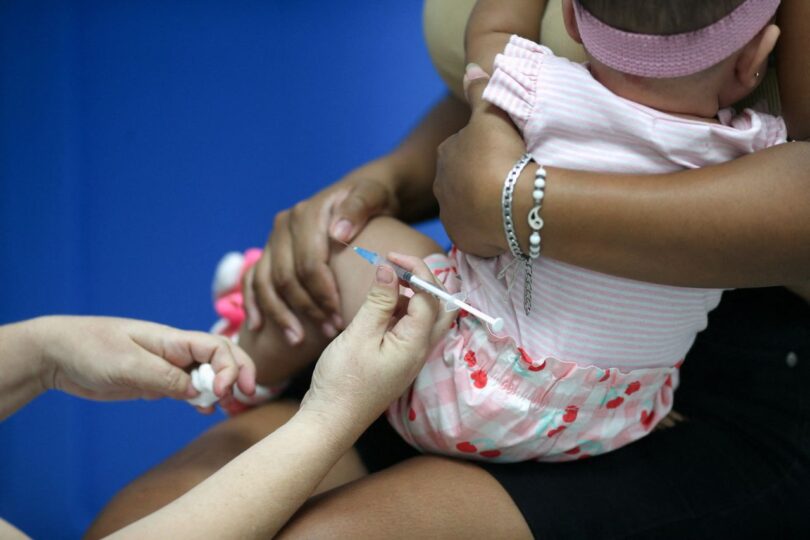
“They came with a cooler box, a smile, and a needle,” Aisha says.
“Kito cried. But I cried more. Because for the first time, someone remembered him.”
That memory—of being remembered—is now shared by an estimated 18.3 million children across 36 countries, most of them in Africa and Asia.
Between 2023 and 2025, the Big Catch-Up (BCU) delivered more than 100 million doses of life-saving vaccines, according to a joint announcement by Gavi, the Vaccine Alliance, the World Health Organization (WHO), and UNICEF at the start of World Immunization Week on April 24-30.
Among those reached: 12.3 million “zero-dose” children who had never received a vaccine, and 15 million who had never received the measles vaccine—a critical gap in a time of surging outbreaks.
For Aisha, the numbers became real one afternoon when Kito, now five and full of energy, ran through the compound without a cough, without a rash, without the fever that had swept through a neighbouring village the previous season.
“He is protected,” she says. “That is worth more than gold.”
Reaching the unreachable
The Big Catch-Up was born out of a crisis.
When the COVID-19 pandemic disrupted health systems worldwide, routine immunisation plunged to levels not seen in a generation.
But unlike previous diphtheria-tetanus-pertussis (DTP) campaigns that focused on infants, BCU did something unprecedented: it systematically targeted older children—aged 1 to 5—the ones who had slipped through the cracks and grown older waiting for a second chance.
Related
The results have been striking. In Ethiopia alone, more than 2.5 million previously zero-dose children received their first DTP1 dose.
The country also delivered nearly 5 million doses of inactivated polio vaccine (IPV) and over 4 million doses of measles vaccine.