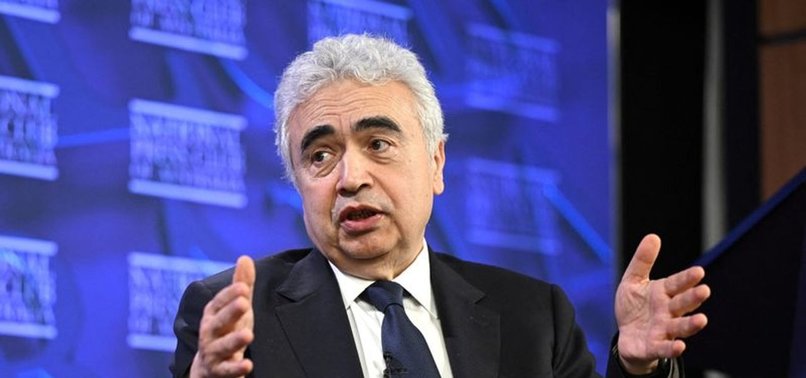
International Energy Agency Executive Director Fatih Birol warned on Thursday that the world is facing the biggest energy security threat in history as the Iran war and the continued closure of the Strait of Hormuz severely disrupt global energy flows.
“We are facing the biggest energy security threat in history,” Birol said in an interview with CNBC at the CONVERGE LIVE event in Singapore.
He said the market has already lost 13 million barrels per day of oil supply and is also experiencing major disruptions in critical commodities.
Birol reiterated earlier warnings that the Iran war and the ongoing closure of the Strait of Hormuz could trigger the largest energy crisis ever faced, pointing to the waterway’s central role in global oil trade.
Before the war, an average 20 million barrels of oil and petroleum products passed through the strait each day. The route is now effectively under what Birol described as a “double-blockade,” with neither Iran nor the US allowing vessels to enter or exit the channel.
The IEA has described the Strait of Hormuz as one of the world’s most critical oil transit chokepoints and warned that its closure could weaken global economic growth, fuel inflation, and force energy rationing.
Birol also warned of a growing jet fuel supply risk in Europe, saying the region had relied heavily on Middle Eastern refineries. “Europe gets about 75% of its jet fuel from refineries in the Middle East and this is basically now zero,” he said, adding that Europe is trying to secure alternative supplies from the US and Nigeria.
He said Europe could face serious difficulties if additional imports are not secured and added that governments may need to consider measures to curb air travel if the disruption persists. “I really hope, first of all, that the strait is opened and refinery exports start from there,” Birol said.
The 32-member IEA agreed in March to release 400 million barrels of oil from emergency reserves in an effort to ease the impact of the supply shock.
Birol said earlier this month that any second release of emergency stocks would only provide temporary relief rather than solve the crisis.
“The cure is opening up the Strait of Hormuz,” he said, while urging governments to strengthen resilience through alternative energy sources, including nuclear power, and more efficient technologies such as electric vehicles.