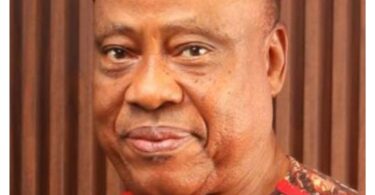

The son of Bauchi State Governor, Shamsuddeen Bala Mohammed, has urged his father, Governor Bala Mohammed, to accelerate the payment of outstanding gratuities to retirees and introduce targeted empowerment programmes for youths.
Naijaonpoint reports that Shamsuddeen made the appeal in a Facebook post on Wednesday titled, “Bridging the Gap: A Call for a Human-Capital Focused Policy.”
He praised his father’s administration for its achievements in infrastructure development over the past seven years, describing the construction of roads, schools and hospitals as a legacy that future generations would celebrate.
Shamsuddeen, however, said many residents, especially young people, were still facing severe economic hardship despite the visible projects across the state.
“The infrastructure projects—our roads, schools, and hospitals—stand as a testament to your vision and legacy. These are milestones that future generations will celebrate,” he wrote.
“However, as we approach 2027, I feel a responsibility to bring to your attention a brewing disconnect between this commendable infrastructure drive and the immediate economic reality of our people.”
He said many families were still waiting for civil service gratuities, adding that the delay had worsened hardship for households.
“The prevailing sentiment on the ground is that while infrastructure is vital, it does not alleviate the immediate economic hardship, the struggle for daily sustenance, or the pain of families still awaiting civil service gratuities,” he said.
Shamsuddeen also warned of growing frustration among youths, whom he described as a major part of the governor’s support base.
“There is a boiling point of agitation. Our youth are not merely asking for handouts; they are asking for a stake in the prosperity of their state,” he added.
He urged the state government to adopt what he called a “Social-Economic Empowerment Pivot,” focused on human-capital development.
Among his proposals were seed funding for youth-led start-ups, capital grants for small businesses and policies requiring contractors handling government projects to prioritise local youth employment.
“We should explore global models of productive inclusion. Let us shift the focus from solely building the state to investing in the citizen,” he stated.