
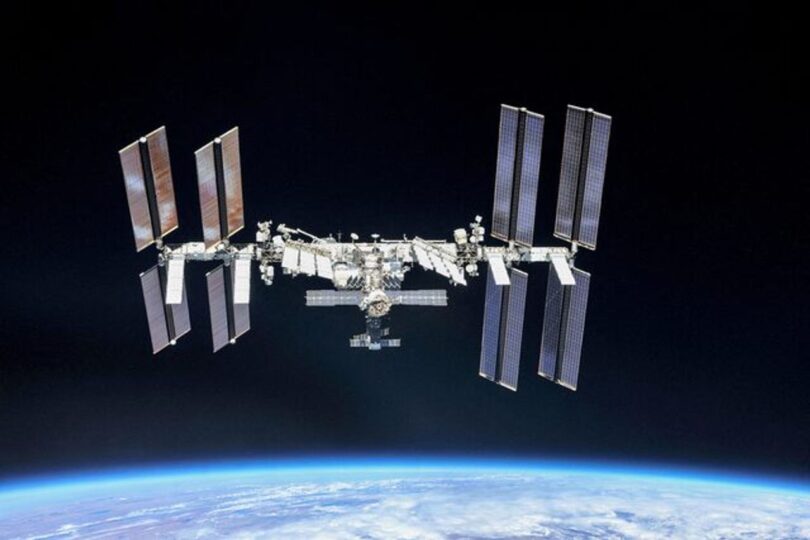
Astronauts aboard the International Space Station (ISS) have resumed duties after NASA lifted an earlier evacuation alert following concerns over a worsening air leak.
On Friday, NASA instructed astronauts aboard the ISS to take shelter inside a docked SpaceX Dragon spacecraft and prepare for a possible evacuation while engineers assessed air leaks on the Russian side of the station.
The precaution covered the four members of NASA’s SpaceX Crew-12 mission, Jessica Meir, Jack Hathaway, Sophie Adenot and Roscosmos cosmonaut Andrey Fedyaev, along with NASA astronaut Chris Williams, who has been on the station for around 190 days.
After roughly two hours, NASA said the crew could return to normal operations once Russian engineers paused repair work and continued evaluating data.
Where the leak is
The issue is located in one segment of the station, in the transfer tunnel connecting to the Zvezda service module.
Zvezda is the main Russian module of the ISS. It serves as the living quarters for cosmonauts, providing sleeping areas, a kitchen, life support systems, power, communications, and docking ports for Soyuz and Progress spacecraft.
During pressurisation checks, Roscosmos detected two potential leak sites.
One was sealed using a two-component sealant known as Germetal-1. Work on the second area, in the conical section of the tunnel, is ongoing.
Russian officials have said there is no immediate threat to crew safety or station systems.
Why NASA responded
NASA’s instruction to move the crew into the Dragon spacecraft was a precautionary safety step.
The capsule can function as an emergency escape vehicle if a rapid departure from the station is required.
Such procedures are standard when there is a perceived risk, including space debris events or structural uncertainties aboard the ISS.
Is the issue new?
The leaks in Zvezda module’s transfer tunnel are not new. They were first identified in 2019 and have fluctuated in severity since then.
Over the past five years, engineers have repeatedly tried to locate and seal microscopic cracks in the structure. NASA has previously described the leaks as a potential safety risk, while access to the affected areas has made repairs difficult due to tight spaces and surrounding hardware.
Concerns escalated again in 2024 when leak rates increased, prompting renewed coordination between NASA and Roscosmos.
Why it matters now
The International Space Station is more than 25 years old and has been continuously occupied since 2000.