
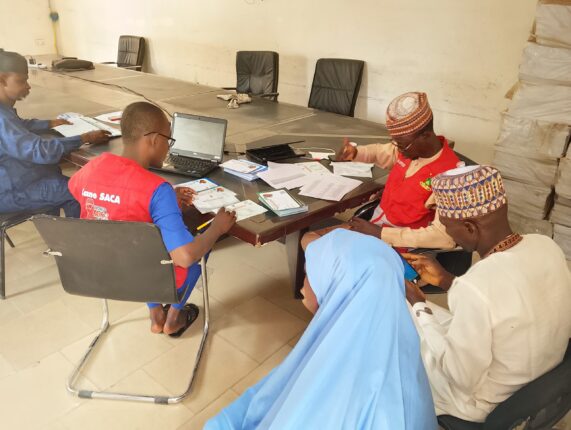
The Kano State Agency for the Control of AIDS (KSACA) has commenced pre-marital medical screening for 3,000 prospective bride and groom couples selected for the state government’s 2026 mass wedding programme, with officials stressing that only medically qualified participants will benefit from the initiative.
SolaceBase reports that the screening exercise, which covers HIV, hepatitis, syphilis and sickle cell disease tests, is being conducted at the agency’s premises at Na’ibawa, Kumbotso local government area, Kano.
According to the agency, the exercise is part of efforts by the Kano State Government to ensure healthy marriages and safeguard public health as preparations intensify for the mass wedding programme designed to support vulnerable residents across the state.
Addressing journalists during the screening exercise, the Director-General of KSACA, Dr Usman Bashir, said the exercise was being conducted in accordance with the Kano State Premarital Screening Law enacted in 2024.

According to him, the law makes it mandatory for intending couples to undergo screening for HIV, hepatitis, syphilis and sickle cell disease, as well as any other investigations considered necessary by healthcare professionals.
Dr Bashir explained that the mass marriage initiative was one of the promises made by Governor Abba Kabir Yusuf’s administration to assist individuals who are unable to afford the financial burden of marriage.
Read Also:Sokoto neglects Primary Healthcare, disburses just 5% of capital budget in 2025
“The sponsorship is comprehensive, meaning that their medical, social, emotional and even empowerment needs are taken care of by the government, so that they can have a new start and a stable home,” he said.
He noted that unlike the previous edition of the programme, medical screening was now being conducted before enrolment.
The KSACA boss said prospective couples had already been identified across the state’s 44 local government areas through a screening process conducted by the Kano State Hisbah Board, while KSACA was responsible for carrying out the medical examinations as required by law.
He disclosed that the agency had already screened intending couples from 23 non-metropolitan local government areas and would continue with the remaining areas before completing the exercise for metropolitan LGAs.
According to him, the agency hopes to screen at least 150 couples, equivalent to 300 persons, daily, with results expected to be ready within 24 hours.

Dr. Bashir said female participants were also undergoing pregnancy tests, while additional investigations would be conducted whenever healthcare workers suspected drug abuse or other medical concerns.
Read Also:Poor sanitation, contaminated water, poverty increases risk of kidney diseases in Northwest Nigeria
He added that couples found medically compatible would be issued marriage certificates, which would serve as a prerequisite for their enrolment into the state-sponsored mass marriage programme.
On the issue of confidentiality, the DG assured participants that their medical information would be handled with utmost privacy.
“We are going to communicate personally with those affected. We have collected their phone numbers, addresses and other necessary details.
Those who test positive for HIV and are not already on treatment will be linked to healthcare facilities close to where they reside for immediate care,” he said.
He explained that individuals diagnosed with hepatitis would be referred for further investigations, while couples found genetically incompatible due to their sickle cell status would receive counselling and would not be allowed to proceed with the programme.
“Those who do not meet the requirements will not take part in the process because there is a law mandating these screenings and we must comply with it,” Dr. Bashir stated.
He described the exercise as a public health intervention aimed at reducing preventable health challenges, particularly sickle cell disease, which continues to affect many families.
Read Also:Kwara receives N146.4 bn federal allocations in 2025 as monthly revenue rose sharply toward year-end
The DG noted that the state government was already supporting persons living with sickle cell disease through the state’s health insurance scheme and said prevention remained the most effective way of reducing the burden of the condition.