By Abdullahi Adamu Fagge, SAN, MCArb
There are moments in politics when leadership is tested not by elections, not by public rallies and not by speeches delivered before cheering crowds, but by the ability to manage competing ambitions behind closed doors. Those moments rarely make headlines. They are often hidden from public view. Yet they determine whether a political party emerges stronger or weaker after a major political exercise. Having had the privilege of participating in virtually all the consultations, negotiations and consensus-building meetings that shaped the just-concluded primaries in Kano State, I believe the public deserves to understand what truly happened behind the scenes and why His Excellency, Governor Abba Kabir Yusuf, deserves recognition for it.
I begin by expressing my sincere appreciation to His Excellency for giving me the opportunity to participate in this important process. It is not often that one gets the chance to observe political leadership at such close range.
Over several weeks, I sat through meetings involving some of the most influential political figures in Nigeria. I listened to arguments, counterarguments, grievances and concerns. I watched politicians defend positions they strongly believed in and advocate passionately for the aspirations of their supporters and candidatures. More importantly, I watched a governor who consistently placed party unity above every other consideration.
I must also acknowledge and commend the many party leaders, stakeholders, elders and members of the various reconciliation, negotiation and consensus teams who worked tirelessly throughout this process. While public attention often focuses on candidates and outcomes, those who participated in the consultations understand the enormous effort invested by party leaders who spent countless hours and sleepless nights engaging stakeholders, managing expectations, building consensus and preventing disagreements from escalating into crises. The success of the primaries was not the achievement of one individual alone; it was the product of collective sacrifice, maturity and commitment to the larger interests of the party.
Read Also:Editorial: When party primaries become marketplace, can they still produce credible leaders?
From the beginning, it was obvious that the primaries would not be an easy exercise. Kano is one of the most politically sophisticated states in Nigeria. It is home to experienced politicians, established political structures and ambitious leaders who have spent years building support across communities. Every ticket carried enormous significance. Every position attracted multiple interests. Every decision had implications beyond the individual aspirants involved. Under such circumstances, disagreements were inevitable and, in many instances, entirely understandable. The real challenge was not about producing candidates. The challenge was ensuring that the process did not leave behind divisions capable of weakening the party.
Across the country, political parties are still grappling with the consequences of contentious primaries. Court cases have emerged. Defections have followed. Parallel structures have been created. In some places, party leaders are spending more time managing internal crises than preparing for upcoming elections. Kano could easily have gone down the same path. There were moments when disagreements appeared difficult to reconcile. There were situations that, if mishandled, could have evolved into major political crises. Yet each time tensions rose, Governor Yusuf responded with the same approach: calmness, dialogue, consultation and patience.
One of the most remarkable things I observed throughout the process was the governor’s willingness to listen. Many political leaders enter negotiations with predetermined positions. Governor Yusuf approached meetings differently.
He allowed people to speak. He listened carefully to their concerns. He encouraged frank conversations and ensured that stakeholders felt heard, even when the final decisions did not entirely align with their expectations. This created an atmosphere in which compromise became possible and where political actors felt respected regardless of the outcome.
Read Also:JUST IN: INEC registers 2 new political parties
His commitment to listening was perhaps most evident in the few instances where consensus proved impossible. While the party successfully achieved consensus in most contests, there were four federal constituencies where some aspirants remained convinced that a direct contest was the best path forward.
Rather than consensus, His Excellency listened to their arguments and respected their position. After extensive consultations, our committee, under the leadership of His Excellency, allowed the said constituencies to proceed with primaries because that was the preference of the aspirants themselves. This decision reflected an important aspect of his leadership style.
He did not view consensus as an end in itself or something to be enforced at all costs. Rather, he saw consensus as a process built on voluntary agreement, mutual respect and stakeholder confidence. Where consensus was achievable, he encouraged it. Where stakeholders genuinely preferred a contest, he allowed the democratic process to take its course. That balance between persuasion and respect for differing views further strengthened confidence in the fairness of the exercise and reinforced the perception that every stakeholder had a voice in the process.
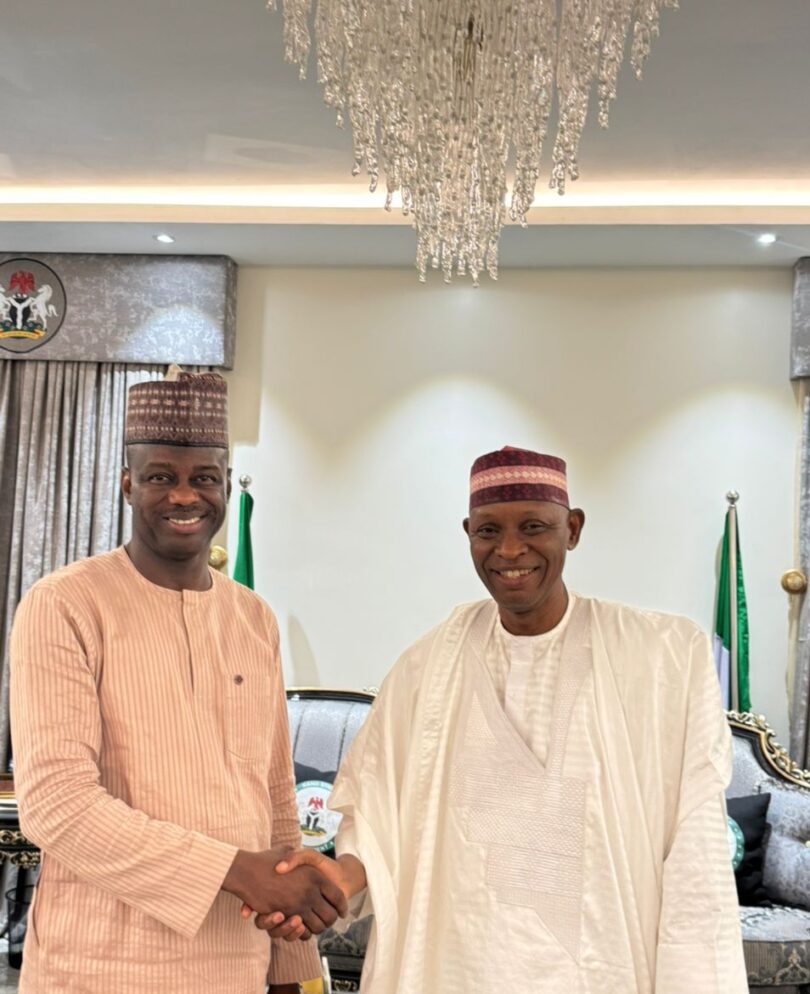
The reconciliation involving Senator Abdurrahman Kawu Sumaila and Hon. Kabiru Alhassan Rurum remains one of the clearest examples of this approach. What many people saw publicly was the eventual reconciliation and the photographs that followed. What they did not see were the conversations and efforts that preceded that outcome. The disagreement had the potential to deepen political divisions within the party. Instead, through careful engagement and persistent dialogue, both leaders emerged with a renewed commitment to unity. Such outcomes do not happen by accident. They are the result of deliberate political management.
Read Also:Poor sanitation, contaminated water, poverty increases risk of kidney diseases in Northwest Nigeria
The same can be said of the highly sensitive discussions surrounding the Kano Central Senatorial District, the constituency that produced Malam Ibrahim Shekarau as its candidate. Unlike many contests across the country, this was not a race involving just two or three aspirants. It was a highly competitive contest that attracted no fewer than eight influential and politically established contenders, each with strong grassroots structures, loyal supporters and legitimate claims to the ticket. The sheer number and stature of those involved made consensus extraordinarily difficult and required extensive consultations, delicate negotiations and continuous engagement.
What made the exercise even more significant was that it was conducted in accordance with Section 84(2) and 87 of the Electoral Act, which permits political parties to adopt consensus arrangements where aspirants voluntarily agree to the process. Reaching consensus under such circumstances was therefore neither automatic nor guaranteed. It required patience, persuasion and extensive stakeholder management. In many political environments, a contest involving eight powerful aspirants could easily have produced deep divisions, defections and prolonged disputes. Instead, through the intervention of Governor Yusuf and other senior party leaders, an agreement was reached that preserved party cohesion and prevented what could have become one of the most contentious primaries in the country. What emerged were not merely candidates but a demonstration of political maturity, sacrifice and commitment to collective interests above individual ambition.
The Kano North Senatorial District also presented its own challenges; it featured formidable political heavyweights whose influence, experience and support base, which is rooted across the state, made the contest also significant. As with other sensitive contests, consultations were undertaken to ensure that the outcome strengthened rather than weakened party unity. The party leadership’s ability to manage competing interests across both Kano Central and Kano North reflected a broader commitment to consensus-building and internal stability.
As I reflected on these experiences, I found myself thinking about Nelson Mandela. The comparison is not about the scale of the challenges they faced. Rather, it is about a shared understanding of leadership. Mandela understood that enduring political victories are achieved not through exclusion but through inclusion. He understood that bringing people together is often harder than defeating them. Throughout these primaries, Governor Yusuf displayed a similar instinct. His objective was never to create winners and losers. His objective was to ensure that everyone remained part of the same political family after the process had ended.
Read Also:Audit Report exposes massive financial irregularities in Kebbi local governments
What impressed me most was the governor’s ability to identify potential crises before they escalate. In many instances, meetings were convened not because a crisis had already occurred but because he understood that one could emerge if stakeholders were not engaged early enough. This preventive approach helped diffuse tensions before they became public disputes. It also reinforced party members’ confidence that their concerns would be heard and addressed through dialogue rather than confrontation.
Today, as the primaries have concluded, the most important achievement may not be the emergence of candidates. Candidates emerge after every primary election. The real achievement is that the party remains united. The real achievement is that political actors who competed for the same positions continue to work together. The real achievement is that the party appears more consolidated than many expected at the beginning of the process. In a political environment where internal disputes often overshadow electoral success, that outcome should not be taken for granted.
Those of us who participated in the process understand the amount of work that went into preserving this unity. We witnessed the late-night meetings. We witnessed the difficult conversations. We witnessed the compromises made and the sacrifices accepted. We also witnessed the dedication of party elders, negotiators, reconciliation committees and stakeholders who worked quietly behind the scenes to keep the process on track. Above all, we witnessed a governor who consistently chose consensus over confrontation and dialogue over division. That is why the governor’s role in the just-concluded primaries deserves recognition.
When the history of these primaries is eventually written, public attention will naturally focus on those who secured tickets and those who did not.